
Kresh and Kerns brand new disaster through Eorzea: Final Fantasy XIV part 4: A Misadventure Reborn

Part 1, Part 2, Part 3

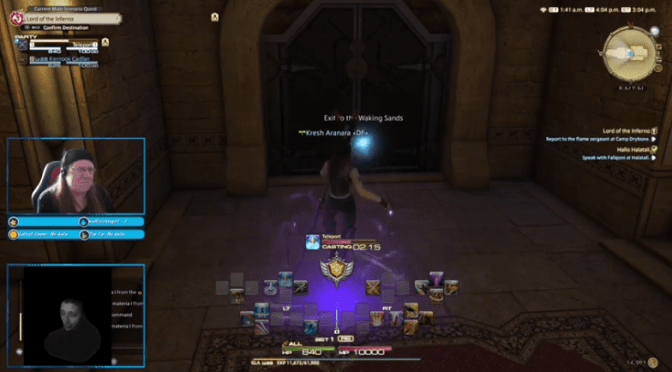
Hey Everyone, it’s Kernook here, bringing you more Final Fantasy XIV gameplay from Kresh and Kernook. More story line questing, and general nonsense build up the bulk of the stream, all around it was a good time.

Our misadventure continues over on our Twitch channel, and you should make sure to follow us there if you want watch us play the game live, instead of getting VOD updates after the fact. We play all kinds of games, of course. It’s worth it to check us out if you enjoy gameplay content.

Part 4

Click to Donate

You can help support us through PayPal or Patreon.

Thank you to all Patreon and Twitch Subscribers.

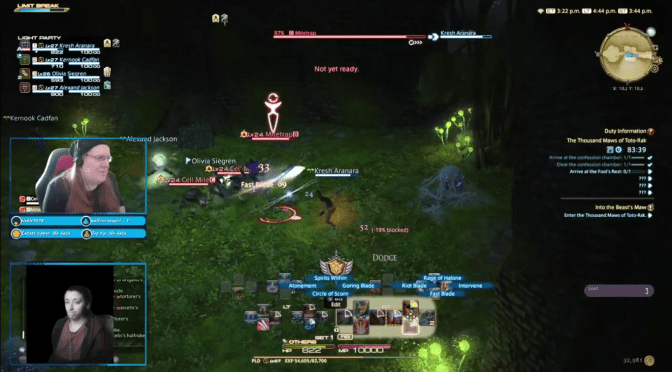
Our trusty red Chocobo, which I call Flufflebutt, carries us around from place to place as we deal with all of the story related quests involved in this early section of the game. Overall, it was a day filled with lots of traveling and cut scenes.

We enter into The Thousand Maws of Toto-Rak, which has been nicely streamlined since I was last inside of it. Ideally, this instance is for those between the levels of 24-27, but with how quickly you level these days, it’s easy to outpace it. We certainly have. Since it is tied to the main story, it can’t be bypassed.

I manage to heal through it with very few incidents attached, and All in all, it is a simple story heavy day, with promises of more havoc next time.

Please don’t forget to follow the blog for more content like this, and follow us on Twitch to join us when we go live.

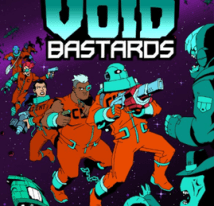
Void Bastards is Plain Stupid Fun

The game is is also very rage-inducing… hey everyone, it’s Kern here. Time to talk about 2019’s pinnacle of assholian game design: Void Bastards.

Be warned this post is riddled with swears, because of course it is…

Here’s the thing. Void Bastards is an absolutely no-shits-given, entirely unrepentant first-person shooter. The developer boasts warnings on their steam page about the fact that the game includes cartoon violence, gore and strong language…

You know what? The game does do that, it does that a lot. Frankly the game is absolutely bombastic at times, and I loved every second of it.

Look, you’re not going to get intelligent satire or thought-provoking, higher-minded concepts. You’re going to get exploding Kittybots and Void Whales that will ruin your day if you have no torpedoes. That’s what you’re going to get. If you don’t like that you can have cameras named Peepers that’ll also make your life hell.

Catch the drift here?

The proof is in the name, Void Bastards is everything it promises itself to be. It’s one bastard of a game, and you’re going to die a lot. If you’re not getting your ass handed to you, you’re either a master at the game, or you’ve lucked out…

The game has a cartoon-like style. It’s almost as if the imagery was ripped right out of a comic book. The game doesn’t take itself too seriously, as other first-person-shooters tend to do. Rather it banks upon a good time and idiocy. When you’re out of torpedoes and the whales have eaten you, that is part of the fun and the rage.

Even the weapon names are downright awesome, but downright idiotic. When you get your hands on the good old clusterflack you can have yourself a good time making a clusterfuck of the enemies.

If you want a flat out stupid, but absolutely fun and bombastic gameplay there are only a few games I can point to. Fewer still come along as ones that I can highly praise. This is one of them. In my personal opinion Void Bastards is good for one thing, and one thing only; being irritatingly fun and not giving a rats ass about anything else.

The developer Blue Manchu really hit it out of the park with this one. It’s a great game all things considered.

A lot of people questioned if the game was actually decently re-playable when the game came out. I think we need to look at the reasons why you’d want to replay the game. To me it’s fairly simple. When I want to turn my brain off and enjoy a truly clean yet goofy aesthetic, I play the game. If you haven’t played it, and you like stupidly fun games, maybe you should.

Anime Review: ACCA 13

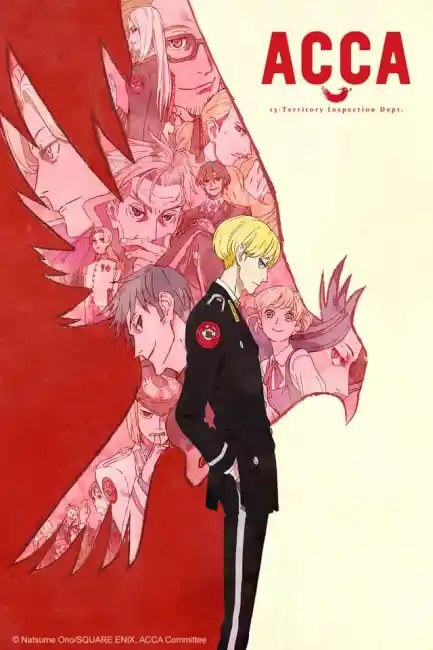
Hey everyone, it’s Kernook here, coming at you with another anime review. I’m going to be trying a new review format today. If you like the way this one is laid out, please let me know. I’m trying to improve upon my standard formula, and want to know your opinion. Today, I’ll be reviewing ACCA 13.
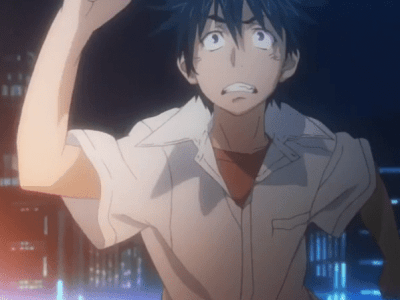
  • Anime: ACCA 13
  • Genres: Drama, politics, thriller, economics
  • Episodes: 12 and an OVA
  • Target Demographic: Seinen (18–30 year old audience)
  • Studio: Madhouse
    • Director: Shingo Natsume
  • Other Media: Yes.
    • Manga written by Natsume Ono: ACCA: 13-Territory Inspection Dept
    • Manga written by Natsume Ono: ACCA: 13-Territory Inspection Dept. P.S.

Setting:

The anime takes place in Dowa, a kingdom subdivided into 13 states. Each one acts under their own autonomy and influence. To help facilitate the governance of this kingdom, an organization known as ACCA helps to maintain peace.

Quick Look:

I neither love nor hate this series, but I do think it stands as a solid viewing experience for the genre and themes the anime presents. If you need something else to watch between your typical seasonal line-up, ACCA 13 is a decent choice. What it lacks in heart pounding action sequences, it more than makes up for that, offering mind-games and political intrigue.

The anime is a technical marvel, made a spectacle for the small and intricate details embedded into every fiber of the series. Instead of large bombastic moments, this anime offers you a much more down-to-earth narrative and satisfying character development.

If you’re looking for something thoughtful to sink your teeth into, you’ll like this anime. If you want action, suspense, and mindlessness, look elsewhere… this is not a shoot-em-up, and victories don’t come at the hand of overpowered lead characters with more ego than good sense.

Mind you, ACCA 13 is a very high-brow anime, suffused with socioeconomic issues, cultural questions, politics and policy at every turn. This is not what I call a “popcorn anime”. You’ll get the most out of the series if you’re willing to take your time and savor the episodes slowly. I do not suggest trying to binge-watch it.

In-Depth Review:

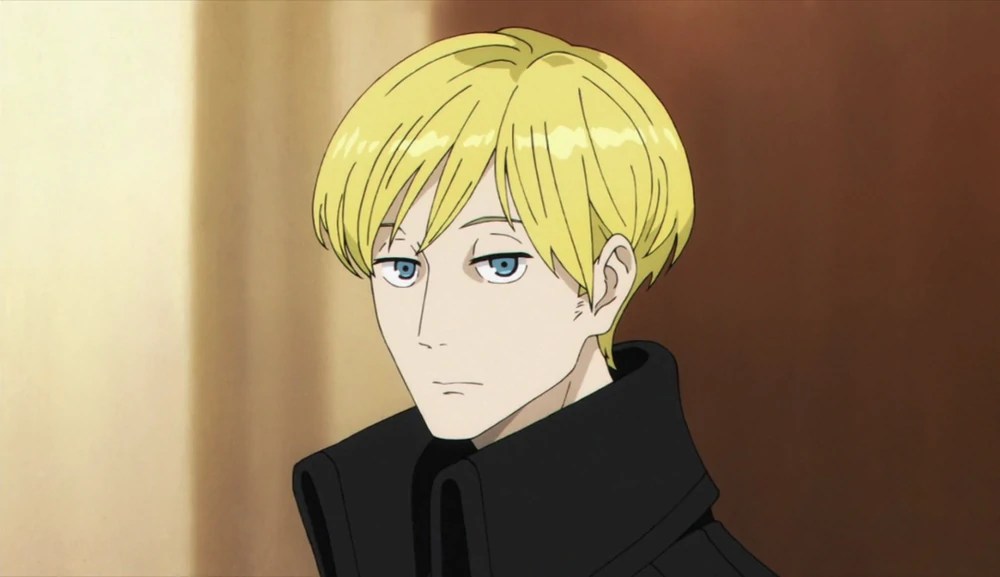
The main protagonist is Jean the “cigarette peddler”, as he’s so often called. This guy always seems to get into trouble despite his best efforts. It’s not usually his fault, either. He tries his best to keep a low profile, going about his day without getting mixed up in problems that he shouldn’t. It’s just that his best laid plans don’t always work the way he might like. For him, another headache is just another day of work.

As the deputy chief of the “territory inspection division”, a subbranch of ACCA, he has his work cut out for him. As the story begins, all he really wants to do is finish the state inspections he’s been saddled with and find a suitable replacement to take his job. He’s tired of the workday grind, and nearly ambivalent about his daily tasks.

All he wants to do is take a quiet position somewhere else, literally almost anywhere else. He’s done with all of the hassle that his position demands of him. Unfortunately, there are murmurs circling around reguarding a coup d’etat, and once again Jean is dragged into countless details he never even wanted to be bothered with in the first place.

By and large, this is your typical cloak and dagger sort of anime. Think big crime and spy syndicates, wrapped up nicely in a political thriller coat of paint. Anime like ACCA 13 can be hard to find, and I think that stands as a very good reason why the hype for this anime was so all-consuming when it was first released.

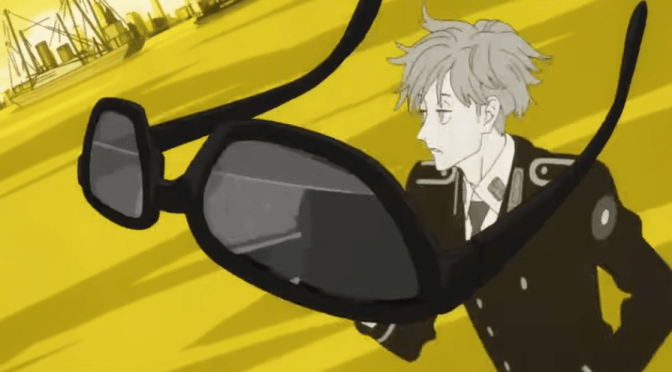
This is a Madhouse production. You can see that within every detail of the animation. None of the anime feels low quality, and everything looks absolutely gorgeous. With openings and endings that remind me of Burst Angel and Psycho-Pass, there’s just a lot to like here. The entire series carries a sort of European flair, represented in the backdrops surrounding the characters. Meanwhile, the character designs themselves remain striking and distinctive amidst their eye-catching environment.

The sound design and music remains pleasing to the ear, and often fitting for the scenes they’re playing beneath. That being said, I wouldn’t say that the entire soundtrack is memorable, only that it’s entirely serviceable. Really, that’s all we need, so that’s just fine. As long as it remains consistently solid across the series, and it does, that’s all I truly care about.

While the overall tone of ACCA 13 lacks the heart pounding action I might expect, it favors a subdued narrative experience. Honestly, this series doesn’t feel like an anime at all.

For that reason, I’d highly suggest it to anyone looking for a show to offer to a non-anime fan. It’s a lot like Bartender and Space Brothers. You could show it to a complete anime novice, and they probably wouldn’t hate the show based upon the fact it’s animation alone.

There’s a pervasive natural quality to the characters and their actions. A true grounded focus relies upon even the small details. That grounded focus helps to uplift the sometimes dry moments that crop up from time to time. The show would be lost without it.

From the way smoke wafts from around the characters, to the way some characters act, there’s a fully realized weight to the physics in the show. Some of them even stumble on occasion, or fidget where they stand in casual little ways… all of this adds context to the wider show.

I’d go so far as to say almost everything in this series comes from a casual lens. The voice acting is often delivered with a relaxed bent to it, using matter-of-fact bluntness to cut through thematic hypocrisy and droll diatribes like a knife through warm butter.

Characters don’t make obscene noises, cry out, or even raise their voice idiotically in the entire series. So many characters, Jean included, just don’t give a rats ass about propriety beyond a certain point. There’s a near fatalistic overtone and resigned undertone that continually seeps into the entire series. That’s what makes ACCA 13 so interesting to watch, and why many believe it to be so damn good.

I’ll say this, ACCA 13 is best enjoyed by anime fans who crave attention to detail. Nine times out of ten, I found myself much more interested in what the characters themselves were doing, rather than the wider story. That’s due to how wonderful the animation is.

Then again, it all seems natural, these don’t feel like anime characters. They feel like real breathing people. Even at mealtime, something we see in anime all the time, these scenes feel exactly as it should. The characters simply grab a meal, with absolutely no pretense to get in the way.

The real-world feel of the series drifts all the way down to socioeconomic questions. The values and cultures within each of the 13 separate states are distinctive enough to feel believable, same as the issues plaguing them. Sometimes there is no “right” answer, only a “less horrible” answer. Altruism is not closely at hand in the series, even when some of the characters would like it to be.

That being said, you’re free to draw your own conclusions. This isn’t an anime that focuses too heavily on the concept of moral high-ground. Jean typically spits in the fact of that, anyway. He just isn’t the type of character to smack the viewer over the head with any particular message one way or the other… then again, the wider ethos provided by Jean is a simple one.

A good drink in hand, a friend by his side, and a cigarette hanging out of his mouth is his ideal of a “happy place”. Anything beyond that, and he’s going to wonder why he should be brought to care beyond simple surface level concern… and that’s not to say he enjoys watching the world burn around him. Only that he’d rather not mess around with problems that don’t directly concern him.

He can’t simply fix the entire would, after all, why try?

There’s an honesty here, all the way through to the end, and it’s never unbelievable. It never gets taken to the climatic expected conclusion. Rather the subdued anime gives us a subdued ending, no blood spilled, no hands unrelentingly left dirty, all of it handled tactfully. Perfectionism has no place. It’s overrated entirely to everyone viewers have connected with, and these characters go on with their lives displaying that.

All in all, ACCA 13 is by far and away one of the most interesting series I’ve ever seen when it comes to displaying characters upon the screen, cramming them together just to see what they do within the political sphere.

I don’t love it, I don’t hate it. The series has its flaws. It’s witty in many places, but dry wit doesn’t always make for the most compelling story. The characters and stellar animation were the main reasons I enjoyed it. Then again, I meant what I said above.

It’s a solid decision for anyone who wants thoughtful maturity layered within the anime they watch. These characters are adults, they think and act like adults, treating the wider world with the required gravitas when they need to.

This has been Kernook of The Demented Ferrets, where stupidity is at its finest and level grinds are par for the course. I’ll see you next time.

With your contributions, you make our efforts possible. Thank you for supporting our content. Patreon supporters receive access into our official Discord server, and a few other perks depending on the tier. If you don’t care for Patreon, and don’t care about perks, you can always support us through PayPal too… links below.

Those who join via Patreon get special perks, such as extra content, quicker updates, and more.

Click to Donate

To Our Supporters

Thank you for helping us to enrich our content.

Patreon Supporters:
($3) Little Ferrets: None
($5) Demented Minions: Andrew Wheal.
($7) Fandom Ferret: None
($14) True Blue Ferret: Francis Murphy and Bryan BSB.
($25) Premium Ferret: None.
($50) Round Table Ferret/Fluffy Ferret: Josh Sayer

Meanwhile, check out some of our other great content.

Kresh and Kerns Brand New Disaster Through Eorzea: Final Fantasy XIV Part 3: A Misadventure Reborn.

Part 1
Part 2

Hey everyone, it’s Kern here. Our misadventure continues over on our Twitch channel, and you should make sure to follow us there if you want watch us play the game live, instead of getting VOD updates after the fact. We play all kinds of games, of course. It’s worth it to check us out if you enjoy gameplay content.

In any case, this is part 3 of it for your enjoyment.

The level grinds and havoc continues as we move forward in story quests. Kresh and I spend our time in the Thanalan region, collecting corpses for burial, befriending goblins, and doing a few required instances.

The beastmen in the area are up to no good again as they prepare to summon a primal. They play a dominant role in this particular section of story quests both as friends and as enemies.

Kresh and Kerns Brand New Disaster Through Eorzea: Part 3

Click to Donate

You can help support us through PayPal or Patreon.

Thank you to all Patreon and Twitch Subscribers.

As far as duties are concerned, we enter into Halatali, a level 20 instance. This twisting labyrinthine cavern has been massively nerfed, making it more streamlined and easier to navigate. Completion was decently quick. After that, it’s into The Bowl of Embers to battle Ifrit.

More story line quests and finally collecting our mounts round out the stream, and at the end of the day all’s well that ends well. We didn’t get as much done as we wanted, but that’s what happens when you’re casually playing around and wandering into a bit of trouble, as we certainly did.

The good thing is that with mounts, the grinding will now go a bit faster, thankfully, and we’re looking forward to it.

This has been Kernook from The Demented Ferrets, where stupidity is at its finest and level grinds are par for the course. I’ll see you next time. Don’t forget to subscribe for more content like this!

Click to Donate

To Our Supporters

Thank you for helping us to enrich our content.

Patreon Supporters:
($3) Little Ferrets: None
($5) Demented Minions: Andrew Wheal.
($7) Fandom Ferret: None
($14) True Blue Ferret: Francis Murphy and Bryan BSB.
($25) Premium Ferret: None.
($50) Round Table Ferret/Fluffy Ferret: Josh Sayer

Meanwhile, check out some of our other great content.

Movie Review: 12 Angry Men

Like Anime, Gaming, and movie reviews? What about RWBY Analysis? If so, check out our other platforms and support our content. Also, please don’t forget to follow our blog for more content like this.

You can help support us through PayPal or Patreon.

Hey everyone, it’s Kern here, bringing you something just a little different today. In 1957, the movie 12 Angry Men hit theaters and took movie watchers by storm. The movie demanded a certain level of forbearance as a drama and a thought piece.

Even these days, I’d be willing to call it unconventional. Then again, I’d also certainly call the film compelling. This movie is an oldie to be sure, you can only find it in black and white. Back in those days, technicolor was still a rarity in many households and theaters.

Regardless, this feature film stands the test of time, and that’s why I’ll be reviewing it today.

The premise is simple enough on the surface. It’s just a court drama, little more, little less. What makes this movie so interesting is the way these themes are addressed. Confined to a room, twelve men need to come to a decision reguarding a murder trial. All the while someone’s life hangs in a delicate balance. We never get to know that someone first hand, only what these twelve men have to say about him.

These men are acting as a jury, and on the surface the accused man looks guilty… but what if he isn’t? All of the evidence seems to line up, but it’s also full of holes, so what is this jury to do?

Is there any reasonable doubt at all?

That is the entire basis of this film. The beginning and the end of it, wrapped up in layers of context and subtext, the question comes down to one thing. Is there any reasonable doubt? If so, they shouldn’t convict this man of a murder he might not have comitted.

One juror, unconvinced of the suspect’s guilt, refuses to believe that there isn’t cause for reasonable doubt. Frankly, he’s just not sure that the man on trial committed a crime at all.

Morals and ethics pervade this film first and foremost. Personal opinions and emotional biases carry a lot of weight in that room and surrounding the table in the aftermath. This old classic doesn’t have a lot of bells and whistles, just a simple setting and a problem at hand.

Is the suspect actually guilty? Who knows?

It’s not about if the suspect is actually guilty or not. It’s about the conclusions these characters come to while trying to decide that. Now, one might rightly argue there’s more ego and testosterone involved around the table than what might be valuable to a firm debate. You might also say there’s almost too much posturing at times.

There are certainly enough hot heads and diatribes based upon hurt feelings and egos to go around. Given the mindsets of the era, you can hardly be surprised. You wouldn’t be at fault for taking issue with it.

I won’t even say this classic film would appeal to a vast many sorts of viewers these days…

For movie fans that it would appeal to, there’s a genuine human interest story to be found here. The heart and soul of these men rests beyond mere conjecture, and even the most loud mouthed idiot among them has solid reasons to act the way he does, blind rage or not.

Judicious and sound reasoning comes at the price of boredom and time loitering around until they can agree on a verdict. There are other places most of these characters would rather be, but until a decision is made, they’re stuck there, arguing among themselves.

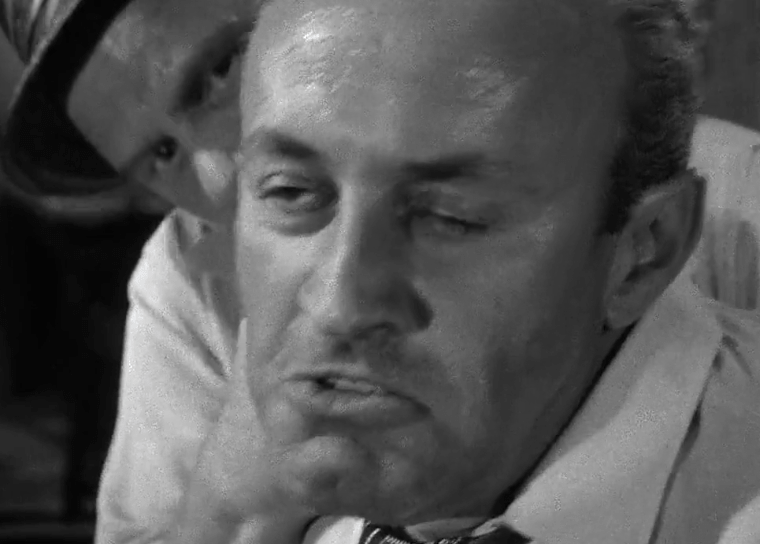
Henry Fonda plays the willing skeptic as Juror number Eight. Only known to us as “Davis” at the end of the movie. All we ever know about his character is that he’s in search of justice, works as an architect and is a father of three. He’s also the only one to question the evidence at first, voting “not guilty” with the intent to examine the facts.

The very little we do know about him doesn’t change the fact that he’s a compelling character. The same can be said for all of the twelve jurors that surround the table. We get just enough out of each and every one of them to understand them emotionally, morally and ethically.

The rest of the weight of the film is maintained by the acting. Each character is contextualized with strong performances by the actors and firm personalities showcased by each of the characters themselves.

I don’t think the film would have been so good without keeping their backstories on a surface level. Part of what makes the conflicts in this movie so interesting, is that for many of them, it’s not a personal conflict. It’s not about grudges, or even about being ‘right’ exactly. To some degree it goes beyond that for all of them.

At only about an hour and a half in run time, this movie isn’t very long. Quite the contrary, it feels just about right. It isn’t too fast, it isn’t too short. While some of the conversations feel contrived or even convoluted at times, that’s precisely the point.

This is one classic film that doesn’t need a re-imagining or a fresh coat of paint. It’s just as wonderful to watch now as the spectacle that it was back in 1957. The fact holds true even to this day that 12 Angry Men holds acclaim for being one of the best court house dramas ever written.

Although I wouldn’t personally call it a drama, I would say it is one of the best movies surrounding the concept of moral high-ground that I have ever seen. I think that says a lot.

It’s also a lot easier to watch emotionally than the 1962 film To Kill A Mockingbird, and a lot less emotionally contentious too. There’s just not a lot of particular (and trust me, they are particular) slurs thrown around in this film compared to others of its era.

Then again, 12 Angry Men has other ways to get the point across, such as rude tempers, and certain characters sticking their feet into their mouths repeatedly. Lee J. Cobb, who plays Juror 3, does an absolute stellar performance playing the “villain” in this movie… if you could really call anyone a villain at all.

At the end of the day, this is a movie for those who want to see wonderful actors taking their characters to their reasonable conclusions without anything else attached.

The set is minimalist at best, and all we really have to entertain us are the characters themselves. There’s no wider reaching story besides the conjecture of the court case, and the conclusion each man comes to.

Then again, the clear distillation of these characters is all you need. Each of the twelve make up a fully fleshed out ensemble cast, even when the individual alone might lack a detail or two. In my opinion you’re just going to have a hard time finding a tighter fitting narrative and carefully woven script in such a short run time… certainly not with twelve characters to flesh out and puzzle together in the way this film has.

The ending isn’t overly happy or overly sad, it’s just an ending. A final, conclusion, a decision and a parting of ways among these twelve strangers that sat in a court case together. It’s as satisfying an ending as we were ever going to get, and much more satisfying than I thought most would ever realistically hope for.

Truly, this is one film that you have to see to believe. A proper masterwork of the actors and the script, perfectly orchestrated to offer the best performance possible. I really couldn’t ask for more than that.

This has been Kernook of The Demented Ferrets, where stupidity is at its finest and level grinds are par for the course. I’ll see you next time.

With your contributions, you make our efforts possible. Thank you for supporting our content. Patreon supporters receive access into our official Discord server, and a few other perks depending on the tier. If you don’t care for Patreon, and don’t care about perks, you can always support us through PayPal too… links below.

Those who join via Patreon get special perks, such as extra content, quicker updates, and more.

Click to Donate

To Our Supporters

Thank you for helping us to enrich our content.

Patreon Supporters:
($3) Little Ferrets: None
($5) Demented Minions: Andrew Wheal.
($7) Fandom Ferret: None
($14) True Blue Ferret: Francis Murphy and Bryan BSB.
($25) Premium Ferret: None.
($50) Round Table Ferret/Fluffy Ferret: Josh Sayer

Reblog of interest: Duality of a Critic (A Personal Post About Iridium Eye and Myself)

Hey guys, it’s Kernook here, and I really think there’s a lot to be said here, particularly in terms of fandom and of course the morals and ethics that reviews hold themselves to. Honestly, it’s worth a read, and if you got the time, maybe you should… just saying…

ospreyshire's avatarIridium Eye Reviews

I usually don’t post on Thursdays or post anything outside of Top 7 lists or reviews (which I haven’t done since late April), but I need to get something off my chest. I was recently confronted about some facts and opinions I shared on my blog. After dwelling on it for a few days, I started to think about myself as a critic and how I use my blog. I wanted to do some positive things with these various anime and film reviews when started this thing back in 2017, but there are some morose undertones I tried to keep hidden. There’s a saying that goes something like “Your greatest strengths can be your greatest curses.”, and I do believe there’s truth to it. Relax, I’m not going to brag about myself especially since I rarely say positive things about myself anyway.

I won’t be making this post too long…

View original post 829 more words

Anime Review: March Comes in Like a Lion

Like Anime, Gaming, and RWBY Analysis content? Check out our other platforms and support our content. Please don’t forget to follow our blog for more content like this.

Click to Donate

You can help support us through PayPal or Patreon.

Follow my blog with Bloglovin

Hey everyone it’s Kernook here. It’s time to talk about March Comes in Like a Lion, a 2016 anime that is both heartfelt and wonderfully animated. The series lands hard with serious undertones and a main character that suffers from extreme anxiety.

It seems like I’m reviewing a lot of series from Studio Shaft recently. That is the same studio responsible for RWBY Ice Queendom as well. However, where that anime doesn’t start off strongly at all, the studio certainly pulled out all the stops on this one.

Honestly, March Comes in Like a Lion is likely one of the few anime that ever really gets to me. That’s because the series is both subtle and incredibly evocative of other shows and series you may have seen before. Yet, where those anime may fall short, this one doesn’t. This anime stands its ground quite well, despite what it has to offer.

Other anime that might come close in terms of impact might be Your Lie in April, but that anime has nothing on this story, at least in my eyes. Sure, March Comes in Like a Lion lacks several of the same sort of punches to the gut that other melancholic anime offer. What we receive in return, remains an introspective piece of fiction worth your time and attention.

That being said, while this is a beautiful anime, the core themes of anxiety, depression, and a sense of feeling lost, it makes it hard to suggest to anyone who isn’t into very thoughtful and analytical anime in the first place. It isn’t anything you need to dive into, it’s not complicated… it just isn’t mindless viewing either.

Directed by Akiyuki Shinbo and Kenjirou Okada, who also worked upon the storyboard, the series was adapted from a manga of the same name. There is also a live action film, if you care to look for wider media within this franchise.

As for me, I’m just going to focus mostly upon the anime. Right off the bat, let’s not pull any punches here. The story follows Rei Kiriyama, a boy who loses his family at a fairly young age. Now, as a wayward seventeen year hold, he has a pretty rough life. When we first meet him, he’s setting off on his own.

Prior to that, he went to live with a mentor and family friend. Due to strained relationships and a sense of failure, Rei decided it was time to live on his own. The game Shogi plays a large role in the anime, because he not only uses it to pay the bills, to him it’s a possible path for his life to take as a professional player… and that’s an important note.

To me, these tiny, but ultimately pervasive details, are what sets this particular anime above a great many others. When it comes to hobbyists and sporting anime, this one is a rarity. You hardly ever see such sad and emotional ones like this. The series has such introspective overtones, that it can seem a bit overbearing on occasion.

That’s fitting, because that’s actually how the characters in this show often feel The story is about finding a sense of belonging and forging one’s own path. Unfortunately, that’s rife with answers that aren’t clear cut for Rei.

He doesn’t know what to do. He has no idea how to come to terms with his past. He needs to find the levity in his life going forward, but that’s a difficult task. His own emotions inhibit him even more when he’s faced with coming to the right decisions about his future.

However, if Rei was the one and only protagonist, this series would fall incredibly short. Thankfully for us, there are three siblings ready to give us a deeper insight into what this series has to offer.

Overall, I think the Kawamoto siblings were a great addition to this otherwise dour anime. Akari, the eldest, Hinata the middling sibling, and Momo who is the youngest lost their parents too. As a family, they managed to get by in life much better than Rei ever did.

The bond Rei makes with them is probably the most endearing, and reasonably “happy” thing, that March Comes in Like a Lion has to offer.

Akari is the oldest, and the motherly overtones as the one to continue to raise her siblings really carries on well for most of the plot. That is a point too, these characters have their own spotlight episodes, separate from Rei entirely. That allows us to really get to know these characters in ways we otherwise wouldn’t.

From a rather sour outlook of school life from Hinata, to Akari’s need to keep the home running smoothly and raise her siblings, there’s a lot going on for these three characters. I won’t spoil too much, as I do find these women more interesting than Rei a vast majority of the time.

There is a little something I should make note of, though. Momo is quite young, and she acts her age. If that prospect annoyed you in Sweetness and Lightning, or particularly young characters aggravate you in general, it’ll likely annoy you here as well.

That being said, without her particular brand of levity, the anime might be considered too dark. The series kind of needs Momo. Without her, scenes that would be naturally infused with the joyous mind of a small child would cease to exist.

Really to me there is only one major and pointed downside to this anime, and that’s the Shogi matches themselves. If you want to learn about this game, this is the wrong anime. If you don’t know how to play Shogi, and have no concept of the rules for the game, you’re going to feel lost.

March Comes in Like a Lion won’t explain the rules to you in a way that’s meaningful, and it won’t attempt to catch even a novice player up to speed, either. You’ll be on your own, and that can make some of the matches feel boring overall.

A vast majority of rules and confines of gameplay are hand-waved away. So little is explained, glossed over at best. At worst, it makes little sense for someone who hasn’t played the game.

However, it’s not really about the game, it never was. It’s about the characters playing the game. That introspection I spoke of earlier comes from the matches in this series, and the way the characters themselves feel at that moment.

At the end of the day, that’s what the entire story of March Comes in Like a Lion comes down to. It isn’t just about their daily lives, it’s not even really what I would call a slice-of-life show. Rather, it comes down to how these characters really feel. None of the characters in this series are entirely unscathed. Everyone has some kind of trauma.

Sometimes that trauma is subdued or hidden beneath a happy facade. Other times you’ll have a character like Rei, who refuses to hide his own emotional scars, having no need to pretend he’s better off than he is. Several other characters do try to hide it, or at the very least, endure it.

From the whimsical Momo, to the completely depressed Rei, the characters run the gambit of emotions. You’ll notice I didn’t touch on Hinata’s story line here. That’s because it is one of the darkest besides Rei’s own. For me it is also one of the most infuriating and depressing, as Hinata faces bullying from her peers and those around her in a way that goes undressed by the adults around her.

With all of that said, I don’t know if you’ll enjoy this series. I don’t even know that you’ll sit there and think it to be a masterwork of narrative story telling….

To be fair to the critics of this show, there are moments that seem a little contrived, and others that feel a little more heavy handed than they needed to be. I think part of that has to do with the name itself, and the poetic narrative surrounding it.

The month of March has plenty of ways to analyze it. In Thomas Fuller’s 1732 compendium, Gnomologia: Adagies and Proverbs; Wise Sentences and Witty Sayings, Ancient and Modern, Foreign and British, we receive once such analysis. The full reference is this: “In like a lion, out like a lamb” and I’d say that’s a very good way to describe this particular anime too.

Sometimes it’s weaker for its additions, and other times it’s very bold for covering them. Either way, I can’t help but love March Comes in Like a Lion. If you like deep, heavily introspective anime, maybe you will too.

This has been Kernook of The Demented Ferrets, where stupidity is at its finest and level grinds are par for the course. I’ll see you next time. Please be sure to follow the block and check out our other platforms for more content like this.

Click to Donate

You can help support us through PayPal or Patreon.

Meanwhile, check out some of our other great content below.

Movie Review: The Dark Knight

Hey everyone it’s Kernook here, coming at you with a review of the Christopher Nolan movie The Dark Knight. Over all this 2008 film is a powerhouse in several different ways. In my opinion, it isn’t your typical “super hero” movie, and in fact tends to be far from it.

Beyond bombastic, high octane moments, we get a real struggle of ideology here. This curiously haunting film is best enjoyed when you’re willing to think about its core themes. It takes its origins all the way to the next level, and sometimes in more ways than one.

The Dark Knight is a movie worth thinking about as the credits roll.

One day, I may do a strict and firm analysis of this masterclass movie. The narrative alone is almost perfect to do strictly that, but sadly, today isn’t that day. This is just a simple review.

If you can’t tell by now, yes I do happen to like it. The film is mired in tragedy though. I’m alright with that. When a film hits so hard without being too complex there’s just a lot to like about it.

About the only thing I don’t like about it, and mind you this is just a minor pet peeve, is that some of the choices when it comes to lighting really can make Batman look kind of stupid. That’s not the fault of the actor, and really I can’t even blame the costume.

It literally is the lighting and shot composition, and nothing else, but I do feel the need to point that out. Depending on the lighting during a few very serious scenes, it can be hard to take those scenes seriously because Batman’s costume doesn’t mesh well with that particular shot composition, and it ends up making him look a little goofy… the image below is a great example.

One of the key scenes that poses a problem is the interrogation scene. There’s just a moment or two that can really snap you out of the immersive experience because the light overhead becomes a distraction instead of “mood setter”. Instead of helping to make Batman look intimidating, he looks like… well… stupid.

Aside from tiny nit-picks of that nature, where vast improvements could have been made with very little effort (say the light flickers whenever he bashes on the table, for example) this movie really is something to praise.

The acting performances, direction, writing, and wider universe has a nice beefy story to tell. It isn’t convoluted, either. This film, might be what some would call a “comic-book movie”, but it surely doesn’t feel like one.

It goes deeper, and becomes far more emotionally complex than most.

The Dark Knight is not a bog-standard tale of good against evil. It isn’t just a mindless action flick, either. Batman is the “good guy”, yeah sure he is. The Joker is “bad guy”, yeah once again, sure he is.

That’s about where the similarities stop. The film enjoys twisting inward on a grittier “soul-searching” kind of quest. The Joker is more than a villain here. He’s still a madman, but the film digs into that, and studies the reasons why.

Thematically, the movie centers around two distinct dynamics; moral ethos and the fragility of the mind itself.  Heath Ledger, plays the Joker and he does a phenomenal job. Honestly, it’s one of the last films he played a key role in.

As a quick moment of reflection, on January 22 of 2008, Heath Ledger passed away. Therefore, in my mind, The Dark Knight is probably one of the most iconic roles he ever played… you might be asking yourself why?
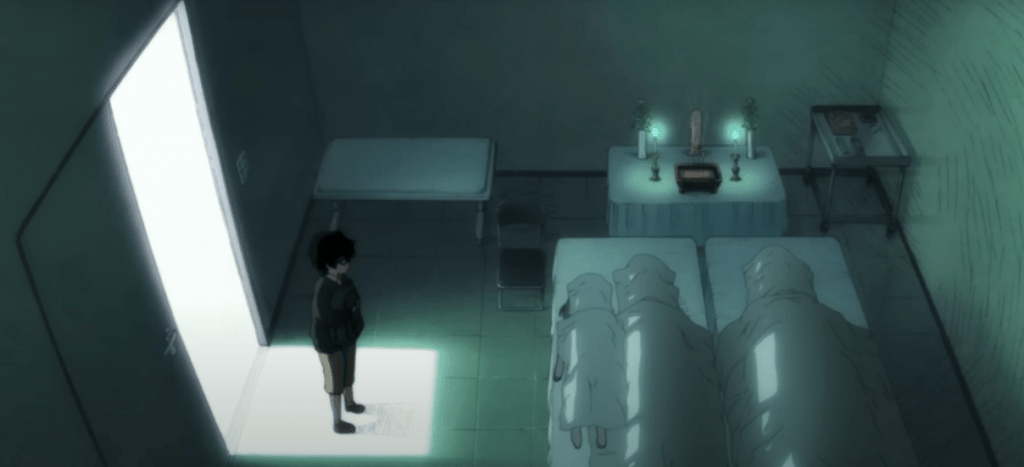
Well, his passing heavily impacted the promotion of the movie. I’m sure I’m not the only one who went to see the film at the time, just to see him in an acting role one last time… and really, movies like these aren’t ones I typically go and see on the big screen. I was glad I did, though.

On a slightly different note, Christian Bale plays the role of Batman. He’s alright, I’ve got no complaints. He lands a solid on screen performance and plays his role well. Would I say he knocks it out of the park? Not entirely, but he does just fine for what the story needs him to do.

That’s honestly the key to what makes this movie so amazing. It would have been all too easy to give Batman more power and leeway, because he is the “hero”. Christian Bale toned that sort of iconic ideology down in very distinct ways, adding a layer of complexity. This does two things.
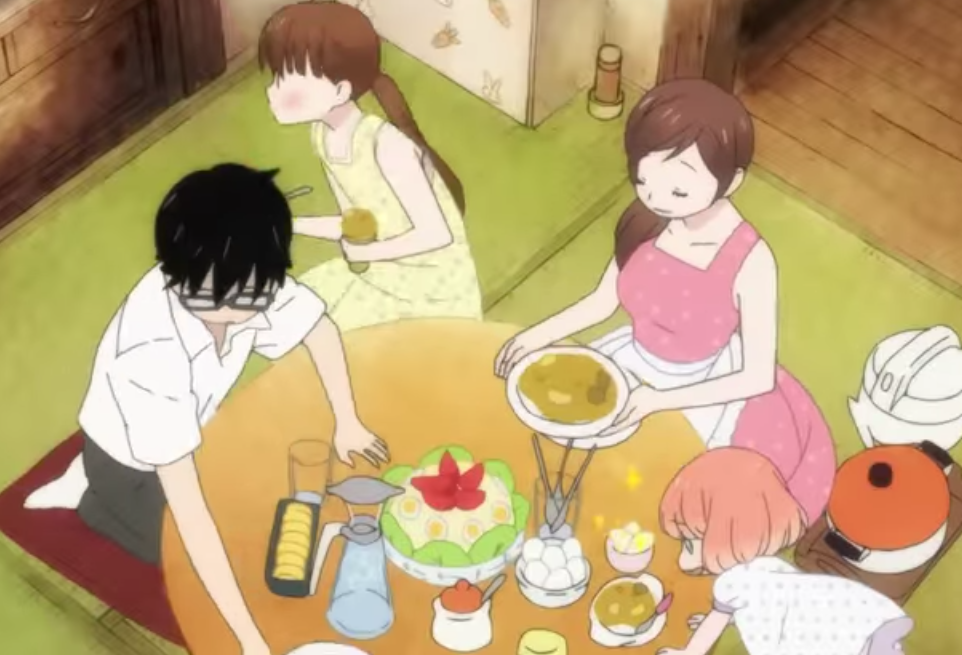
First it makes our beloved Joker a much larger threat over all. Secondly, it makes Batman more compelling by pure default. When I say I’d like to do a strict and firm analysis of this movie one day, that’s because Batman and Joker have such an interesting and unique power struggle in this movie. Our titular hero doesn’t take too much of the limelight, only making a spectacle of himself when he absolutely needs to.

That’s exactly what Batman should do, and it’s exactly what he does in this movie.

Special effects, bombastic moments, super hero and villain aside, this is a story about humanity. Both dramatic and heart-felt, there’s just an emotional journey here. The story truly feels sophisticated, or at the very least, it feels earnest.

It doesn’t get too far up it’s own ass, unless of course that particular moment is meant to be viewed that way.

We’ve got the Joker here, for goodness sake, could we really expect otherwise? He’s nothing if not acerbic on a good day, never mind when he starts concocting the worst of his evil plots.

I do like that beneath all of the emotional grit, that there is a satirical bent to some of the scenes. It isn’t flashy, or “in your face”. It just happens to be there. You either take it, or you leave it…

You know, a lot of the film feels that way. Monotone moments and daily grinds clash against ciaos and unsound minds. That juxtaposition is what forces you as a viewer to pay attention to the tiny details. The movie doesn’t seem to care if we like what we see, and in this case I truly respect that kind of flippant nature.

The Dark Knight has a simple plot resting over the far more emotional complications. The Joker is attempting to humiliate Batman and expose his secret identity. That’s it… really… it is that simple. The joker strives to make a point, and Batman has to deal with it.

That’s why I’m not going to focus on the plot here, the plot isn’t the point. The characters are the point, the world building is the point, the players and pieces involved on the strategic chess board… that’s the point. The plot is just the simple overlay over the top of all that, tying these details together.

Any die-hard Batman fan can tell you, that’s always the logic used between Batman and Joker in any iteration of the series. Here that ethos is displayed in one line, both in the trailer, and in the movie. It is so keenly displayed as a core ethos of the film that it deserves mention here.

“You either die a hero, or you live long enough to see yourself become the villain.”

Over all the film is good, and it’s worth a watch. I’ve given it a lot of praise, but I should offer one last tiny thing I noticed. As enamored as I was the first time I saw it in theaters, I hadn’t picked up the movie to watch a second time until writing this review.

I have no idea why I didn’t feel the need to see it again, only that I felt satisfied seeing it the first time. I can completely recall a firm and deep contentment when I exited out of that theater in 2008.

With that in mind, I have to admit, I wasn’t quite as enamored with the film a second time around. It felt lesser, in a way, on a second viewing. I almost as though it wasn’t meant to be watched a second time. I believe that’s just a personal stance I take mind you.

I think the movie loses a fair bit of impact on a second viewing in a way others just wouldn’t. I don’t really want to watch it a third time either. That’s okay though. I think I got everything from the experience that I wanted the first time.

This second viewing all these years later didn’t have to matter so much. I wouldn’t call it a collector’s movie. It doesn’t belong on my shelf to watch over-and-over again. Frankly, I don’t want it to, and I certainly don’t need to unless I’m going to analyze it.

My point is, give it a watch on a streaming service before you just go out and buy it. One viewing may be enough for you, just like it was enough for me.

This has been Kernook of The Demented Ferrets, where stupidity is at its finest and level grinds are par for the course. I’ll see you next time.

Click to Donate

You can help support us through PayPal or Patreon.

Meanwhile, check out some of our other great content below.

RWBY Ice Queendom Episode 1 Review

Hey everyone, it’s Kernook here, finally ready to begin reviewing the RWBY Ice Queendom series properly. In all honesty, it was off to a shaky start when the first three episodes released as promotional hype.

You can read all about my RWBY Ice Queendom first impressions here. That’s just a broad look at the first three episodes, mind you. For now let’s dive into the actual and proper review, shall we?

To begin, I want to say that the first episode is as rushed as it could possibly be. I don’t think anyone should go into this anime as their first experience with RWBY. It isn’t exactly what I would call a strong start for those unfamiliar with the main series.

You see, we knew going into Ice Queendom that the first two episodes would rehash a lot of plot elements from Volume 1. My god, did it ever do that… but I’m going to be honest here. It is super fast, and it’s not for a non-fan to try to absorb.

No newbie can hope to truly understand the depth of what is actually going on without having seen Volume 1 of the original show first… so if you’re going to watch Ice Queendom, awesome!

Just… uh… watch Volume 1 first too, okay? I promise if you did feel a little lost, don’t be too concerned… even I felt a little lost, but we could have a diamond in the rough here, so let’s not be too hasty.

That said, we did get some pretty stellar moments, and we got some clunky ones. Spoilers ahead, be warned

If they were going to re-hash volume one, they should have done it from scratch. Enough is changed in this iteration to argue a complete and total overhaul. Here’s the thing, the first volume of RWBY is only two hours long. That means they could have rehashed all of what they needed to do in six episodes (no I’m not joking). They should have done that.

Take for example the Weiss battle from the RWBY White Trailer and compare that fight to this one. The battle is cleaner in Ice Queendom for sure, but it lacks some of the emotional character development we get from the Weiss Trailer and her introduction song. Also, the battle feels just a little rushed and choppy. Thanks to the break-away scenes with Blake and Adam running around doing a separate fight entirely, the combat feels very segmented.

Winter’s inclusion so early in Ice Queendom is a welcome addition, but it is just a little jarring without context… Winter wasn’t in the RWBY White Trailer and didn’t make an appearance until a later volume. The same is true for all the Schnee family.

It is very nice that some of these plot points were touched on in the first episode, but why not slow down and really contextualize it? I don’t understand the need to rush, and that is a bit annoying.

I do like this fight, though, and I think Studio Shaft had the best of intentions. It was merely that those intentions fell a little flat. The same is effectively true for a great deal of the first episode during the re-hash scenes. They’re a bit cobbled together, demanding you have some concept of the show to start with, and not particularly caring to slow down if you don’t.

That said, there is a highlight moment every now and then when Ice Queendom extrapolates where the original RWBY series never does. For example, at least Taiyang isn’t strangely absentee this time around, which is something I’ve brought up in my character analysis of him. His lack of development in the original series really paints him in a really bad light.

It’s nice to see him as the father we knew he could be, and not the complete jerk-ass father that the original series implies him to be. Again, super nice gem here. Whoever had the mind to add this in and push it through should get a standing ovation.

Taiyang’s scenes with Yang, and later Ozpin, really help to flesh out what Volume 1 failed to really cover earnestly.

However, a few good narrative calls doesn’t help the show when the rest of it can be somewhat crammed together at such a break-neck pace. There’s little room to breathe.

This may sound harsh, but I’m not trying to rip on the show here.

I’m just pointing out that there are some really good choices when the creators choose to take the time to flesh things out. When they do, it’s amazing. When they choose not to take that time, it’s obvious. In some ways that’s very annoying to me as a fan.

Ice Queendom is “canon adjacent” or so they call it. That means some canon remains the same, and some become different… when you do this, you need to be clear about what changes and how it changes.

You can’t be vague about this. Many of us aren’t coming into the series with fresh eyes. We’re coming in as fans from the original show. We have preconceived notions and biases that needed to be challenged under these new ideologies.

In any case when the fights are this clean, they’re pretty good. If you just want action with no combat choreography or subtext, this will do you just fine. It feels fun and it’s entertaining, that’s for sure.

Once again though, welcome to my biases at play here. I’m a huge fan of the original show, there is a lot to live up to here in terms of combat. This show has big shoes to fill and I’m not entirely sure that it could have hoped to live up to the original fight scenes.

If you want actual choreography that sticks with you and hits home, this just won’t hold a candle to a lot of the battles in Volume 1. Sorry, but for me it holds true. If you don’t mind losing some of the charm of choreography and just want a good brawl, this will do just fine as it is though… it’s serviceable.

In losing some of the charm in the fights, we do lose a little something in the characters too. That is the main issue here.

All of the characters feel watered down and distilled in ways that just pull me out of the experience. Yang especially feels so watered down I don’t even recognize her as Yang anymore. We just don’t have the time with her to really get a sense of who she is, what she wants, or how she feels as an aspiring huntress.

There is no combat at the bar scene to really amp up her temperament, or showcase some of her poor decision making. To highlight my point look at these two comparison photos.

Let’s be real honest here guys, which one best represents the Yang that’s adventuresome, ready to throw down in a fight? Yang is a complicated, deep character. She spends all of volume one trying to get Ruby to go out and make friends, find her own way, get on her own team, and become a huntress. That’s not the Yang I see portrayed in Ice Queendom even slightly… she doesn’t get enough screen time to get that portrayal.

Now, that’s not to say I expect Yang to be the same… or any character for that matter. At this point in time, I just don’t know who she even is as a character. I’m a huge RWBY fan. I should have a very firm idea of who Yang is, but she’s not really anything at the moment.

I want to know who these girls are in this iteration of the show, and the show itself doesn’t seem to want us to know.

It’s like that with all of the characters to one degree or another, even Weiss… considering Weiss is supposed to be the focal point, that’s a problem here. I’m only using Yang as just the most notable problem with this in the first episode… and I know it will be a problem with JNPR in episodes two and three because I’ve already seen those episodes.

You can’t scream canon adjacent in one breath, and fail to really take the time to flesh out these characters in the earliest episodes. I just don’t think that’s the best way to endear fans to a series that we’re not coming in completely blind on.

So my final thoughts on RWBY Ice Queendom are simple. Let’s wait and see. It might be a trash fire, it might get really good. As of right now, there’s just no way to tell. There are enough tidbits to make me feel like we’re going to get something good, and enough red flags to have me concerned. Either way, I guess we’ll have to wait and see.

Another take on episode 1 can be found here, reviewed by DoubleSama. I’m not entirely sure that they have seen the original RWBY series, but I do think their take adequately describes some of the confusion a person might feel if they are going into RWBY Ice Queendom entirely blind, or rusty on the wider show. That’s why it might be worth it to give it a look.

This has been Kernook of The Demented Ferrets, where stupidity is at its finest and level grinds are par for the course. I’ll see you next time.

With your contributions, you make our efforts possible. Thank you for supporting our content. Patreon supporters receive access into our official Discord server, and a few other perks depending on the tier. If you don’t care for Patreon, and don’t care about perks, you can always support us through PayPal too… links below.

Those who join via Patreon get special perks, such as extra content, quicker updates, and more.

Click to Donate

To Our Supporters

Thank you for helping us to enrich our content.

Patreon Supporters:
($3) Little Ferrets: None
($5) Demented Minions: Andrew Wheal.
($7) Fandom Ferret: None
($14) True Blue Ferret: Francis Murphy and Bryan BSB.
($25) Premium Ferret: None.
($50) Round Table Ferret/Fluffy Ferret: Josh Sayer

Top 10 Naruto Characters

Hey everyone, it’s Kernook here… I’ve always loved the Naruto universe with its compelling cast and complex ninja world. However the cast is so large that narrowing down a top ten list isn’t easy. I love so many of the characters for an assortment of reasons, so this is my list. It might not be yours. There’s also a caveat that should be kept in mind.

None of the core cast of the rookie nine were included in this list. That would be unfair, because so many of them are beloved fan favorites for myself included. I had to prune this list massively, as I doubt a gigantic list of top 50 or top 70 Naruto characters would go over very well… plus it would be very long to write.

With that out of the way, let’s dive into the list.

#10. Jiraiya

The resident pervert sage ranks number ten in my list because he’s honestly one of the characters that really sticks out to me. All of the Naruto characters have some sort of fatal flaw, none of them are perfect. That’s the hallmark of good writing. The man is a pervert though, make no mistakes about it. His love for writing erotic books aside, he’s earnest and he’s kind.

Jiraiya is a complex man with simple pleasures in life, and he’s old enough to carry the perspective needed in a good mentor. As a sage, he’s probably not the best example of the discipline or demeanor. However, there’s no question that he is a wonderful mentor and friend to those that need his support.

He ranks number 10 because his death is literally one of the saddest in the series for me. It’s secondary only to Asuma Sarutobi. Quite frankly even after Jiraiya is gone, he plays such a paramount role in Naruto’s development that he just needs a spot on this list.

#9. Iruka Umino

I honestly believe that Iruka is one of the most earnest characters in the entire series. He’s devoted to his village, and to his place in the ninja world in a way few others are. He’s a middling villager in almost every way, and he’s just fine with his lot in life. Given his own sad past and how it reflects Naruto’s own, there’s something to be said for a guy like him.

We can only really appreciate the tragic stories of others by looking back on where they came from. A lot of prominent youths in the series come from broken homes, left as orphans to fend for themselves. Iruka is one such character who grew into a well-adjusted adult.

For all of the characters achieving greatness, showing off insane feats at every turn, it’s nice to see a regular guy. He’s just living out the average ninja lifestyle the best way he can, and really I’ve got to give him a lot of credit for that.

#8. Asuma Sarutobi

This guy has a story for the record books. A man does his job valiantly, only to leave behind a woman he loves, and his unborn child. His students surround him in his final moments, rain falling from the sky as he doles out his last words. Asuma has one of the most memorable deaths in the Naruto series…

Here’s the thing, when it comes to the wider universe, this series heavily focuses on legacy and the passing of the torch from one person onto another. Youth grow up, inheriting the responsibilities of their successors. Passing on those lessons becomes intrinsic to the “ninja way”, and there’s just a lot of heart and soul you can’t fit into a few simple paragraphs hoping to do it justice.

There is no greater example of this than Asuma’s bond with Shikamaru. To me, that is the absolute pinnacle of what the core themes of the series attempt to convey. Found family and honor clings heavily upon the young upstarts aging into their positions in the village…

Facing down the difficulties of childish dreams slowly taken away, and replaced by adult ambition. Asuma to me is one of the most tragic characters. Outcomes like his are what lead to so much suffering among the hidden villages. It’s also what breeds the war and continued suffering of countless others.

If Iruka is one of my favorites due to his earnest average-joe lifestyle, then Asuma is one of my favorites because he represents the average casualty among villages and just how deeply it impacts those closest to them. We see on screen exactly what that does to the people he inadvertently leaves behind.

#7. Karui (Later, Karui Akimichi) 

This was a difficult choice, because when it comes to Karui and Temari, it’s a toss up of what style of bad-assery you like better. Both of these women refuse to take crap from anyone, and both are self-assured. Ultimately, I settled on Karui because she’s not as charismatic, and she doesn’t even care what we think of her.

Beating Naruto bloody might have been a bridge too far, but that just goes to show how tenacious and ruthless she is. When she feels she has to act, she does. Temari is just a bit softer, and a tiny bit more timid, which is what made her lose the spot in the running.

You have to take Karui as she is. She won’t tolerate anyone doing otherwise. She won’t conform, she doesn’t want to. Her loyalty can’t be bought, and her ability to see the value in others comes from a very personal place. What I absolutely love about her character is that she eventually finds romance with Choji, and the romance is a mature thing from the get-go… neither of them act like profound idiots… beyond that, it gives all the proof we need that Karui has a gentle side.

So many stereotypes flip on their head when Karui is on screen. In a series like Naruto, that can be pretty hard to come by. So many of the core members within the series are taken up by women who can’t seem to figure themselves out… or when they do, it isn’t on firm ground.

Karui knows who she is and what she wants out of her future. She’s also one of the few women who shows romantic interest because it empowers her own personal sense of pride and self-worth. In a series where young, emotionally independent women can be somewhat hard to find, Karui is a breath of fresh air…

But, like I said, Temari isn’t too far removed from that, either. In that way, she’s certainly an honorable mention not soon to be left out or forgotten.

#6. Might Guy and Kakashi Hatake

Call this a cop-out if you want, but in my opinion you just can’t have one without the other on any character list. You also can’t place one of them above the other in my opinion. That diminishes the bond these two share. They’re rivals, but they’re also sincerely good friends. The connection of their male bond is so incredibly important for so many characters in the series. It gives us viewers context for so many key themes in the show.

Male bonds are a driving factor for so many things the young men in the series do. Separating these two is just impossible to me. It would be like having a Naruto anime without Sasuke… you just can’t freakin’ do it… and that’s why these two need to be on the list.

It’s the entire point of the show… the forged bonds that last the test of time. That’s what the series is about. That’s the core ethos.

These two characters showcase this bond when it’s in synergy. There’s a brotherhood here. When both of them are on the same wavelength, the two of them harbor the same sort of profound loyalty and companionship that Naruto has for Sasuke.

I just can’t overlook that, not for anything…

However, that’s why they’re not in the top five, that wouldn’t be fair either. As important to the series as these characters are, and as deeply compelling the friendship they keep is, it’s only fair I place them in the number 6 spot.

#5. Killer Bee

It’s funny to me that when it comes to Naruto’s long list of mentors Killer Bee stands out on top for me, but it’s true. I really do like Jiraiya, but there’s just something so unassuming about Killer Bee. He’s fun to watch, charismatic and goofy at times, but he knows when to get serious too.

Honestly, I love this character because what you see is what you get with this guy. Much like Karui, you’ve got to take him as he is, and if you don’t that’s not his problem… he doesn’t care.

He’s been through the ringer, there’s some real grit and trauma attached to him. He doesn’t let that history get the better of him. As a Jinchūriki, he’s the most emotionally well-rounded when we first see him on screen. He has such a fundamental role in the series, and also the one so easy to overlook. Yeah, it’s true, he’s always spouting off nonsense and driving everyone crazy… still, if he weren’t so well respected, he wouldn’t be where he is when he enters into the show.

Common sense does not always equate to wisdom, but Killer Bee has both. He knows what it takes to earn the respect of those around him, and exactly how to keep it. For a Jinchūriki that’s not an easy road. We’ve seen what happens to Naruto and Gaara when communities turn their back on one.

Killer Bee walked that path too, but he did it with a smile on his face and he continues to do so even when the chips are down. Killer Bee is just an uplifting guy all around.

What isn’t to like about that?

#4. Nagato (Pain)

Once again, we turn to the deeper ties that bind these characters together. Pain’s character accomplishes 2 things. Firstly, he brings the full ramification of the Akatsuki’s story to a boiling point. Secondly he forces viewers to ask themselves deeper questions about the series as a whole. There is, in a way a “circle-of-life” vibe from this true and iconic villain… even if it is the darker, grittier sort.

In a world where war tarnishes what characters love most, and rips innocence away from them, Nagato provides a rather insidious bone to chew. He’s as tragic a character as he is completely dangerous. Seeing his true form, a withered husk of a person really hits home in ways so few of Naruto’s villains do.

He trained under Jiraiya in his younger days, but sadly, that peaceful philosophy became warped and sent askew. Although Jiraiya had spent the time to teach many things, all of those lessons became corrupted entirely by years of atrocities… death, war, emotional hardship and the continued loss of community and innocence.

In a way, you might say this man became Jiraiya’s greatest failing, and in another way turned into what I believe to be Naruto’s greatest foil…

#3. Itachi Uchiha

You know what they say. Assumptions make asses out of people, and it made an ass out of Sasuke. First assumed as a villain, Itachi Uchiha was a guy that completely massacred the Uchiha clan, aside from his younger brother. However, that’s a slanted view… a child’s view of something much larger and far more complicated.

If growing up is part of the core ethos in this series, so is learning to see the truth for yourself. To gain a clearer insight, and forge one’s own opinions based on the facts presented. Sasuke later finds out that his brother is no sick and twisted murderer.

He did kill the rest of the clan, but that was only to protect the Hidden Leaf village, and it was something he did in service to it. Even the Hokage knew what had to be done, and Itachi did exactly that.

What makes these bonds of bloodline and vengeance so entirely heartbreaking is that Itachi had no intention to truly harm his little brother with his actions. Morally bankrupt or not, someone had to do it, and Itachi took up the task… in a way it ruined his spirit and forged him anew in ways he least wished for.

I will never forget Itachi’s last apology as he’s bleeding from the mouth and facing his own death. For countless episodes there are flashbacks, and promises of later. Sadly, later never comes for these two brothers. Instead, it’s only a final apology and a goodbye… a death and loss that holds no comfort or even vindication. All that Sasuke has left is an understanding that he didn’t know a single thing, blinded by his own grief and anger as he was, there was nothing he could have done.

Itachi is without question one of my most favorite characters that as a fan, I never had the chance to understand. Having viewed the entire event through Sasuke’s eyes, I never had the chance to really get to know Itachi until it was too late and he was gone…

The series played this one close to the chest right up until the end, and they did a damn good job of it. Itachi sits at number 3 because there is so much more to this character than I ever gave him credit for. That sticks with me to this day…

As long as i continue to be an anime fan, it probably always will.

#2. Zabuza Momochi and Haku

Yes, we’ve got another two-for-one deal here. Sorry, it just needs to happen, because you just can’t have one without the other. It just cannot work for me. What makes these two so interesting is the bond they have for each other and the true and imminent threat these two pose to the rookie members of Team Seven.

These two characters are the first real time that we’re shown what kind of actual danger these kids are in, and just what happens when adults cannot keep them safe or protected. There’s a cruelty and hardship laced down deep among many of these characters, Zabuza is one of them, Haku is another…

However, for many of us, these were some of the first characters to value their lives not based upon their own self-worth, but rather the worth of another found within them instead… and there was nothing heroic about the way either of these two characters chose to think.

Yet, in his dying breaths, Zabuza makes his way bodily over to Haku and spends his final moments reflecting upon everything that he ever was, and everything he tossed away. For the rookies, it’s their first real taste of this dark and gritty world that they live in. For us viewers, it’s the first time we’ve got to contend with the truth.

This moment did one thing. It promised that we were going to have to swallow down some pretty uncomfortable realities. We had to accept that no, this really wasn’t a kid’s show, and it wasn’t all fun and games.

In these moments nothing could be sanctimonious anymore. We were going to lose characters we enjoyed, and not all of them would be hard and grizzled adults going out in a bad-ass blaze of glory… no, sometimes it would be a death that could have damn-well been prevented, and in all honesty damn-well should have been.

After this battle, there’s a burial. Although it isn’t the hardest hitting one that we run into across this series, it is one of the first that really made us think about what the show was going to send at us next.

Mark my words; if Zabuza and Haku were not so wonderfully written and conceptualized as characters, the early establishment of so many themes would have entirely suffered for it.

This line-up is a start-studed one to be sure, but how do you beat these guys in my book and take the number one spot on this list? Good question…

#1. You Don’t! The Hidden Villages Take the Top Spot!

Hidden villages are their own character within the show, translucent and on the back-burner but no less dynamic. There’s an intuitive understanding among those that live within them, and that understanding forces so much of the good and the bad within this wider ninja world that we fans enjoy.

Hear me out here, the series wouldn’t be so good if we didn’t get to have a taste of the complex and diverse ideology found within these villages. Some of the best and beloved moments come from a cast of characters that come from far away places. Be it the battle Gaara has with Rock Lee during the Chunin Exams early on, or some of the saddest battles in the series later on, we get a taste of it all.

What makes these characters so prolific are the communities and cultures they hail from. These identities can’t only come down to the characters we follow on the screen, but the masses that we don’t see. Naruto and Gaara want to be Kage simply because of their villages and the ambitions they have… to belong among them.

I am always taken aback by the scenes that truly highlight the wider world, the changes it’s made for the better, the faults it still has… the world building in this series is absolutely a master craft in and of itself.

The countless peoples inhabiting this world are what breathes real life into the fights. When villages are on the verge of ruin and war takes so much away, the villages still persist and persevere.

So much about this series comes down to protecting what is valuable, and mourning what is lost. To fight for the things that matter, and to let go of the things that don’t. To love despite pain, and to trust despite war. These themes are only made so incredibly powerful, because we get to experience the realities of a village attacked so brutally.

We are forced to see the cold and hard realities for those that call themselves ninja. Neji says it best, when he says that Hinata is prepared to die for Naruto. That he holds more than his own life in his hands.

This, I believe is true of all ninja to a point. To choose to kill and cultivate more war is the end result. Years of bloodshed continue to harbor old grudges. So much if that could be avoided, and is shown to be mitigated once this new enlightened generation matures to take center stage.

From characters like Nagato and Jiraiya, to those like Neji and Itchai, those who are raised to become a ninja are at the mercy of the world they’re thrown into… and there is really little mercy to be found.

This scene would not be so powerful if it was only Neji that died. Many nameless characters lay dead and each one meant something to someone out there. That is implied, but Naruto knows it to be true. He is horrified to see these things around him, and these atrocities continue to occur in ways he just cannot abide.

The villages, the peoples, and the journeys all of the characters take really rely on where they came from, who impacted them the most. What lessons were passed down during their formative years are the ones that will forge either peace, or more bloodshed.

That is something only the villages do, for better and for worse, and that is why they take the top spot on this list.

From the little ramen shop that Naruto frequents, to the barbecue Choji enjoys, and the shogi matches Shikmaru spent his childhood playing, all of the characters we come to care for learn one thing.

You always protect the “king”, and that metaphor will never die, nor will it ever become weak or overstated.

Then again, this is my list. you may disagree. You’re free to do so. No matter what your opinion might be, the hidden villages, with their diverse cultures and complex mindsets take the number one spot for me.

This has been Kernook of The Demented Ferrets, where stupidity is at its finest and level grinds are par for the course. I’ll see you next time.

With your contributions, you make our efforts possible. Thank you for supporting our content. Patreon supporters receive access into our official Discord server, and a few other perks depending on the tier. If you don’t care for Patreon, and don’t care about perks, you can always support us through PayPal too… links below.

Those who join via Patreon get special perks, such as extra content, quicker updates, and more.

Click to Donate

To Our Supporters

Thank you for helping us to enrich our content.

Patreon Supporters:
($3) Little Ferrets: None
($5) Demented Minions: Andrew Wheal.
($7) Fandom Ferret: None
($14) True Blue Ferret: Francis Murphy and Bryan BSB.
($25) Premium Ferret: None.
($50) Round Table Ferret/Fluffy Ferret: Josh Sayer

Music, anime, games, movies and more. Where stupidity is at its finest, and level grinds are par for the course.