Hey everyone, it’s Kernook here. I’m here to tell you all about the “The Demented Ferrets“.
As of right now, we have three members. Kreshenne, Ruka and myself (Kernook). So, let me tell you a little bit about what we do
Our members:
Kernook (Kern for short) – A little bit of everything, and the one who usually deals with the social media/community end of things.
Kreshenne (Kresh for short) – Streaming (will branch out later).
Ruka – Our official artist (art and blog posts).
This is the finished video regarding the script. It is written, edited, and read aloud by Kernook of “The Demented Ferrets”. You can watch the video on this blog and on YouTube. I hope you enjoy the content.
Minako and Rei from Sailor Moon are without a doubt a solid character pairing, even if they aren’t exactly cannon across all of the Sailor Moon media. Why do they stand the test of time? Simple, because their romance comes natural to those who see it within the subtext.
In popular media, when I think of reasons to sail any ship, it’s not the large cannon elements that come to mind. It’s the tiny things. Moments when characters might brush their fingers together when exchanging an object. Times when short quips and witty dialogue carrying a greater subtext within a scene.
Know what other ships sails really well because of this? Pretty much any ship containing at least two of the main four girls of RWBY. I ship nearly every combination because of how versatile they are.
Small moments make a ship, that’s a fact. It is particularly important if a series isn’t centrally focused on romance. Then the smaller moments matter even more. Long running series with advancing story arcs might not spend a whole lot of time focusing on romantic overtures. Instead, they tend to spread large romantic elements few and far between. Sometimes, the best ships don’t have any big moments at all. Sometimes they only have a series of small elements to craft a greater narrative. In this instance, subtext quickly becomes fan fodder.
I look no further than NCIS as an example. Tony and Ziva, or “Tiva” as the ship is named by the fans. These two are strong contenders in shipping because the slow burn is as hilarious as it is dramatic.
Romance between these two is the show in spades, but, it walks a fine line. The pairing never consumes the show. Instead, the fans consume the romance, looking for the little details hidden between the subtle character interactions. These two aren’t obviously a cannon couple until much later in the series. However, this didn’t stop fans from sailing that ship early on. It was only through implication and subtext that the relationship held any ground, at least, at first.
I think that personally this is sometimes the better approach. Fans have a gift for running away with subtext. Collective fans like making stories of their own. When moments are rare,it’s no surprise that fan-fiction itself becomes a selfish endeavor.
Fans meet their own desire to see character romance carried further than a series could have taken it. This is true for almost all media that has an active fan following.
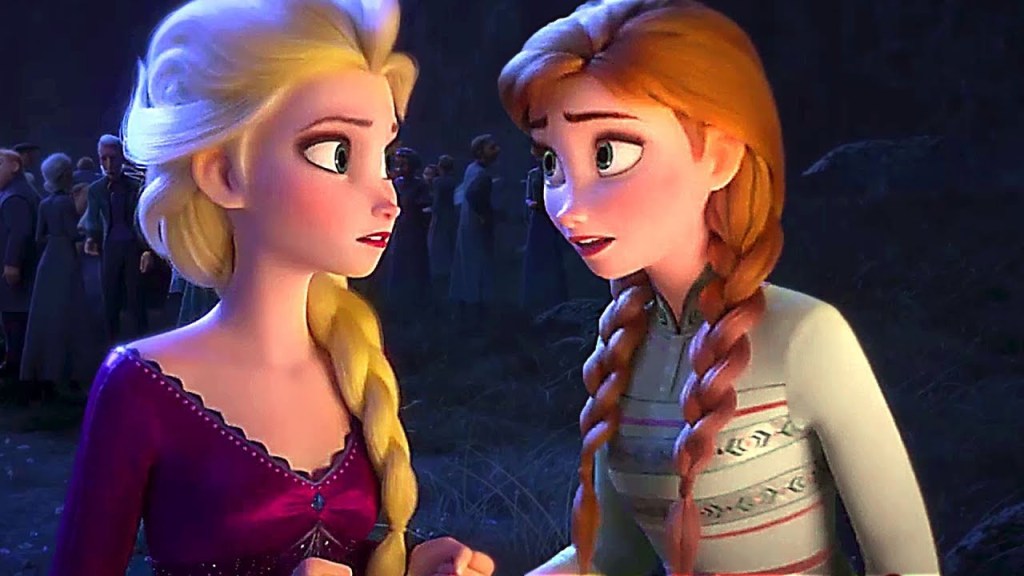
Depending on the character pairing, strange ships sail fast. I think of the romantic pairing of Elsa and Anna from Frozen being a prime example of fandom running amok. Seriously, fans ship these two hard. I don’t see the draw in it personally, but it’s in the fandom for sure.
There is no conceivable way that Disney would have imagined their older fan base deciding to turn the sisters into lesbians…
Or that, even if they were on the GRSM spectrum, that they would ever be seen as romantically in love with each other. Then again, I can’t say that I’m surprised. Pairings revolving around sibling romance can be common in fandom, particularly of the animated variety.
Even without sibling romance, some stories become downright filthy as fans of a medium carefully craft and contort romantic relationships between characters. Ultimately, for better and for worse, fans have always been able to fill gaps that cannon material fails to provide. If little else, fan communities keep character romances thriving when long stretches of time pass without cannon material.
This is particularly important when large series take an extended break or the series eventually ends. At that point it’s up to fans to find a new source of entertainment. Some find this solace within the media that they already care for, writing or reading stories that reflect on certain plot elements within the series as a whole.
Deceased or retired characters in media find new life, and new stories because fan fiction and far art too. I think of characters like Pyrrha Nikos from RWBY, or Kate Todd and Ziva David from NCIS, as prime examples of characters that continue to live on in fandom because of the stories people write.
Without these stories, these characters, and their ships, they might have been left stagnant and forgotten. Within fandom, these characters will always live on. They will always be shipped, and the fandom will always triumph.
That’s what little moments do. They’re powerful, and they can’t be disregarded.
This has been Kernook of The Demented Ferrets, where stupidity is at its finest and level grinds are par for the course. I’ll see you next time.
You can help support us through PayPal or Patreon.
With your contributions, you make our efforts possible. Thank you for supporting our content. Patreon supporters receive access into our official Discord server, and a few other perks depending on the tier. If you don’t care for Patreon, and don’t care about perks, you can always support us through PayPal too… links below.
Those who join via Patreon get special perks, such as extra content, quicker updates, and more.
Hey everyone, it’s Kern here. I want to take a brief interlude into the troubles of game design, and the subsequent cancellation of what would be Resident Evil 2‘s first iteration.
Thank you to our patrons for supporting our content.
Unfortunately, that particular version of Resident Evil 2 was canceled. It is now known by hardcore fans as Resident Evil 1.5. Frankly, this unreleased attempt of a game deserves a discussion or two, and that’s the reason for this post.
It’s a shame that director Hideki Kamiya, and producer Shinji Mikami, hadn’t been able to see eye-to-eye on the game. If they had, the Resident Evil 2 that we know and love might have been vastly different.
As a failed prototype, Resident Evil 1.5 is an interesting look into what Resident Evil 2 could have become. There is no official release of Resident Evil 1.5. Thankfully, the build of Resident Evil 1.5 was leaked on the internet back in 2013. Fans of the series have managed to cobble together some form of playable version.
If you look hard enough the content for 1.5 is out there. If you can’t find the game to play yourself, there is plenty of game footage among members of the survival horror community. It’s worth a look at the very least.
Before we do that, though I just want to remind you that I already did a review of the first game. If you want all of the nitty-gritty about that, you should likely read that first.
The original Resident Evil was a huge success. The game was foundational to the survival horror genre, it gave rise to it, truth be told. Resident Evil did one thing above all else, it proved that gamers had a true hunger for survival horror, and a ravenous craving for more games in the genre. This would lead to many iterations and spin-offs over time, but Resident Evil was the first of its kind to popularize the genre.
Resident Evil features a fairly typical story. A rescue mission is taking place. With a string of murders running rampant across the fictional Raccoon City, it’s up to the police to find…
The success of the first game was so large that it stood to reason that they’d make another. Just a month after the original game was released, development began for a sequel. Hideki Kamiya was slated to direct the new game. Shinji Mikami was going to produce it. These two masterminds dove into their new concept, eager to make a much better survival horror experience.
They had big plans to surpass the fandom’s expectations when it came to the new game. That wasn’t going to be an easy thing to do, either. They had high hopes to fulfill here, both for themselves and for the growing number of Resident Evil fans. Initially these two men had three core ideas on how to make the sequel even better than the original.
Firstly, they wanted to make playing the game feel more dynamic. They felt that the first game wasn’t as strong as it could have been in this area.
Secondly, they planned to vastly expand the scope of Raccoon City. They wanted to broaden the scope of Resident Evil‘s already compelling narrative.
Thirdly, they wanted to include a wider range of highly detailed and stunning pre-rendered backgrounds. This would lend the game even better imagery than what was provided in the original game.
Unfortunately, this new vision wouldn’t be the one to be published. Hideki Kamiya and Shinji Mikami had all of the building blocks for a great game in place. However, each of them had different artistic visions.
Originally, Shinji Mikami wanted to complete the entire Resident Evil story with the sequel before moving onto other projects. He didn’t want to linger on this franchise for too long.
Hideki Kamiya vastly disagreed. He wanted to make a longer, more complex story. He planned on using the sequel to expand on Resident Evil‘s core themes. to create a wider universe.
In the end, Shinji Mikami eventually took a few steps back from the creative development of the game. It was his belief that the game was lackluster. He felt that the narrative was lacking something important. In his opinion, the game mechanics and story just didn’t meld together seamlessly. He asked to be kept informed about the game’s development, but otherwise handed the reigns over to Hideki Kamiya completely.
During the development cycle, Resident Evil 1.5 was nearly eighty percent complete before it was scrapped entirely. A new scenario writer had joined the team and everyone agreed that it was just better to rebuild the game from scratch.
Key Differences
Firstly, I suppose, is the game itself. Resident Evil 2 as we know it today is vastly different from Resident Evil 1.5. Many of the assets from the project couldn’t be used in the release of Resident Evil 2, most of them had to be remade. That being said, some of the modded versions of Resident Evil 1.5 use assets from the Resident Evil 2 game. They do this to help fill in the gaps in the unfinished product.
The story has quite a few changes in it too. Now, to be clear, the story wasn’t completely fleshed out in Resident Evil 1.5, and that reflects in the media. That said, the story as we do know it is vastly different.
In Resident Evil 1.5, the S.T.A.R.S operatives manage to convince the authorities that Umbrella is up to no good. They report that Umbrella was directly involved with problems in Arklay Mountains and within Spencer Mansion. During the game, this is referred to as the “Umbrella Incident”.
The Raccoon City Police were shutting down Umbrella’s laboratories, but the city isn’t safe. A massive viral outbreak has overtaken the city, and it’s the T-Virus.
There is a lot of political intrigue in Resident Evil 1.5. Subtext and implication suggests that Umbrella only released the virus to quiet the naysayers and silence opposition. The story slowly unfolds as the player experiences two different scenarios, starring two different characters. There are some interesting additions to the supporting cast as well.
The first is Leon Kennedy, a familiar name to anyone who knows of the Resident Evil franchise.
Leon’s personality stays much the same, and his basic story plot does too. Very little changes with him, and its clear that he was fleshed out conceptually very well from the start. Leon is still the rookie police officer we all know and love, but thankfully this time around it isn’t his first day on the job.
The second character is Elza Walker. she is a student at Raccoon University. Let’s be honest, she’s no Claire Redfield, that’s for sure.
Elza is a motorcycle enthusiast who returns back from a long vacation only to find that the city is completely overrun with zombies. She ends up crashing her motorcycle into the main lobby of the police station and closes the shutters, locking her inside.
Classic Leon is awesome in both 1.5 and Resident Evil 2. Though, I must say, the same doesn’t hold true for Elza. I prefer Claire over Elza any day.
No matter what scenario is chosen, the goals are roughly the same. Players must find a safe way out of the police department, save any survivors, and get out of the city. As far as survivors go, there are several.
The Birkin family makes a full fledged return. Sherry is still a child that needs protection. Annette and William are her parents. Ada Wong, Marvin Branagh, and Brian Irons, have returned as well. In Resident Evil 1.5, their roles have changed drastically. This is probably one of the most important reasons to play Resident Evil 1.5, because it gives us a look at what these characters could have been.
I won’t spoil too much, but there are some interesting things to take note of. In this version, Marvin spends a great deal of time with Leon throughout the game. Ada is an employee of Umbrella, she was under arrest until the outbreak occurred. Brian is more level headed, and less murderous, but his role is very small.
Mechanics: The Good, The Bad, The Broken…
There are a few oddities to make note of. Computers in the game make a point to remind the player to save their progress, but, there are standard Resident Evil typewriters too. I’m not really sure why the save system might be implemented in this way, but it is an interesting little detail.
You’ll have to be careful when running around. The game was still in development when it was scrapped, so there are plenty of broken boundaries.
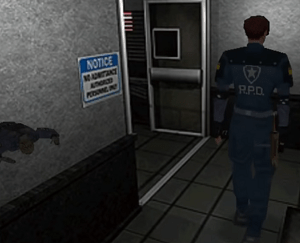
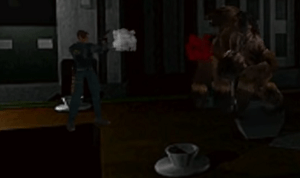
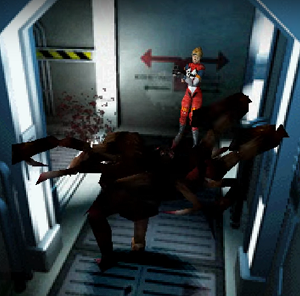
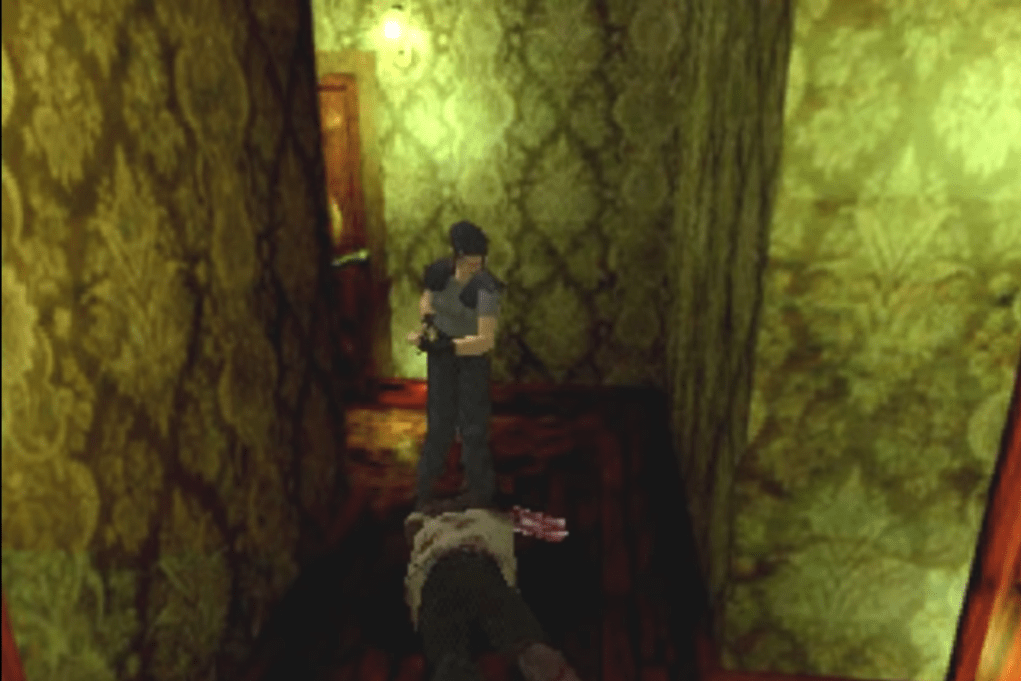
You clip through things that you shouldn’t be able to, and all enemies can be seen. Yes, that also means you can see them through walls.
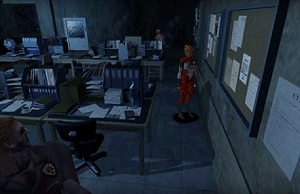
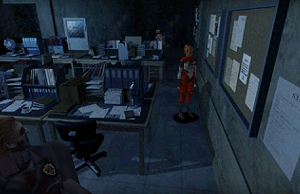
If you notice, it looks like Leon is standing on the table in this photo, and there are plenty of moments like this. Trust me, that’s not a rug. I assure you that dark square thing is, in fact, a table.
Furthermore, there is a huge range of weaponry to choose from in Resident Evil 1.5, but some of the items don’t have assets. Using an item that doesn’t have assets will crash the game.
Puzzles look to be standard Resident Evil format, though most aren’t completely implemented. You can go through the entire game without collecting key items. This is likely a good thing.
Other than that, playing Resident Evil 1.5 isn’t too different from the classic Resident Evil 2. There are more zombies on screen at any given time, and even other enemies can come in small packs. Tank controls and fixed camera angles make a return, of course. Anyone who has played the classic titles in the series will be well acquainted with them by now.
There’s just one problem. The controller can be very wonky…
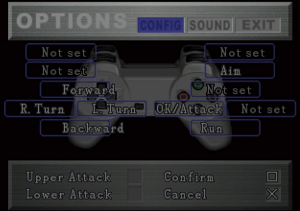
The game never had an official console release. That means you have to play the game using an emulator. If you’re like me, you use an Xbox 360 controller. The directional pad on Xbox 360 controllers are a piece of garbage, and it can make playing the game difficult. If you have a controller with a better directional pad, you should use it.
The rest of the mechanical changes are small, but I have to admit that I actually prefer most of them. Shotguns can still completely destroy a zombie. However, you can’t aim upwards to take off a zombie’s head. Shotguns will only rip the zombie in half. This can be used to incapacitate a zombie entirely. If you aim below the belt, you can even take their legs clean off. I have to admit, it’s a nice touch.
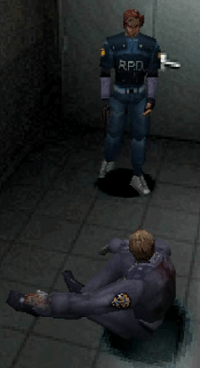
There is one awkward thing, though. When comes to health bars and status effects, your character will show signs of being injured by having ripped up clothing or seeping wounds. This was a nice idea in practice, but for me it kills immersion. Obviously when you heal back up, the wounds go away and the clothing goes back to normal.
This looks a little odd, and quite frankly, I prefer the limping and slower movement speed that’s found in most classic iterations of the franchise. It simply works better in my personal opinion.
Interesting Visuals and Soundtrack
The sound design is a masterful mix between the first and second Resident Evil titles. The music itself has that classic Resident Evil vibe to it, but there is no voice acting in the game. Due to the fixed camera angles, it’s important that each monster has an auditory cue so that players can hear when they’re just off screen. This ethos is the same in all of the classic titles, and it makes a return here as well.
Visually the game is impressive for its time. However, as a fan it’s hard not to notice something. There is a strange middle ground between Resident Evil graphics and Resident Evil 2 graphics. Resident Evil 1.5 fits perfectly in the center of all of it, showing off what would happen if you merged the two styles completely. Everything is slightly more improved visually from the first game, but, the Resident Evil 2 that was officially released is by far better looking.
My favorite place has to be inside the police station. There’s a cold, sterile feeling that comes along with it. The colors are often muted, meaning that even the brown cardboard boxes on shelves become eye-catching. Truthfully, it isn’t as interesting as the police station in Resident Evil 2, but, it has its own charm to it.
Final Thoughts
There are a lot of good things to come out of this failed prototype of a game. In truth, there are some less than stellar things about it too. It has flaws in spades, but, that’s the point of playing it.
Resident Evil 1.5 is a stepping stone for classic survival horror. It conceptualizes a game’s development cycle in a way few prototypes can. That shouldn’t be overlooked.
The hard work and love that staff put into their crafted worlds can’t be understated either. This prototype was a steppingstone that showcases just how much effort it takes to make a series like Resident Evil.
Fans of the franchise shouldn’t miss the opportunity to experience this prototype in one way or another. If you have the chance to play Resident Evil 1.5, you should. If you need to watch someone else play it, you should still do it. The experience is worth the time, and I can’t stress that enough.
This has been Kernook of The Demented Ferrets, where stupidity is at its finest and level grinds are par for the course. I’ll see you next time.
You can help support us through PayPal or Patreon.
With your contributions, you make our efforts possible. Thank you for supporting our content. Patreon supporters receive access into our official Discord server, and a few other perks depending on the tier. If you don’t care for Patreon, and don’t care about perks, you can always support us through PayPal too… links below.
Those who join via Patreon get special perks, such as extra content, quicker updates, and more.
Hey everyone, Kernook here. I’m back again, with another artist recommendation.
As for the usual disclaimer, nobody solicited my opinion.Nobody offered me any sort of perk for writing about this musical artist. I have not met this artists personally. I have not seen her live, in concert. I just like her music, and the covers she does of popular songs. That was the only qualifier I deemed necessary for writing this post.
That said, if you’re interested in listening to her musical talents, you should check her YouTube channel down below.
Have you ever heard a female singer with a smokey voice, and instantly, your ears perk up? That is what happens when I listen to this artist. My ears perk, I zone in, and I just listen. Her music is good. I can’t say why exactly. I can’t even put my finger on it.
It’s just that good.
That indescribable draw is notable, and that’s why I wanted to suggest her music. The thing is, I’d like to say that I’m a decisive person. That things need to be able to tick certain boxes for me. For whatever reason, her music doesn’t need to. It’s not something I can shove into a mold. Strangely, I don’t really want to try, either.
I just want to enjoy her music for what it is. Her vocal quality is a rarity. I wouldn’t say her lyrics are too catchy, or too edgy. They’re not ear-worms and they don’t linger around long after the song is over. Instead, they’re impact in the moment.
Her lyrics have a subtext that really draws me in. That’s why, I think, I keep going back to her music. When I think of what I would like to suggest, it would have to be “My Funeral” It’s smokey, soft, slightly sensual, and something I always come back to.
Another great song with the same qualities happens to be “Silence and the Clock“. It’s a song I often zone out to as I let the sound sweep me away. The song was actually assisted by Robin Ghosh who ghost recorded all of the guitars used in the song.
Krysta Youngs is just a prolific singer and songwriter, there’s no two ways about it.
All in all, that’s the only reason I need to keep listening. I think there’s something to be said for music that doesn’t just speak to the listener. Songs that are self-serving speak about the artist. It reflects their deepest thoughts and desires, and there will always be value in that.
Like I said, give her music a try, and you might find out you like it.
This has been Kernook of The Demented Ferrets, where stupidity is at its finest and level grinds are par for the course. I’ll see you next time.
You can help support us through PayPal or Patreon.
With your contributions, you make our efforts possible. Thank you for supporting our content. Patreon supporters receive access into our official Discord server, and a few other perks depending on the tier. If you don’t care for Patreon, and don’t care about perks, you can always support us through PayPal too… links below.
Those who join via Patreon get special perks, such as extra content, quicker updates, and more.
Note: My cousin was biologically female, assigned at birth. My cousin also subverted gender normality mentally in every way humanly possible. The line between a non-binary identity crossed heavily with a male one. My cousin most often identified as male. Therefore, I will be using the pronouns he/him for the entirety of this blog post.
“Okay smart-ass, how do you make a brick…?”
That was the question asked nearly a decade ago on a summer day. I was whittling the slow hours away out on my cousin’s front deck. I had a cigarette in hand and a cold glass of some flavored water collecting condensation in the sun. We were talking about everything and nothing. Stupid questions and even stupider answers flowing from our mouths. Everything we said was vitriolic, but also in good humor.
It was just our way, you know?
It was a typical day for us. I recall that day fondly. My cousin’s life was prolific in the normalcy of it all. A hand-full of problems, and no real way to fix any of them. He was incredibly smart, but, he was also a drug addict. He went to therapy often, going through shrinks like a household goes through toilet paper. He spent his many years taking prescription medication, using them, until they began using him. Just another vice among a great many.
He never quite got his fix…
Why does all that matter now? Well, my cousin’s dead. He died in 2019 of an overdose. Duster cans acting a means of getting high. The means of that addiction just didn’t justify the end. In spite of this, that was the outcome we had all come to expect. It was going to happen eventually, because addiction is a beast all of it’s own… and it had it’s claws into him too far.
Addiction is monstrous in how it eats the soul from the inside out. It’s almost like a plague, really…
Being an outsider looking in on that struggle, it’s hard to fathom. The highs come with lows, and when mental illness get mixed in, lines blur. You ask yourself questions trying to piece together the magnitude of it all. You try to understand-often failing to do so– and sometimes there are just no answers in sight. Sometimes, there won’t be.
That’s how it was for me. I had so many questions, but so few answers.
I’d ask myself, what part of it is the illness? What part is the drugs? Where is the soul beneath all of that? How do you cure the things that can’t seem to be?
Some people can claw their way to successful management of their addictions. It never leaves, once an addict, always an addict. Yet, some people can control that beast. Unfortunately, my cousin never could. Maybe in a way, it was just easier not to…
I can’t help but think of all the missed opportunities, failed chances, and everything he left behind. A muddled story to be sure, but one that played an irreplaceable part in my life.
It would be a disservice to even think otherwise.
We had always said we’d write a book together. We never did. We should have. With all time we wasted with our thumbs up our asses, we could have. It’s that last point that really gets me.
We could have done it.
Like so many things, we never got around to it. Instead, all I have left are the memories of the things we’d said we do… and we said so many things.
I look back at the missed opportunity. I wish we had made those chronicles of our lives. I wish we’d written that family history. It was just as imperfect as any other, but it was ours anyway. In a way, it was special because it was ours. Now, it’ll never be written. My cousin was eighteen years, my senior, but… well, history has way of repeating.
My cousin was some sort of looking-glass for me…. still is, I suppose… not with addiction… no, just in life…
Like my cousin, lines of gender blur for me. I am also biologically female. In my head, I am 100% not female. I don’t believe myself to think inherently like a woman. I don’t give a rat’s ass about the concept of inherently feminine traits or masculine traits, it doesn’t matter.
I’d never call myself non-binary, because to be that title would never fit. Then again, I can only help but feel that the spectrum of gender fails humanity in so many ways. I think we put too much significance in gender. The Performativity of it.
In many ways it’s all pomp and circumstance.
That being said, I take my identity a step farther than my cousin ever did. I wear binders, he didn’t. I pack, he didn’t. Even so, in my eyes he was no less a person, and no lesser a man.
Effeminate qualities do not chain down a soul.
Like him, I find myself at the mercy of the mirror every day. Taking quick showers because I don’t wish to see myself without clothing. I’m by no means obese, but biologically speaking, women tend to have more body fat than men in some very select areas I don’t want to be reminded of. To me, breasts are no more than blubber with a nipple on them. A pain in the ass, and just as unsightly as rolls of excess fat that cling no matter what you do.
I’ve made peace with the fact that I will never have the body I’d like. I’ve decided that a body is just a vessel that houses a soul. That the vessel itself need not reflect the soul in the slightest.
That despite our best wishes, for some of us it’s never going to. I feel that we must reach beyond those confines in different ways. For some semblance of comfort, I feel like there’s no other choice.
This idea is akin to many memes we see across the internet. Much like a house cat with the ferocity of a lion. Or a dog that stands with all the majesty of a wolf.
I turned 31 in September of 2020. It was a bit bitter for me because I thought I’d be someplace further in my life than what I am now. It’s strange, because my cousin used to say that about his own life more often than not.
The older I get, the more I find myself thinking about it during the quiet dawns and late sleepless nights.
I love to write, even if I’m not very good at it. Sometimes I tell myself that it’s just another passion that’ll never go anywhere. Jack of all trades, master of none.
Late in 2020, my friend Kreshenne and I formed “The Demented Ferrets” in a single hope that we’d be able to escape some of the mundanity that life had to offer.
We have a Twitch, YouTube, and this blog as far as content creation is concerned. We play games, I write on the blog, and life moves forward.
Now, will we get anywhere with this seemingly asinine idea? Well that’s anybody’s guess.
Then again, I don’t want to have another monumental regret, either. I don’t want to spend later years in my life asking “what if?” endlessly as I am often prone to do.
I’m not a perfect person, my shit stinks, just the same as everyone else. I look at my flaws and they cripple me sometimes. They overwhelm me. I don’t know where this blog will take me, if anywhere. I don’t know if Kreshenne and I can really make something of our platforms or not.
I don’t want insane fame. I don’t want countless fortune. I just want to pay the bills with things I love to do, and Kreshenne is the same way…
So, sections of this blog will just be my thoughts, my insights. However meaningless that proves to be for anyone else doesn’t matter. This post is a selfish thing, but humans are selfish creatures.
If I don’t put my thoughts down brick by brick, maybe I never will. They say it takes 8,176 bricks to make the average home. If that’s true, I wonder how many I’ve laid down in my life so far.
How many more it will take before I feel like I’ve accomplished something meaningful? I don’t know that answer. Maybe I never will.
This blog is a collection of my passions, my failings, and everything else I can think of. Imperfect in so many ways, because I’m flawed to a fault. In some ways, I don’t believe that’s a grave sin. Rather, I feel like that’s the way it should be…
So among all of the anime content, gaming content, and RWBY content that will doubtlessly flood all of “The Demented Ferrets” platforms as time goes on, I want to be selfish. I want this one thing for me. To place down these bricks, bit by bit.
I realize it’s not the standard fare that most would come to expect. I understand that completely. I’m probably just shouting into a void, and so few people will ever read these sorts of posts.
Either way, this is the first brick. One that I should have laid down along with my cousin when we had the chance to write a book together.
That’s gone, but this new opportunity is one that I won’t allow to pass me by.
This has been Kernook of The Demented Ferrets, where stupidity is at its finest and level grinds are par for the course. I’ll see you next time.
You can help support us through PayPal or Patreon.
Hey everyone, it’s Kern here. In the future I’m going to review a lot of anime, and plenty of Kon’s works. However, it simply didn’t feel right to do that without first talking about his many accomplishments, so I’m going to do that first.
There is a lot to talk about, but I’m only going to give a brief overview here. If you want to know more beyond this blog post, you should begin by watching the anime mentioned here, and then branching off from there.
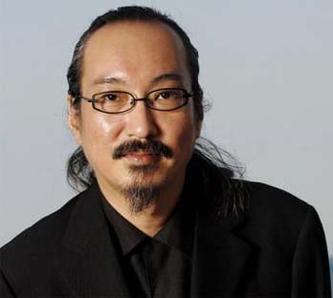
I doubt I have to say this, but Satoshi Kon was a huge influence in the anime industry. If you’ve been an anime fan for any length of time, there’s a good chance you’ve heard of him. At the very least, you’ve probably heard of at least one of the animated titles he directed.
His aspiration in life was to become an animator, but thankfully he blossomed well beyond that. In his career he was credited for being an animator, screenwriter, manga artist, and a director.
His ability as a director is what I truly want to highlight here. Though keep in mind, he had other talents too. Each of them just as prolific and noteworthy in their own way.
In the 90’s animation was striving to do new things, and reach a larger audience. Kon fit the needs of the industry well in regards to that. He was able to utilize the anime medium to its fullest potential as an art form.
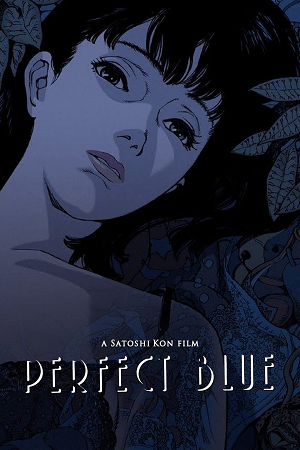
In 1997, Satoshi Kon had built quite a name for himself. his reputation almost preceded him in the anime industry. His visionary skill would land him a directing role. In collaboration with studio Madhouse, Satoshi Kon was able to direct his first feature length film; Perfect Blue.
Now, let’s make no mistake about this. Kon was an absolute master in directorial design. Love or hate his works, it doesn’t much matter. The man was an influence either way. He took to his craft with a keen eye for detail. Each of the films he directed are unique. None are without depth. In my personal opinion, his productions are incredible.
I’ve done a review of Perfect Blue, and you should check that out if you want more information on that film in particular. To summarize my thoughts though, Perfect Blue is by far one of the most compelling anime movies that I have ever had the pleasure to watch.
It is both hauntingly beautiful and unsettling at the same time. The themes are wrapped up nicely between reality and surrealism. Paranoia and mental unease are cornerstones to be explored here. Although the series is a bit dated by today’s standards, this is a true masterpiece in storytelling. It shouldn’t be overlooked, dispute the dated feel. There is so much to unpack about the world, Mima, and the concept of idol culture in Japan.
Even if his works aren’t exactly mainstream media, his influence impacted the anime industry unquestionably. Satoshi Kon’s films are way ahead of their time thematically. They challenge viewers, and often they require more than a single viewing.
Like Anime and Gaming content? Check out our other platforms:
In order to completely catch every minor detail Kon skillfully embeds into films like Millennium Actress, it’s best to watch them at least twice.
They’re darker by their nature, and tend to require a more mature viewer. One that is able to critically think about the themes that are so prevalent in his media. His works are often saturated with several layers of metaphor to drive the stories forward.
Kon was diagnosed with terminal pancreatic cancer. 2010, leaving behind a legacy in anime that shouldn’t be forgotten. With the flood of new anime every season, there is no shortage of things to watch. In fact there’s not enough time in a day to watch them all, but to cast aside those older gems would be a disservice to anime as an art form.
I have memories of watching his works with my friends. I spent way too many nights huddled under blankets and starting popcorn fights over his anime, and I’d never be able to thank him, or the medium of anime enough for that.
So, that’s it then. I’ll leave it here for now.
This has been Kernook of The Demented Ferrets, where stupidity is at its finest and level grinds are par for the course. I’ll see you next time.
You can help support us through PayPal or Patreon.
With your contributions, you make our efforts possible. Thank you for supporting our content. Patreon supporters receive access into our official Discord server, and a few other perks depending on the tier. If you don’t care for Patreon, and don’t care about perks, you can always support us through PayPal too… links below.
Those who join via Patreon get special perks, such as extra content, quicker updates, and more.
Hey guys, Kernook here. This is not a review. Rather, this is a post about a game I absolutely adore and always suggest to those looking for a casual gaming experience.
I love farming simulators. I always have, and my first introduction to the genera was Harvest Moon. I absolutely loved it, and my mom did too. We’d spend hours after I got home from school playing it together. The two of us dedicated way too much time building a farm, raising the animals, and befriending the characters. Getting to play my wholesome little farm family lingers as some of the most memorable gaming moments in my life just due to how often I played those types of games.
Naturally, when I’d heard an indie developer was working on a game to rival the Harvest Moon franchise I didn’t believe it would be successful. I was told the game would be available on steam, and when it released, I bought it. I was skeptical, but soon I realized my fears were unfounded.
Like Anime and Gaming content? Check out our other platforms:
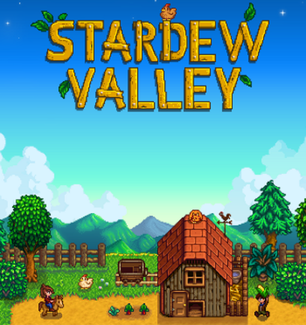
Stardew Valley is one of the best farming simulators I ever played. It’s a game I often return to when I just want a game to play casually.
Farming isn’t all that you do, but it is a rather large part of the game’s core design. Tending to crops and caring for the animals are the only way to make some of the highest quality goods in the game. Unsurprisingly, Stardew Valley was heavily inspired by the Harvest Moon franchise. Therefore plenty of the core features in the game revolve around key aspects that were so loved by players of Harvest Moon.
In many ways, those core ideas were expanded upon, and new concepts were added too.
Eric Barone, also known as “ConcernedApe“, developed the game as an endeavor to improve upon the genera. I’d like to think that he certainly did, as Stardew Valley is an incredibly robust game all on its own, not to mention the modding community that comes along with it.
Published by Chucklefish, the game was released for Microsoft Windows in February of 2016. Later ports of the game were released for macOS, Linux, PlayStation 4, Xbox One, PlayStation Vita, Nintendo Switch, iOS, and Android devices.
ConcernedApe developed the game over the course of four years, and players are still treated to occasional updates. If his updates aren’t enough to satisfy, the modding community has a wealth of content to satisfy even the most seasoned players looking for new challenges or simply additional features.
The Story
The story starts the same way many other farming simulators do. Usually, an aging family member decides to leave you an old farmhouse in hopes that your character will continue the family’s legacy.
Upon starting the game, you play as a young adult who takes over your grandfather’s farm. Packing your bags, you move to Stardew Valley. The farm is in a horrible state of disrepair. It’s your job to get it into proper working order.
In this respect, Stardew Valley settles into a predictable pattern. However, the game will subvert expectations quickly.
Let’s take a brief look at the opening story…
Now I’ve made a male character, but both genders are open to creation. You can make a male or a female character, and have that character marry a man or a woman.
Your character’s has an old and ill grandfather. He leaves his legacy to you.
Once you’ve made your character, the scene begins with an old man lying in bed. He’s clutching an envelope and struggling to breathe. This man is your grandfather, and he says that this letter is for you. Then, he asks you to not to open it until the time is right. He gives you the letter, and the screen fades to black.
A moment later, a new visual awaits…
Your first look at “Joja”, the major corporation that threatens to consume everything that your character seems to care about.
A grey and lifeless office building comes into focus. Cubicles stacked closely with one another pan slowly, showing office workers in poor conditions. Two figures loom over the exhausted employees, gazing down at them from the comfort of their offices on the floor above.
This is the first indication that Stardew Valley has a darker story to tell. Make no mistake, this isn’t like the farming simulators of the past. The plot elements begin the same, but this is a somewhat mature re-telling of classic tropes. The game is riddled with grim subtext and context clues to further its narrative.
This oppressive atmosphere seems like a prison. The building is untidy, and workers are being treated unfairly. The imagery in front of you suggests long hours and little pay. The sounds themselves are mechanical, lacking any warmth. There are none of the usual comforts you might find in a typical office building.
The lighting is dim, grime cakes the desks, and a security camera hangs over the head of each employee. The skeleton of a deceased worker hangs limply in his cubicle. The slogan plastered upon the wall is a lie.
Life isn’t better with Joja…
Your character is unhappy. The poor working conditions have obviously taken their toll. His eyes are closed as the monitor in front of him glows blue. He looks as dull and lifeless as everyone else around him. His eyes slowly open, groggy and with a sense of hopelessness.
He bends forward to reach into the drawer of his desk. His grandfather’s letter rests neatly inside, sealed and waiting. He opens it, finding a heartfelt letter from his grandfather.
You’ve kept the letter for an indescribable amount of time. Yet, today is the day you choose to open it.
According to the letter, your grandfather has left you his farm. He tells you to reconnect with what matters most in life. The names you’ve chosen for your character and your farm will be listed in the letter.
Your grandfather writes that the farm is tucked away on the southern coast, located in a place called Stardew Valley. After a moment the scene fades to black again.
Although it isn’t shown on screen, your character packs his bags and heads off for his new home. The scene opens with a bus speeding down an otherwise empty country road. Upon arrival, you meet the first of many NPC townsfolk.
Robin, the town carpenter. She is the first of many characters you’ll meet in the game.
Her name is Robin, and she’s the local carpenter. She’ll be useful later for making upgrades to your farm. She tells you that the town mayor, Lewis, asked her to come and greet you. She offers to take you to your new home.
Befriending the townsfolk is a core game-play mechanic. The closer you are with them, the more you get to know them. All of the characters have at least some level of depth to their backstories. It behooves you to make friends with all of them.
Like other genera titles, giving gifts twice a week and speaking to the NPC’s daily raises their friendship score. Higher scores give you access to more cut-scenes. Each character has things they like, and things they don’t. You’ll have to learn about that through trial and error, or simply look it up online if you don’t want to go through the trouble. Lastly, Don’t forget to give them gifts on their birthdays. It gives a greater friendship boost.
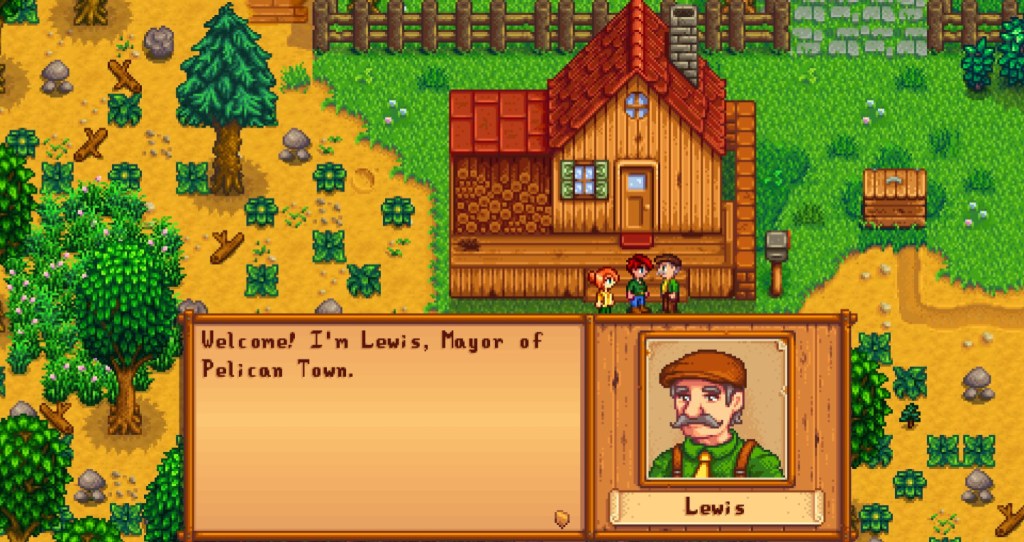
Lewis is the town mayor. If you want to get a divorce later in the game, you can do it at his house.
Robin takes you to your farm. There, you see what a complete mess the farm is. Obviously, it’s fallen into disrepair. This is the another core game-play mechanic. There’s a lot of different ways to enjoy your time playing Stardew Valley, and one of them is maintaining your farm.
You can raise crops and animals here. That’s not all, the game offers a robust crafting system, allowing you to run your farm is several different ways. Bee keeping is one of my favorites, but there are others too.
You’ll need to clear the mess on the farm to get it in working condition. First however, you need to finish the cut-scene.
Once you enter your farm, you meet Lewis, the mayor of Stardew Valley. Robin and Lewis banter, proving that not all of the townsfolk get along. Eventually, Lewis tells you to get some rest because there will be plenty of things to do tomorrow.
Finally, the cut-scene ends, and the screen fades to black. After this, you get control of your character for the first time. This is where the story truly begins.
Final Thoughts
The game isn’t intense or “hard core” in any way. The appeal of it comes from the short bursts of time you can offer and still feel like you’ve gotten something done. The game saves after each in-game day, and they’re fairly short.
Now, you can binge the game for hours on end too, I certainly have at times. However the long-running appeal for me is that I don’t have to binge it to enjoy it.
No matter how you choose to play though, you’ll have to manage your character’s time on the farm wisely. Days move quickly and you have limited energy at first. As a farmer, you’ll clear your land and care for your crops. You can choose to raise livestock, too.
Seasoned players will tell you that it’s best to avoid livestock during your first in-game year. You’ll have to earn money if you want to expand your farm, and livestock can be a drain on time, money, and valuable crafting goods such as wood and stone. That being said, the great thing about Stardew Valley is that it’s meant to be played however you wish to play it. You can set up your farm in many ways, and it’s not set in stone.
By crafting goods, mining for ore, and befriending townsfolk, you’ll make your deceased grandfather proud. It’s important to join in on social activities around Stardew Valley. You’ll be able to start a romance that may lead to marriage. If you get married, you’ll get to have children. If you have a same-sex marriage, you’ll be able to adopt. There are many inhabitants in the small town, so there are plenty of spouses to choose from.
The game is fairly open-ended, allowing you to choose how you’d like to play. Friends can play together too. Stardew Valley features a multiplayer mode that allows up to four people to play on the same farm at once.
I absolutely love Stardew Valley. With the wealth of content constantly being released by fans and the creator alike, Stardew Valleyis a game that is always refreshing to return to.
The modding community is a fairly healthy one too, and the types of content you’ll find among them is vast. Some of them produce darker cut scene content, that add to the already lightly mature themes discussed in the series. I won’t cover that here because if you’ve played the game already, the mods are the next logical step. This is more of an overview for players who haven’t heard of the game, or simply weren’t sure if they’d like it.
So, if your looking for a relaxing title, with a story that appeals to an audience that isn’t inherently a child at heart, then look no further. Give it a try and see how you like it.
This has been Kernook of The Demented Ferrets, where stupidity is at its finest and level grinds are par for the course. I’ll see you next time.
You can help support us through PayPal or Patreon.
With your contributions, you make our efforts possible. Thank you for supporting our content. Patreon supporters receive access into our official Discord server, and a few other perks depending on the tier. If you don’t care for Patreon, and don’t care about perks, you can always support us through PayPal too… links below.
Those who join via Patreon get special perks, such as extra content, quicker updates, and more.
Hey everyone, it’s Kernook here. In the two videos below, Kreshenne explores the immersive world of Myst, solving puzzles along the way.The game is coined as a graphic puzzle adventure, as the main draw of the game is the puzzles themselves. The game is considered a classic.
It was developed by Cyan, Inc. and published by Broderbund. Originally it released in 1993 for Mac. As time went on other ports of the game were released. PlayStation, Sega Saturn, and Windows saw notable ports of the game.
As for the game itself, it’s all about the insanity of two brothers. The mind-games that you, the player, must sort through.
Kresh Plays: MYST
Part 1
Part 2
More About MYST
In the game players use a special book to travel to the island of “Myst“. Once there, you solve puzzles and travel to four other worlds. These other worlds are known as “Ages”. Each age uncovers more backstory of the game’s characters.
Mystis a first person game. Players interact with specific objects on screen by clicking on the item, or dragging it around. Certain items like journal pages can be picked up and carried to particular locations.
Movement in the game relies on the player clicking on locations shown on the screen. There are plenty of areas to explore, and a keen eye is required to solve some of the puzzles. More on that later…
The game also features a journal. This is a necessary component to the game. You’ll be collecting the pages that belong inside of it. This is a double edged sword. You can only carry a single page at a time. If you drop a page, it reverts back to its original location. When you find them, be sure to place them where they belong.
Little Details Matter
Like Anime and Gaming content? Check out our other platforms below:
To beat the game, you’ve got to explore the island of Myst in its entirety. With every puzzle you solve you’ll discover clues for the next one and where you ought to go next.
You’ll be tasked with visiting the “Ages” mentioned above, The “Ages” you’ll visit are small sub worlds, self-contained and with their own puzzles to solve. Each of the Ages have their own name and theme to go with it. The Ages are: Selenitic, Stoneship, Mechanical, and Channelwood. Some of the clues, items and information discovered in one of the “Ages” might be required to solve puzzles in a different one. This is why details matter.
Rushing through a puzzle too quickly may leave you stumped later. In the videos above Kreshenne runs into this issue a few times.
Unique Aspects of MYST
Myst uses each in-game environment to the utmost advantage to tell the story it presents. Like many games of its era, the game relies largely on text based story telling. There are some “cut-scenes” if you can truly call them that, as well.
What made Myst so popular for its time was the unusual ways it provided the backstory. The entire game is riddled with mystery waiting to be unraveled. At first, you’ll have very little backstory. Nothing is particularly clear, and there is no hand-holding in sight.
You won’t have any obvious goals or objectives in front of you. As a player, it will all be left up to you. There are no enemies in the game, and no combat. The game is a slow burn, and the player can solve the puzzles at their own pace.
For more opinions about this game, might I suggest you look at the Myst review written by Jason Smith over at Adventure Gamers, or that you check out the one by Christopher Livingston on PC Gamer website.
In my personal opinion though, the two brothers that made the island are crazy people. Frankly, I’ve said too much about them with that single statement. The rest is up to you. If you haven’t played Myst or watched a play-through, you really should.
This has been Kernook of The Demented Ferrets, where stupidity is at its finest and level grinds are par for the course. I’ll see you next time.
You can help support us through PayPal or Patreon.
With your contributions, you make our efforts possible. Thank you for supporting our content. Patreon supporters receive access into our official Discord server, and a few other perks depending on the tier. If you don’t care for Patreon, and don’t care about perks, you can always support us through PayPal too… links below.
Those who join via Patreon get special perks, such as extra content, quicker updates, and more.
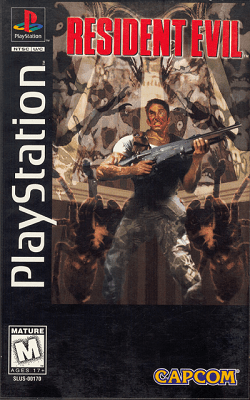
Hey guys, it’s Kernook here. Let’s enter into the realm of survival horror for a spell, shall we? This will be a retrospective review of Resident Evil. This review will only cover the original black box release of Resident Evil 1, for the PlayStation.
This review will not cover the directors cut, or the duel shock release of the game. That’s for two reasons. Firstly, the soundtrack was changed in both of those versions, and not entirely for the better. Secondly, even though I do have both the director’s cut and the original black box release, I usually don’t play the director’s cut version.
Furthermore, this review does not cover the Resident Evil remake. That’s a topic for a different day. It requires it’s own separate review. Today, I’m just going to be covering the original game. There’s a lot to cover here, so let’s get started.
Resident Evil as a franchise will always be very near and dear to my heart. In order to understand why, I need to give you a glimpse of my childhood. My personal upbringing with gaming isn’t necessarily something that should be emulated.
In 1989, I was born with Dyspraxia and Dysgraphia, which are non-curable motor-skill disorders. They’re also kind of weird, and when I was a child there was no good way to handle the disorders. Experts in the field of medicine sort of just shrugged it off. They weren’t entirely sure how to help alleviate the symptoms, which are a long list in and of themselves. Look it up if you want to, just know that not all of them apply to everyone. There is a spectrum.
What worked for me, probably as a fluke was incredibly lucky. I just want to make that clear. I don’t advocate for buying games for children who aren’t ready to handle the context of that game. Furthermore, I believe it’s up to parents to police their child’s gaming habits. It’s not for the media or the public to decide.
That being said, as a child I spent a lot of my time playing video games. I belonged to a family of gamers. My earliest memories contain eight-bit and sixteen-bit images splashed across the television screen. Sonic and Mario were my bread and butter. We were lucky to have a Sega Genesis, a Nintendo, and a Super Nintendo in the house.
Our gaming library wasn’t particularly vast. Thankfully, we had a large and active gaming family. My bother, older cousins, and even my mom, played video games. We often traded games and systems, to experience the best of all worlds. The medium of gaming was everywhere for me.
When I think about it now, playing the Resident Evil franchise in the late 90’s was one of the best experiences I could have had as a child. It helped a lot for my personal and particular problems. So, from here on out, when I talk about the franchise, just keep that. I do have a positive personal bias towards the franchise as a whole, and I won’t disregard that.
The Beginning: Sweet Home Mutates into Resident Evil
Any gamer that was around for the 90’s knows that it was a very experimental time in gaming history. Prior to the 90’s, playing games with 3D animation was laughable, expensive, and to casual players it was unheard of.
Frankly, 2D gaming was cheaper to develop, more accessible to gamers, and pandered to a wider family-style audience. In general, 2D gaming was just the commonality at the time. Occasionally computers offered a stepping stone into 3D gaming, but even that was limited at first. A lot of games that looked 3D weren’t. They just looked that way, using clever techniques and tricks of the eye.
Sony changed that with the release of the PlayStation. The powerhouse of a system opened doors for developers, and allowed gamers a glimpse into what fully realized worlds might look like.
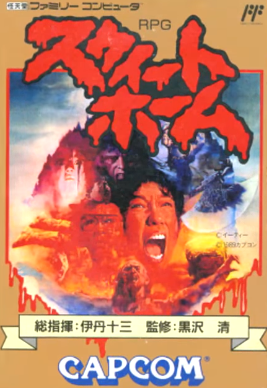
Capcom, a Japanese video-game developer, had the bold idea of bringing one of their classic games over to the new console. Its name was “Sweet Home“. Now, here’s a little food for thought. Sweet Home was a title for the family entertainment system. It was made in 1989, so everything about it was made with the older platform in mind. Bringing it into a 3D space was going to be a monumental effort. The game was a fusion, containing both RPG and horror elements. Knowing that this would not be an easy task, Capcom asked Shinji Mikami to help them with the project.
To say that the project was a massive undertaking would be selling the matter short. Everything was against them in this effort. Sweet Home was a complex game with multiple story lines, and very intricately created puzzles. They couldn’t just up-heave the general concept, and then proceed to cram it into a 3D environment.
That surely would have been a complete disaster. Thankfully, that’s not what they did.
Instead, the ideas and themes of Sweet Home took on a life of their own. Eventually, from the ashes of all of those great ideas, a new game was born. It was known as Bio Hazard in Japan.
Unfortunately, there was another problem. They couldn’t use the name. A DOS game had already registered that name for a different brand, so Capcom couldn’t use it.
Capcom eventually re-named the title, and it became Resident Evil. The game, in a word, was masterful. There were plenty of horror games to play at the time, but none of them were quite like this one. With the release of Resident Evil, so too, came the birth of survival horror.
An Aside: A Plethora of “You Died” Screens
I was young when I began my Resident Eviljourney. The first game I ever beat on my own was Resident Evil 3: Nemesis. Prior to that, I didn’t have the skills required to beat the games. I tried, of course, but I always needed help. Resident Evil 3: Nemesis had a freakishly low skill requirement on easy mode.
With tons of weapons and ammo in the item box at the start of the game, it’s actually pretty difficult to die. Well, I mean, unless you just stand there and let zombies eat you.
As a general rule, survival horror is not an easy genre to play. It’s generally made for adults. It’s not aimed at it kids, nor should it be. I played the genre as a child, but I had an older brother that was usually with me. Forcing myself to focus on cognitive puzzle solving, basic game controls, memorizing maps, and recalling enemy layouts were some of the hardest things I ever had to do in a game. This is why I say that playing these games helped me more than I ever could have perceived as a child. They were foundational tools for many of the skills I became able to do after holding a controller and thinking outside of the box.
After playing Resident Evil 3: Nemesis on easy, normal, and finally hard difficulty, I was able to go back to the older games in the genre and play them on my own. Before that, I usually never made it beyond the mansion in Resident Evil 1, or the police station in Resident Evil 2. Before that, poor inventory management, terrible ammo conservation, and a lack of ink ribbons usually did me in.
Entering the Nightmare
Entering into Resident Evil, a bazaar string of murders runs rampant. Victims are being eaten alive.
Resident Evil features a fairly typical story. A rescue mission is taking place. With a string of murders running rampant across the fictional Raccoon City, it’s up to the police to find out what is really going on. In response to this, the Special Tactics and Rescue Service, or “S.T.A.R.S.” have been sent to look into the issue. Having been sent deep into the mountains, the first team has gone missing.
When starting the game, players get to choose between two characters. Both of them are S.T.A.R.S officers. One is a man by the name of Chris Redfield. The other is a woman by the name of Jill Valentine. Each one has their own story, and it serves the player to go through each scenario at least once.
No matter what character you pick, you have a few not-so-simple tasks:
First, you must find the missing Bravo S.T.A.R.S. team members. At the very least, you must find out what happened to them.
Secondly, you must find out what has been happening deep in the Arklay Mountains just northwest of Raccoon City.
Thirdly, you have to survive this ordeal and come out of it alive.
The opening cinematic is the same for both characters. You find out that the other team’s helicopter has been heavily damaged, and no one is around. A pack of deranged zombie dogs attack the group. In a desperate attempt to survive the attack, the alpha team members make a mad dash to the nearby mansion. They hide inside, where they believe it will be safe.
Instead, they’ve walked headlong into the nightmare. The a virus has spread throughout the entire mansion, infecting everything from humans, dogs, plants, spiders, and more.
The Basics
The mansion itself is a labyrinth of narrow hallways. A maze that needs to be traversed bit by bit, carefully and with an eye out for the looming dangers.
Tight camera angles and tank controls keep the player on their toes. Now, I’ll say this, a lot of people complain about tank controls. In this current era of gaming, I agree they can be a bit clunky. That said, I never had an issue with them. In fact, they were almost second nature to me. For me, I had more of a problem with inventory management and trying not to use up all my ammo.
The game-takes small cues from Sweet Home, Alone in the Dark, and other story driven horror titles. With limited inventory and never enough ammo, players will be forced to explore many areas to find the items they need in order to progress.
Certain keys have to be acquired, and backtracking will happen more than once. This was a risky design decision, but I’m glad it works so well. Typewriters for saving and item boxes for inventory management will be utilized often. They have been carefully placed in areas that players visit often.
On the topic of item boxes and typewriters, they are instrumental in playing Resident Evil. These are core game mechanics across most of the titles. Space on your character is limited, and it is imperative that you plan accordingly. This includes saving your game. In order to save your game, you require ink ribbons. You’ll usually find them in small batches.
Every time you save your game, it costs an ink ribbon. The supply is limited and on the first play-through you might find yourself running out. The ink ribbon is a doubled edged sword, though. Higher end game rankings require faster completion times, fewer saves, and less healing items.
Thanks to constant puzzle solving, there is a sense of adventure woven into the narrative. To be honest, it couples nicely with the campy dialogue and nods to classic horror as a genre.
Nowadays, the original Resident Evil might be a bit too campy, but I still enjoy it. I think it works well, given the graphics of the era.
Newcomers need to remember that the PlayStation era was before high fidelity graphics were even possible in gaming. In my opinion, the goofy dialogue only adds to the charm. In some ways, it has even helped to age the game. Back in the day there were some parts of the game I had a hard time taking seriously. Nowadays, I think it’s actually impossible. I feel like everyone has that moment when they want to laugh out loud at least once. For me, that reason alone makes it an experience worth playing.
The Combat
Really, there is only one form of combat in Resident Evil. You can either aim your gun and shoot, or choose to run away. Both options have their place, and it’s important to know what option suits the situation best.
Skilled players can do no “save, knife only runs”, but that isn’t something average players will master. Certainly not on their first try.
Learning the contours of the mansion will help you to make these all too important decisions. You can’t murder every enemy in the entire game. Your ammo is limited, and this key fact is what defines the survival horror genre. Well, that, and the tank controls for earlier titles.
Your job is simply to survive by any means necessary. Choosing a live-and-let-live approach comes in handy inside wide open rooms. Outmaneuvering slower enemies will conserve ammunition. Narrow hallways will require a more aggressive approach.
Due to the stationary camera angles and tank controls, sometimes enemies will be hiding just off camera. The developers planned for that, giving every monster in the game some sort of audio cue. They were careful to make every sound distinct and clear against the ambient music of the soundtrack. Zombies have their moans, dogs growl, hunters make a clicking noise whenever they walk, and so on.
Even boss fights like Yawn have carefully placed cues to warn you about what kind of attack is coming. In general, careful players can usually avoid getting attacked by a monster off screen, all they need to do is wait and listen.
If you take damage from an enemy, you’ll have to rely on herbs and first aid sprays to heal you. They’re in short supply, and every time you get hit you put yourself into a sticky situation. Your character will begin to hold their side if the injury is bad enough. If they continue to take damage, they’ll begin to limp slowly, and this makes avoiding enemies difficult.
There are several boss battles, of course. Yawn is a battle you face twice. With the right weapons and preparation, they’re never too hard. If you conserve your ammo properly the bosses shouldn’t be your largest threat. In fact, I’d say that most boss battles in this game aren’t that big of a threat at all.
Instead, I’d say that forgetting where you might have left a zombie or two is a much bigger problem. Backtracking after a battle can be a death sentence. Especially if you’re low on ammo and healing items.
The first Resident Evil game is a true classic among the survival horror genre. It isn’t insanely difficult, but it doesn’t forgive reckless new players either. The game has a learning curve, and it expects you to rise above every puzzle, enemy, and trap that it gives you.
The game is atmospheric in the best ways, utilizing visual assets in a way few games could back then. The musical sound design is flawless in the original black box edition of the game, ambient and often beautiful.
The musical quality is abysmal when it comes to the directors cut, or the duel shock releases of the game. Sadly, that’s the trade-off you make if you can’t get a copy of the original.
The voice acting is campy at best, embarrassingly bad at worst, but a lot of that dialogue became a touchstone for gamers around the world. People attend anime and gaming conventions cosplaying as the characters. Fan fiction flooded websites, and fan art followed soon after.
Best of all, nowadays speed-runners collectively band together to experience the game, giving rise to an entirely new audience of survival horror fans. All of that cannot be understated.
Obviously, with the original game being remade, we got to visit the mansion once more with the Resident Evil remake for the GameCube in 2002. Many prefer the remake over the original. I certainly do as well. The remake eventually received a PC port, which is by far the most visually impressive way to enjoy the game.
That said, returning to the original game every now and then is vastly important to gaming history. Survival horror as a genre would be completely different than it is today without the original Resident Evil.
This has been Kernook of The Demented Ferrets, where stupidity is at its finest, and level grinds are par for the course. I’ll catch you next time. Meanwhile, check out some of our other great content below.
With your contributions, you make our efforts possible. Thank you for supporting our content. Patreon supporters receive access into our official Discord server, and a few other perks depending on the tier. If you don’t care for Patreon, and don’t care about perks, you can always support us through PayPal too… links below.
Those who join via Patreon get special perks, such as extra content, quicker updates, early fiction chapters and more.
As you can likely guess from the disclaimer, this is an old post. That being said, when the initial hype for the game was in full swing, I was one of the many fans excited for the game.
I’m sad to say I wasn’t a huge fan of the game, but I’ll talk about why when I review the game in it’s entirety. That’s a separate post though. For now, the content below is merely a time in fandom when I was far too excited for my own good.
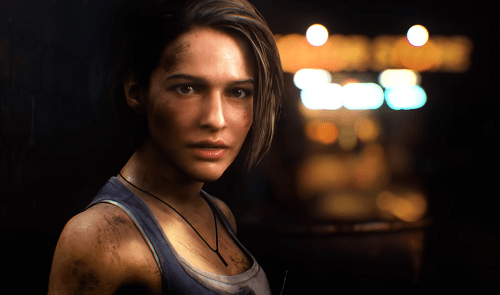
The official trailer for the Resident Evil 3: Remake has me so excited to see what’s in store for the survival horror genre.
Old fans of the series will easily recall the dynamic game-play of the original game, released for PlayStation back in September of 1999. I’d like to take a few moments to share my fondness of Resident Evil, and Resident Evil 3: Nemesis particularly.
Playing as Jill Valentine was one of my favorite things to do in the early days of Resident Evil. Back in the first game, I played her story over Chris’s. Getting to return to her character after the events of Resident Evil 2 was what made me beg my mom for the game. She agreed to get it as a late birthday gift. I counted the days until it hit store shelves. Unfortunately the game dropped on a Wednesday, and I had to wait until Friday after school to get it.
The wait seemed like forever. Finally the day came, and I immediately started playing as soon as we arrived home with the game disc in hand. Playing Resident Evil three was a very memorable moment in my life. While many fans call Resident Evil 2 the best game in the franchise, I have always loved Resident Evil 3: Nemesis even more.
Despite the many flaws that Resident Evil 3: Nemesis had, I fondly recall that it was the first survival horror game I was able to beat on my own. My birthday is in the middle of September. I was a child, and survival horror was something that I just couldn’t help but be enamored with. The problem was that I was very young for a mature rated game. My older brother, 7 years my senior, usually had to help me with other games in the genre.
At the time, I was too young to understand some of the puzzles. I had trouble overcoming the problems that came with having a limited supply of ammo. Other survival horror games had me stumped, or were simply too difficult at the time. Without help, I didn’t get a chance to beat the games at all.
At least, not until Resident Evil 3: Nemesis released for the PlayStation. It was the game that allowed me to fully experience survival horror, without help from anyone. Looking back as an adult, the easy mode was probably too easy.
In hindsight offering such a huge capacity of weapons and ammo allowed me to blast my way through the entire game. I didn’t need assistance, but I also didn’t learn the skills required of other survival horror games. That said, while easy mode was too easy, the normal mode and beyond provided a sufficient challenge. After playing Resident Evil 3: Nemesis on easy, I returned to it invigorated. Feeling empowered and encouraged, I beat it two more times. Once on normal and once on hard. After that, I was able to return back to the other releases in the franchise. Finally, I could play them entirely on my own.
As you can see, I owe a lot of my love for survival horror genre to Resident Evil 3. Seeing this remake come out is a dream come true for me.
The release date for Resident Evil 3: Remake is April 3, 2020, and there seems to be plenty to look forward to.
I’m honestly at the edge of my seat waiting for this game to come out. I haven’t felt this much child-like glee for a game release in years. With a burst of healthy nostalgia, and an overwhelming excitement to see what changes have been made, I sit here with a smile on my face. For me, this heartfelt elation is what it means to be a gamer.
Seeing this franchise come back to life the way that it has in recent years does my soul good. There are few things in this world as simple as sitting down to play a game. Only a handful are more rewarding than sharing that passion with others like myself. Watching the hype slowly build as the fan base grows. I can’t put a price on it. It’s too valuable to me.
In some ways, I feel like a child again. I’m eagerly waiting to have the game in my hands. I can’t help counting away the moments until I can experience Jill’s story and Raccoon City anew.
When the game comes out, I’ll be playing, will you?
This has been Kernook of The Demented Ferrets, where stupidity is at its finest and level grinds are par for the course. I’ll see you next time.
You can help support us through PayPal or Patreon.
With your contributions, you make our efforts possible. Thank you for supporting our content. Patreon supporters receive access into our official Discord server, and a few other perks depending on the tier. If you don’t care for Patreon, and don’t care about perks, you can always support us through PayPal too… links below.
Those who join via Patreon get special perks, such as extra content, quicker updates, and more.
Artwork made by Rukangel, this piece is called “Asylum” and features Rei and Minako from Sailor Moon. Find more of her artwork on Deviant Art.
Hey everyone, it’s Kernook here with another post. Today I want to talk about the One True Pairing concept, and why it’s a fallacy.
When fans of a series gather to form large social groups over a specific type of media, we call this a fandom. In general, fandom tends to be a positive space, but there can be occasions when it isn’t. Discussions can get heated and when fandom takes a a nosedive into negativity people tend to slip off and form smaller cliques.
One of the ways this can happen is when a fandom is overrun with the “one true pairing” fallacy. This occurs when fans collectively agree that two characters belong together romantically, no matter the circumstances, or the outlying opinions of others. I’ve seen this problem occur mostly within anime and gaming, but I’m sure it happens elsewhere too. It’s a rare problem, but it is nearly toxic to a fandom when it does occur.
Now, many people have personal “OTP’s” or a “one true pairing” that they love to sail as a ship. On its own, that’s completely fine. There is nothing wrong with that. As long as the “one true pairing” isn’t forced on others as the only ship to sail, there is no problem at all with having them.
This problem of the “one true pairing fallacy” comes along when a large contingent of the fan base adopts the “one true paring” mindset viciously. This usually happens in less popular media and welled established, fan communities.
A lack of widespread diversity can hinder a fan base. Eventually, that will cause these echo chambers to exist. Particularly in older fandom, where die-hard fans have lingered around for years after the initial hype ended.
A fan simply has to love and enjoy the medium. Weather or not they sail any ship should be up to them. The “one true pairing” ideology shouldn’t need to apply.
I personally never wanted to sail an “OTP”, primarily because I don’t consume media that would require me to have one. I don’t believe having an “OTP” does me any good. I don’t gain anything from the media I care about by having one. In fact, I often think it does a media like anime a huge disservice by having an “OTP”.
Anime has a tenancy to leave an open ending. Several of them are just long running advertisements for its manga counter part. To see the full story you’d have to consume both pieces of media, and some fans like myself don’t have the desire to do both.
At the end of the day, “one true pairings” can be very powerful things inside of a fandom, and its our job as fans to recognize that. We need to be respectful of the ships we sail, and she ships of others. It’s the only way to keep a fan base growing, and all fans should want that. The stronger and more diverse a fan base is, the more fan based content will thrive.
Do you sail an “OTP”? Let me know in the comments below.
This has been Kernook of The Demented Ferrets, where stupidity is at its finest and level grinds are par for the course. I’ll see you next time.
You can help support us through PayPal or Patreon.
With your contributions, you make our efforts possible. Thank you for supporting our content. Patreon supporters receive access into our official Discord server, and a few other perks depending on the tier. If you don’t care for Patreon, and don’t care about perks, you can always support us through PayPal too… links below.
Those who join via Patreon get special perks, such as extra content, quicker updates, and more.

























 The Demented Ferrets