Category Archives: anime reviews

Gen:Lock Season 1

Like Anime, Gaming, and movie reviews? What about RWBY Analysis? If so, check out our other platforms and support our content. Also, please don’t forget to follow our blog for more content like this.

Click to Donate

You can help support us through PayPal or Patreon.

Welcome once more to our little corner of the internet!  I am Frost of the Demented Ferrets, and 

It’s time once again for another anime review. Now, while there has been more than a little debate about whether this actually counts as anime or not, it still ticks all the right boxes for me.  Interesting characters that undergo personal growth, a world that makes you want to know more about it, and a different take on Mecha all had me intrigued from the beginning.  So, let’s dive into Rooster Teeth’s Gen: Lock Season 1.

Now, I will not be including Season 2 in this review because, honestly, it departed so far from the first season that it honestly did not really feel connected at all anymore.

Gen:Lock (or GL) is an interesting and deep work, with memorable characters (Val and Cammy are two of my favorites, hands down) a good backdrop for the action (a war between two dynamically opposing societies, the Polity and the Union) and an interesting look at a possible future on both a scientific and societal level.  From a perspective on the immoral and flagrant use of advanced nanotechnology in war, and in society, to gender norms, acceptance, and transhumanism this series has so much going on under the hood.  

Honestly, it’s a very deep show, as long as you can make it past the first episode or two.  I loved seeing the characters grow and develop throughout the series.  Cammie learning about dealing with trauma and personal growth was so rewarding!  Chase also had so much growth and change throughout the series, it was an amazing performance by Michael B. Jordan, one that I will always consider one of my favorites.

The rest of the cast is also amazing, and more than a little insane.  The talent that was gathered for this show is mind boggling, from anime dub staples to people that you would never think of associating with an anime, this show never disappointed me.  

Now, it wasn’t all roses, of course.   There were more than a few awkward moments, or scenes that broke the intensity of the narrative, but I do think that they were necessary to keep the show from getting too dark and intense, and losing the heart of the show in an overly heavy deluge of emotion and angst.

I am also a huge fan of the mechanical design in this series, from the VTOL support craft, to the variable configuration fighter that Chase flies at the beginning of the series, it all showed a clear image that they sought to pass along.  The ground Mecha that both sides used were different enough while still sharing enough design concepts to make them believable as outgrowths of concurrent design philosophies.

Then we come to the Holons of Gen:Lock.  They are a good example of civilian technology being converted to military use.  The frames under the armor and weapons show their original purpose, while the external modifications clearly were made to weaponize them.

The redesigns that were done later in the season to the Holons are some of my favorite visuals in the entire series, especially Cammie’s redesign of her Holon, and her reaction to them asking her about it.

I cried, it was so fitting!  I had to rewatch that scene over again because I loved it so much.

Even the ending of season one was pretty close to perfect.  It closed off a major plot point, while opening a massive one and showed incredible growth and development in the characters.  Acceptance, hope, pushing ever onward while striving to move past the scars that hold you back, it had it all.

It made the train wreck that was season two even more insulting, I have to say.

Check out the adventures of GL 1, and let me know what you thought!

Let the good times roll!

With your contributions, you make our efforts possible. Thank you for supporting our content. Patreon supporters receive access into our official Discord server, and a few other perks depending on the tier. If you don’t care for Patreon, and don’t care about perks, you can always support us through PayPal too… links below.

Those who join via Patreon get special perks, such as extra content, quicker updates, and more.

Click to Donate

To Our Supporters

Thank you for helping us to enrich our content.

Patreon Supporters:
($3) Little Ferrets: Emily Turner
($5) Demented Minions: Andrew Wheal.
($7) Fandom Ferret: None
($14) True Blue Ferret: Francis Murphy and Bryan BSB.
($25) Premium Ferret: None.
($50) Round Table Ferret/Fluffy Ferret: Josh Sayer

Anime Review: 86

Welcome once more to our little corner of the internet!  I am Frost of the Demented Ferrets, and it’s time once again for another anime review. This is one of the ones that I have wanted to do for some time, ever since I saw the first episode, in fact.  I am a huge fan of mecha anime, and when you throw in such things as child soldiers, morally questionable practices, and the search for what you truly care for you have an explosive powder keg of potential.

Of course, spoiler warnings do apply.

86 is an anime adaptation of the light novel series that was written by Asato Asato in 2017.  It follows the events of a war that is being fought between the unmanned weapons of two warring nations.  

At least, that is what is being said.

The truth is something far darker, and with much more dire meanings for all those that are involved.

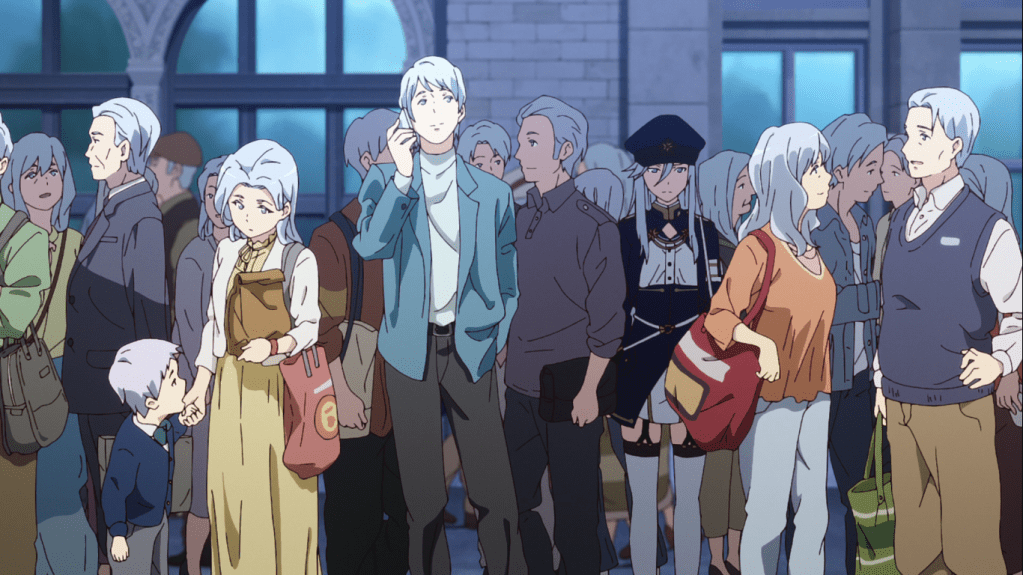
The Republic of San Magnolia has been locked in a dire war for its very existence against the unrelenting machines of the Legion for years, but if you looked around the neat streets and carefully maintained parks of the 85 districts, you would be hard pressed to believe it.  The people go about their daily lives, their silver hair blowing in the wind and their silver eyes without a care in the world while propaganda plays behind them on every screen.

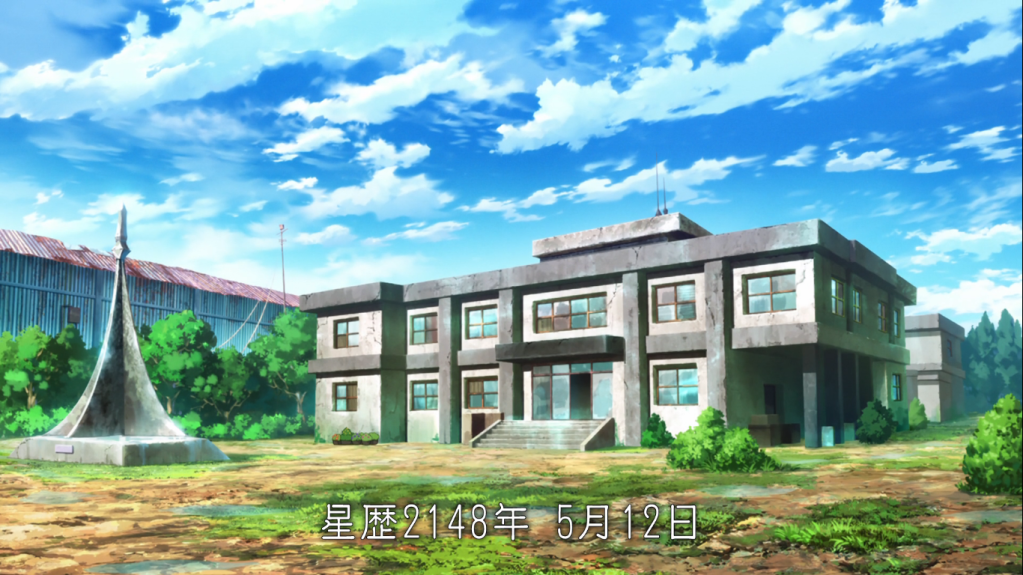
It is a strange disconnect from the hellish battlefield that lies just beyond the massive wall that protects them.

Outside, in the 86th district, the Juggernauts that compromise the Republic’s defense fight against the superior machines of the AI controlled Legion, in a bloody war that sees no ‘human’ deaths.

Regardless of how much blood is spilled by the 86, the people who are actually fighting the war.

The truth is far darker, and one that even those that know look away from for the most part.  The Juggernauts are piloted by those that have had their rights stripped away from them, the ones that have been declared to be ‘unevolved pigs’ by the government of the Republic.  Overseen by “Handlers” who have never once stepped foot on the battlefield, the people of the 86th district fight and die for little more than their pride, their determination to live another day serving as the one thing that they have to keep pushing forward.

This is the horrible truth of the ‘unmanned’ drones that fight to stop the implacable advance of the Legion.

The animation itself can easily be broken into two sections, the battles in the Juggernauts and the events that take place outside of them.  Where sometimes the production of the rest did fall flat at times, the CGI battle scenes always impressed.  It was clear that the production issues that plagued the series in the wake of COVID and other issues had not impacted that side of the anime as much as it did the rest.  

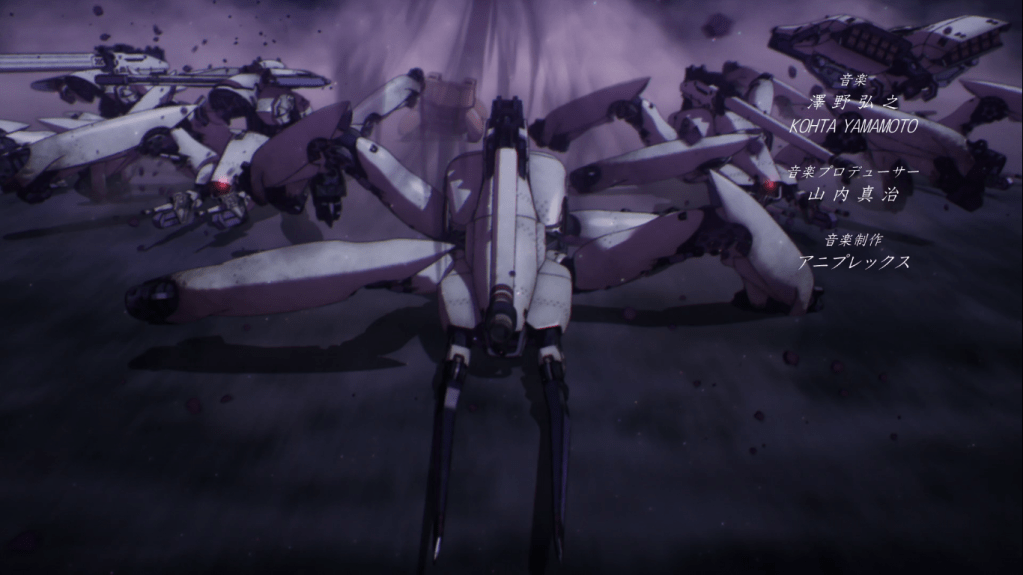
The designs of the mecha were inspired, and did not fall into the usual lanes of most other anime.  There were no massive, humanoid battle machines.  Instead, we saw designs drawn more from a practical viewpoint.  Multi-legged walkers that took a far more practical outlook on warfare, but still delivered a truly dynamic visual experience.  Honestly, it reminded me in parts of the spider tanks of another certain franchise.  Or even the quads of Battletech.

As a fan of mecha, I approve.

The music and visual style of the series have always been spot on, if you ask me.  The music and art have always set the stage very well, from the opening to the ending they did an amazing job of conveying the feel of the series, and the weight of it all.  The choice of using CGI for a good portion of the battle sequences was certainly the right thing to do, as it made the battles very fast, very fluid and incredibly dynamic.

The adaptation is where I think they really hit a home run.  The light novels don’t actually focus on the 86’s lives all that much, not in the first volume or two, at least.  There are also the usual issues with English translations of Japanese light novels, mostly keeping track of who is talking and doing what in a scene.  That was resolved very well in the anime, as were a lot of the ‘blank’ spots in the lives of the 86.  I have read the light novels, and watched the anime, and I have to say that I really do love the anime.

I just wish that they had adapted more of it.

I am pretty sure I could write another entire blog just about the world building, and the surprising depths that lie there.  From the decadent, hedonistic lifestyle of the Republic where the only real impact that they seem to be feeling from the war itself is a lack of real foodstuffs and resources, to the relative freedom of the 86 outside of the walls.  The existence of psychic phenomena, the existence and structure of the other countries, and even the horrifying truth of the Legion and the Empire that spawned them.  Honestly, I could read the series just for the world building alone.

Another reason I keep hoping that they will adapt the next arc of the story, since things get really wild from where they left off. 

If you are a fan of realistic, gritty war anime where death is waiting around every corner and very few characters have ‘plot armor’, where the characters are very much at a disadvantage and have very real, very living personalities to them, then I hope that you will give 86 a shot.

Just don’t lose your head.

With your contributions, you make our efforts possible. Thank you for supporting our content. Patreon supporters receive access into our official Discord server, and a few other perks depending on the tier. If you don’t care for Patreon, and don’t care about perks, you can always support us through PayPal too… links below.

Those who join via Patreon get special perks, such as extra content, quicker updates, and more.

Click to Donate

To Our Supporters

Thank you for helping us to enrich our content.

Patreon Supporters:
($3) Little Ferrets: Emily Turner
($5) Demented Minions: Andrew Wheal.
($7) Fandom Ferret: None
($14) True Blue Ferret: Francis Murphy and Bryan BSB.
($25) Premium Ferret: None.
($50) Round Table Ferret/Fluffy Ferret: Josh Sayer

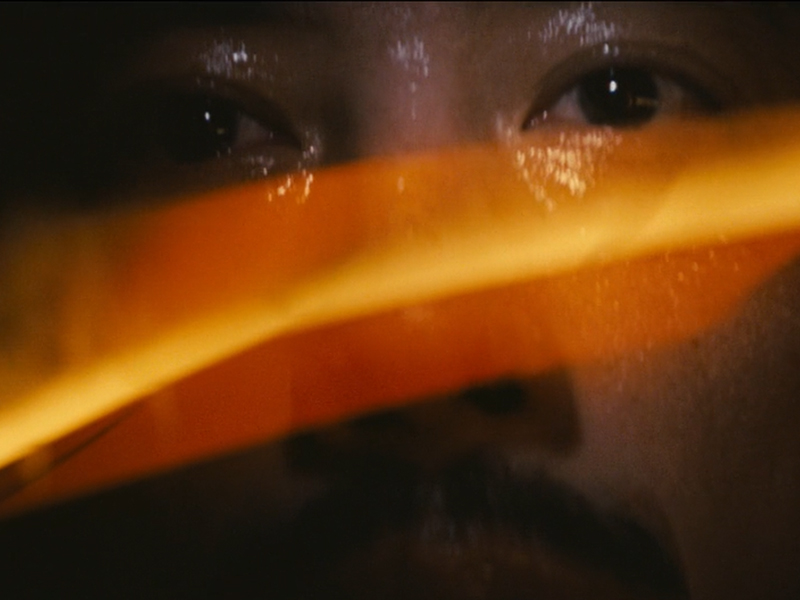
Anime Review: Another

Hello all, to our little corner of the internet! I’m Frost, and today I want to talk to you about one of my favorite anime of all time.  And since it’s the season, it seemed appropriate.

Of course, spoiler warnings apply.

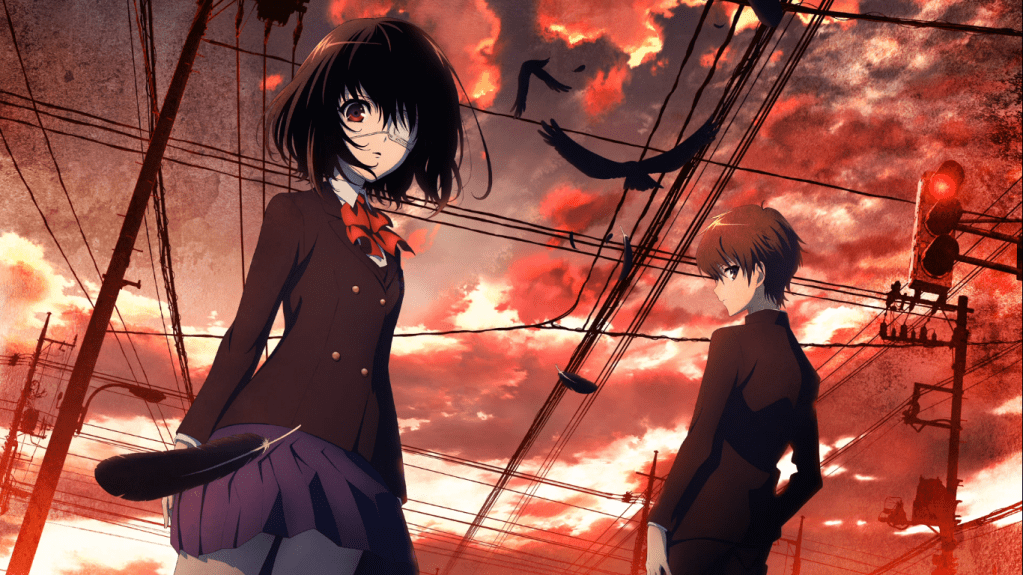
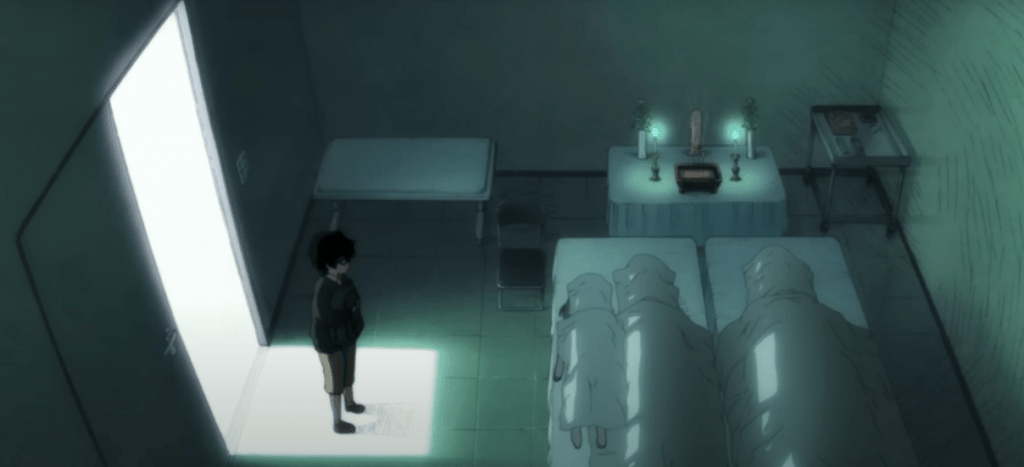
The anime Another is one of the best examples of what makes Japanese horror so unique that I have ever watched.  It’s gory and bloody, but not in the ‘Have a pile of body parts’ way that a lot of American horror is.  It has a plot, it has interesting characters, and it makes you think.  It was produced in 2012 by P. A. Works based on the novels by Yukito Ayatsuji, and for a ten year old anime, I think it still makes an incredible showing.

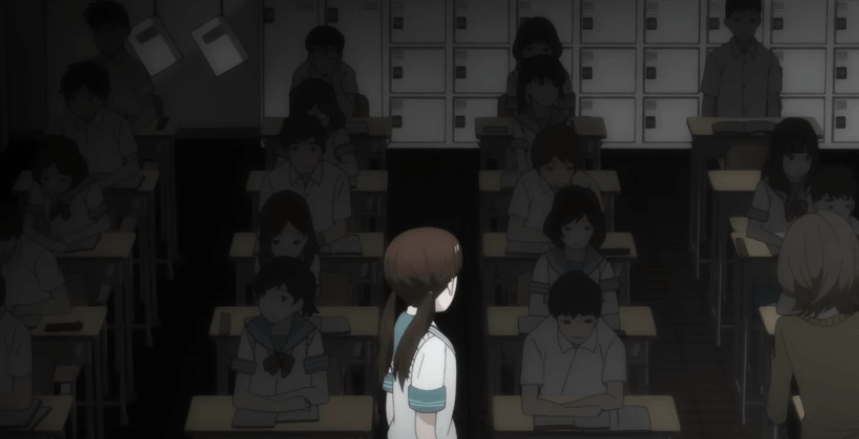
The story is good, if you ask me.  Twenty-six years ago, there was a girl in class 3-3 that was the kind, popular person that everyone was attached to.  You know the type, the one that the entire class just seems to gravitate around, the one that becomes the very heart and soul of the class?  Yes, that one.  Her name was Misaki.

Then…  She died.  The class started to go through the classic stages of dealing with grief, but they got stuck on denial.  One day, one of them pointed at her empty desk and said “She isn’t dead, she is right there.” Then the other members of the class started to do it, as well.  Even the teacher became part of this.  It went so far that at their graduation, the principal included Misaki’s chair at the ceremony.  It was even in the final class photo.

The thing is, there were no empty chairs in the picture.

Ever since then, this particular class, class 3-3, has been cursed.  The door has been opened, and they have been brought closer to death.  Every year, there is an extra desk in the class, one that no one knows of.  And the person who sits in that desk is no longer alive.

How does that work, you wonder?  Wouldn’t they know who the extra was, who was the other?

Wouldn’t the fact that there was Another stick out like a sore thumb?

That is where the next part comes in.  For the entirety of the school year, no one knows. Their memories have been altered. Everyone just knows that everyone in their class should be there.  They remember each other, no one stands out.  Every list of names, every photo, conforms to this new reality.  This new perception.

No one knows who the extra person is.  They can suspect, they can wonder, but the exact person is unknown.

They have tried many things over the years to counteract this curse, to stop the cycle of deaths from starting, but the one that they have settled on is to decide before the school year who the Other is.  Who to treat like they don’t exist, so that there is the correct number of students in the class.  The person who they ignore to make the numbers right.  The one they will exclude to balance the books.

Then, an outsider gets thrown into the mix.  A transfer student who doesn’t know the rules, who missed all the planning sessions.  Who doesn’t have a clue about the hell that is about to be unleashed.  Someone who had reasons to not be present, to have to change schools the way he did.

He interacts with the class, and one girl in particular.  Misaki Mei, who the rest of the class treats like she doesn’t exist.  Like they can’t see her.

Things go downhill fast from there.  The preparations have been upset, and the curtain rises on their little drama.  The cycle begins, and the curse shows no mercy.

What makes it even worse, is the fact that as you start to get to know the characters, you start to get connected to them.  You begin to learn who some of them are, as people, before tragic  things begin to happen.  It is one of the things that I have always found impactful about the Japanese style of horror.  They are not shy about letting you get to know the characters before they do awful things to them.  It is definitely the style I prefer over the bloody slasher flicks of American cinema.  It makes the impact more meaningful, and the dread more visceral when you have some level of emotional attachment on the line.

I would recommend Another for anyone who is a fan of the Japanese’s unique take on horror.  The fans of Final Destination, the Sixth Sense and other deeper horror series.  The visuals are very strong, and disturbing, even if they are starting to show their age.  They are used like a scalpel, to cut straight to the heart of the situation.  To show just how sudden death can be, how unexpected…  How inevitable.  The use of foretelling and symbolism really drive things home, and make re-watching it an interesting experience.  

There is a reason this has stuck at the top of my list with all the others that have come out before and since it.  There might be shows that look better, or that have a different approach to telling their stories, but few have ever really made the kind of impact that Another has on me.

So, I hope you watch it, and see if you can figure out who is…

Like anime, gaming, movie reviews and more? What about RWBY Analysis? If so, check out our other platforms and support our content. Also, please don’t forget to follow our blog for more content like this.

Click to Donate

You can help support us through PayPal or Patreon. You can support us for as little as $1 a month.

Patreon Supporters:
($1) General Ferret: None
($3) Little Ferrets: Emily Turner
($5) Demented Minions: Andrew Wheal.
($7) Fandom Ferret: None
($14) True Blue Ferret: Francis Murphy and Bryan BSB.
($25) Premium Ferret: None.
($50) Round Table Ferret/Fluffy Ferret: Josh Sayer

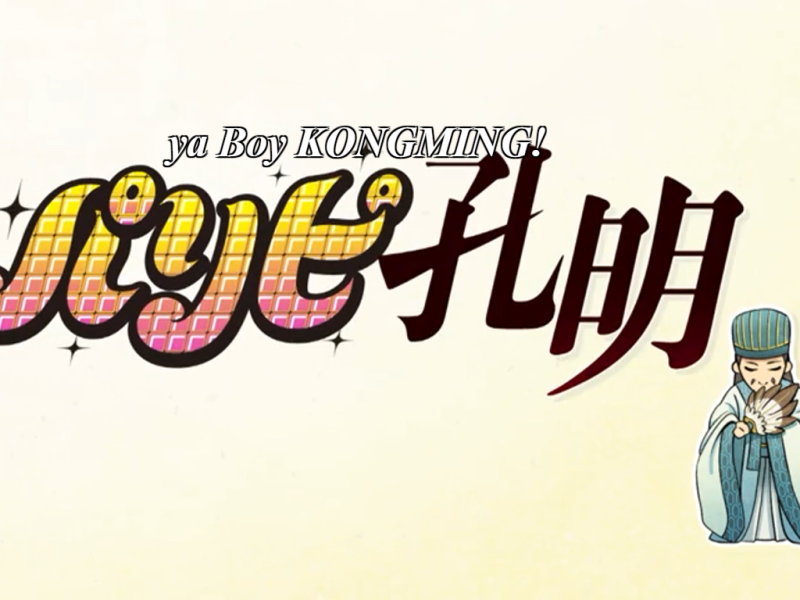
Anime Review: Ya Boy Kongming!

Welcome to our little corner of the Internet!  l’m Frost, and I would like to talk to you about a series that I really enjoyed, time after time I have watched it.  With it getting an English language dub, I figured that this is a good time to talk about it with others.

And of course, the usual warning of potential spoilers applies.

The series I am talking about is one that, I will be honest, I skipped at first. The premise was ambitious and sounded odd, and I was not sure if it would stick the landing. Then I heard the opening song, and it’s a real banger of a song.  After that, I checked out the actual opening animation, and I was intrigued. 

The first episode had me hooked, and now here I am, a fan of Ya Boy Kongming! It’s a newer series, produced in 2022 by P. A. Works.  

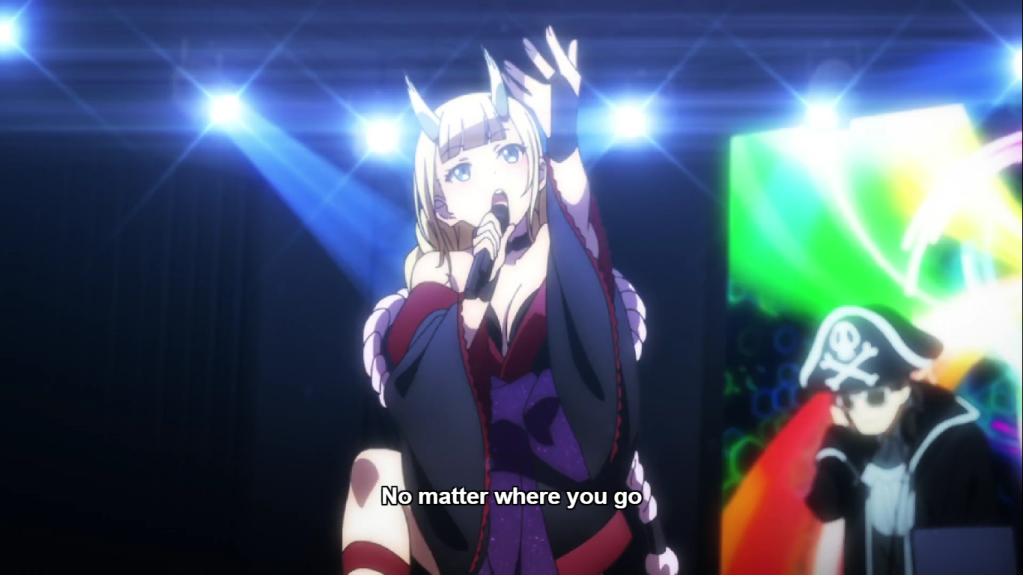
Where to start?  Well, let’s start with the music, since that was what initially pulled me in.  The soundtrack is amazing, with most of the songs being performed by Kuroneko and Laezel. I will admit, I am not usually a fan of this style of music, but the vocals combined with the series’ top notch animation and great characterizations drew me in. I am kind of obsessed over Dreamer.  It is one of my favorite songs from an anime of all time.

I would say it even beat out Flare and Dark Seeks Light.  

Now, what about the story?  

It is an unusual story, which is why I skipped it at first. Kongming was one of the greatest tacticians from the Three Kingdoms area, and he met his end in 234 AD. Now, in the series he is reborn as a younger version of himself in modern day Japan.

In Shibuya. On Halloween.

Needless to say, he thinks he has been sent to Hell. Understandable, considering.

He ends up at a club, where he meets the other leading character. A singer trying to make the jump into being a true professional. A young woman named Eiko, who works in the club and sings from time to time.  Her performance moves him, and I will say it caught my attention as well. Kuroneko did just an amazing job.

It is a story that really touched me. It is a comedy, yes. However, one that has shades of redemption, personal growth, and questions of morality. What will you do to make it big? What will you sacrifice?  What means the most to you, your integrity or fame? And how far will you go, to make amends for the mistakes you made in the past?

The writers did an amazing job on bringing this to light in ways that are very relatable.

Another factor I really enjoyed was watching the titular character deploy what were some of the most ruthless and innovative military strategies of all time…  To advance the career of a young woman that he found a worthy person to serve under.  

The supporting cast is another shining part of the story.  None of them are really throwaways, except for the true bit characters.  Even some of the supporting characters get their own time to shine, their own chance to confront their fears, their regrets, and rise above them.  

And let’s face it, everyone loves the Three-kingdoms nerd that is the owner of the club.  I really liked the fact that they show much more to him than JUST the gag trope.  He is a vital part of the story, from making sure that things are done, to giving Kongming help behind the scenes.  He even was the reason for Eiko to not just still be around, but to have decided to pursue what became her dream.

Okay, now I’m going to talk a bit about the bones of the show, as it were.

The animation style fits very well.  The attention to little details, like how Kongming walks in his robes, the use of his fan, and the little bounce that Eiko does before she performs really are great uses of animation to tell the story, and to set the characters.  Some of the insert animations that are used, especially during the rap battle, are just awesome.  I loved how they used it to portray the battle between two forces.  It really made it seem even more epic than it already was (and as someone who honestly doesn’t really like ‘modern’ rap, seeing the older style of free-form rap was very nice.)

The backgrounds and scenery are very nicely done, and truly make you feel like you are immersed in their world.  No matter how good the characters look, if you don’t have a good setting for them, they lose the impact.  The night time views of Shibuya are amazing, and the scene where they are atop the tower and looking down on the city?  Perfection.

The sound and music are honestly spot on.  They pretty much have to be in this kind of show, but let’s all admit, we have seen many musical shows where the music…  Really didn’t stand up to what it should.  The composition, pacing, and in-world use of insert songs was great.  It made me very eager for them to release the full soundtrack, not just the televised versions of the songs.  The ease that they used multiple styles and genres of music was masterful.  Honestly, I now have an appreciation for several styles of music that were never on my radar before.

I would highly recommend this series, in any format, for anyone that is a fan of great music, characters that you really feel for without the need to cry, and just some of the best feelings I have gotten out of a show this season.  Oh, and for Three-Kingdom nerds, of course.  I am hoping that they will announce another season, but I will definitely be reading this series just in case.

I hope that you give this series a shot, and don’t forget to dream big.

And don’t get lost in the Stone Sentinel Maze!

This has been Frost from The Demented Ferrets, where stupidity is at its finest, and level grinds are par for the course, and we’ll see you next time!

Like Anime, Gaming, and movie reviews? What about RWBY Analysis? If so, check out our other platforms and support our content. Also, please don’t forget to follow our blog for more content like this.

Click to Donate

You can help support us through PayPal or Patreon.

Patreon Supporters:
($3) Little Ferrets: None
($5) Demented Minions: Andrew Wheal.
($7) Fandom Ferret: None
($14) True Blue Ferret: Francis Murphy and Bryan BSB.
($25) Premium Ferret: None.
($50) Round Table Ferret/Fluffy Ferret: Josh Sayer

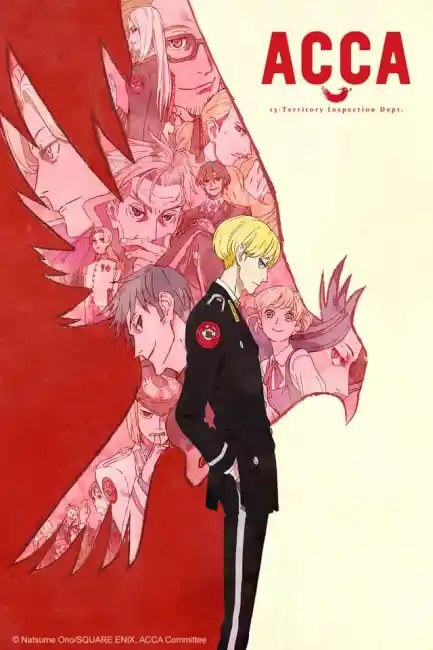
Anime Review: ACCA 13

Hey everyone, it’s Kernook here, coming at you with another anime review. I’m going to be trying a new review format today. If you like the way this one is laid out, please let me know. I’m trying to improve upon my standard formula, and want to know your opinion. Today, I’ll be reviewing ACCA 13.

  • Anime: ACCA 13
  • Genres: Drama, politics, thriller, economics
  • Episodes: 12 and an OVA
  • Target Demographic: Seinen (18–30 year old audience)
  • Studio: Madhouse
    • Director: Shingo Natsume
  • Other Media: Yes.
    • Manga written by Natsume Ono: ACCA: 13-Territory Inspection Dept
    • Manga written by Natsume Ono: ACCA: 13-Territory Inspection Dept. P.S.

Setting:

The anime takes place in Dowa, a kingdom subdivided into 13 states. Each one acts under their own autonomy and influence. To help facilitate the governance of this kingdom, an organization known as ACCA helps to maintain peace.

Quick Look:

I neither love nor hate this series, but I do think it stands as a solid viewing experience for the genre and themes the anime presents. If you need something else to watch between your typical seasonal line-up, ACCA 13 is a decent choice. What it lacks in heart pounding action sequences, it more than makes up for that, offering mind-games and political intrigue.

The anime is a technical marvel, made a spectacle for the small and intricate details embedded into every fiber of the series. Instead of large bombastic moments, this anime offers you a much more down-to-earth narrative and satisfying character development.

If you’re looking for something thoughtful to sink your teeth into, you’ll like this anime. If you want action, suspense, and mindlessness, look elsewhere… this is not a shoot-em-up, and victories don’t come at the hand of overpowered lead characters with more ego than good sense.

Mind you, ACCA 13 is a very high-brow anime, suffused with socioeconomic issues, cultural questions, politics and policy at every turn. This is not what I call a “popcorn anime”. You’ll get the most out of the series if you’re willing to take your time and savor the episodes slowly. I do not suggest trying to binge-watch it.

In-Depth Review:

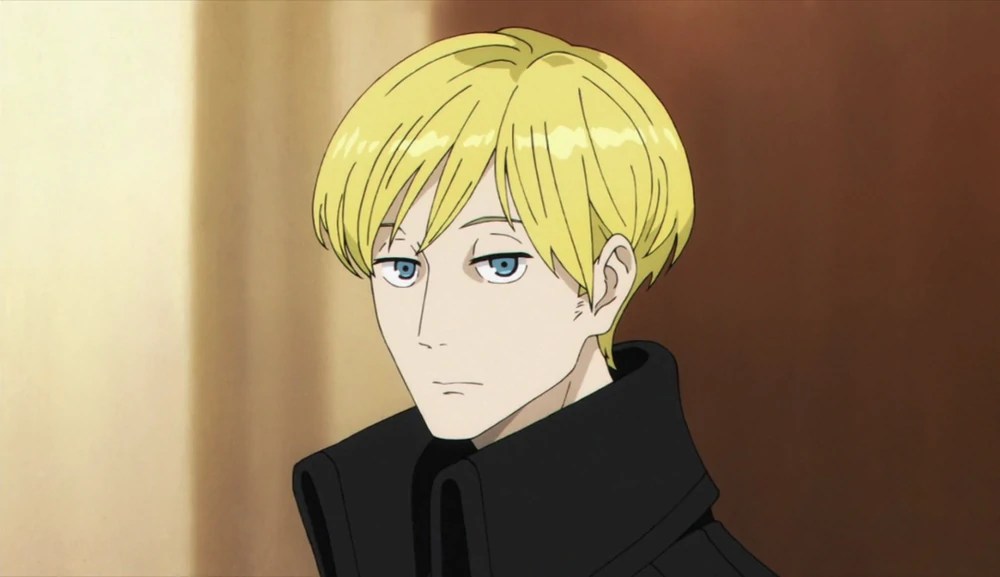
The main protagonist is Jean the “cigarette peddler”, as he’s so often called. This guy always seems to get into trouble despite his best efforts. It’s not usually his fault, either. He tries his best to keep a low profile, going about his day without getting mixed up in problems that he shouldn’t. It’s just that his best laid plans don’t always work the way he might like. For him, another headache is just another day of work.

As the deputy chief of the “territory inspection division”, a subbranch of ACCA, he has his work cut out for him. As the story begins, all he really wants to do is finish the state inspections he’s been saddled with and find a suitable replacement to take his job. He’s tired of the workday grind, and nearly ambivalent about his daily tasks.

All he wants to do is take a quiet position somewhere else, literally almost anywhere else. He’s done with all of the hassle that his position demands of him. Unfortunately, there are murmurs circling around reguarding a coup d’etat, and once again Jean is dragged into countless details he never even wanted to be bothered with in the first place.

By and large, this is your typical cloak and dagger sort of anime. Think big crime and spy syndicates, wrapped up nicely in a political thriller coat of paint. Anime like ACCA 13 can be hard to find, and I think that stands as a very good reason why the hype for this anime was so all-consuming when it was first released.

This is a Madhouse production. You can see that within every detail of the animation. None of the anime feels low quality, and everything looks absolutely gorgeous. With openings and endings that remind me of Burst Angel and Psycho-Pass, there’s just a lot to like here. The entire series carries a sort of European flair, represented in the backdrops surrounding the characters. Meanwhile, the character designs themselves remain striking and distinctive amidst their eye-catching environment.

The sound design and music remains pleasing to the ear, and often fitting for the scenes they’re playing beneath. That being said, I wouldn’t say that the entire soundtrack is memorable, only that it’s entirely serviceable. Really, that’s all we need, so that’s just fine. As long as it remains consistently solid across the series, and it does, that’s all I truly care about.

While the overall tone of ACCA 13 lacks the heart pounding action I might expect, it favors a subdued narrative experience. Honestly, this series doesn’t feel like an anime at all.

For that reason, I’d highly suggest it to anyone looking for a show to offer to a non-anime fan. It’s a lot like Bartender and Space Brothers. You could show it to a complete anime novice, and they probably wouldn’t hate the show based upon the fact it’s animation alone.

There’s a pervasive natural quality to the characters and their actions. A true grounded focus relies upon even the small details. That grounded focus helps to uplift the sometimes dry moments that crop up from time to time. The show would be lost without it.

From the way smoke wafts from around the characters, to the way some characters act, there’s a fully realized weight to the physics in the show. Some of them even stumble on occasion, or fidget where they stand in casual little ways… all of this adds context to the wider show.

I’d go so far as to say almost everything in this series comes from a casual lens. The voice acting is often delivered with a relaxed bent to it, using matter-of-fact bluntness to cut through thematic hypocrisy and droll diatribes like a knife through warm butter.

Characters don’t make obscene noises, cry out, or even raise their voice idiotically in the entire series. So many characters, Jean included, just don’t give a rats ass about propriety beyond a certain point. There’s a near fatalistic overtone and resigned undertone that continually seeps into the entire series. That’s what makes ACCA 13 so interesting to watch, and why many believe it to be so damn good.

I’ll say this, ACCA 13 is best enjoyed by anime fans who crave attention to detail. Nine times out of ten, I found myself much more interested in what the characters themselves were doing, rather than the wider story. That’s due to how wonderful the animation is.

Then again, it all seems natural, these don’t feel like anime characters. They feel like real breathing people. Even at mealtime, something we see in anime all the time, these scenes feel exactly as it should. The characters simply grab a meal, with absolutely no pretense to get in the way.

The real-world feel of the series drifts all the way down to socioeconomic questions. The values and cultures within each of the 13 separate states are distinctive enough to feel believable, same as the issues plaguing them. Sometimes there is no “right” answer, only a “less horrible” answer. Altruism is not closely at hand in the series, even when some of the characters would like it to be.

That being said, you’re free to draw your own conclusions. This isn’t an anime that focuses too heavily on the concept of moral high-ground. Jean typically spits in the fact of that, anyway. He just isn’t the type of character to smack the viewer over the head with any particular message one way or the other… then again, the wider ethos provided by Jean is a simple one.

A good drink in hand, a friend by his side, and a cigarette hanging out of his mouth is his ideal of a “happy place”. Anything beyond that, and he’s going to wonder why he should be brought to care beyond simple surface level concern… and that’s not to say he enjoys watching the world burn around him. Only that he’d rather not mess around with problems that don’t directly concern him.

He can’t simply fix the entire would, after all, why try?

There’s an honesty here, all the way through to the end, and it’s never unbelievable. It never gets taken to the climatic expected conclusion. Rather the subdued anime gives us a subdued ending, no blood spilled, no hands unrelentingly left dirty, all of it handled tactfully. Perfectionism has no place. It’s overrated entirely to everyone viewers have connected with, and these characters go on with their lives displaying that.

All in all, ACCA 13 is by far and away one of the most interesting series I’ve ever seen when it comes to displaying characters upon the screen, cramming them together just to see what they do within the political sphere.

I don’t love it, I don’t hate it. The series has its flaws. It’s witty in many places, but dry wit doesn’t always make for the most compelling story. The characters and stellar animation were the main reasons I enjoyed it. Then again, I meant what I said above.

It’s a solid decision for anyone who wants thoughtful maturity layered within the anime they watch. These characters are adults, they think and act like adults, treating the wider world with the required gravitas when they need to.

This has been Kernook of The Demented Ferrets, where stupidity is at its finest and level grinds are par for the course. I’ll see you next time.

With your contributions, you make our efforts possible. Thank you for supporting our content. Patreon supporters receive access into our official Discord server, and a few other perks depending on the tier. If you don’t care for Patreon, and don’t care about perks, you can always support us through PayPal too… links below.

Those who join via Patreon get special perks, such as extra content, quicker updates, and more.

Click to Donate

To Our Supporters

Thank you for helping us to enrich our content.

Patreon Supporters:
($3) Little Ferrets: None
($5) Demented Minions: Andrew Wheal.
($7) Fandom Ferret: None
($14) True Blue Ferret: Francis Murphy and Bryan BSB.
($25) Premium Ferret: None.
($50) Round Table Ferret/Fluffy Ferret: Josh Sayer

Meanwhile, check out some of our other great content.

Anime Review: March Comes in Like a Lion

Like Anime, Gaming, and RWBY Analysis content? Check out our other platforms and support our content. Please don’t forget to follow our blog for more content like this.

Click to Donate

You can help support us through PayPal or Patreon.

Follow my blog with Bloglovin

Hey everyone it’s Kernook here. It’s time to talk about March Comes in Like a Lion, a 2016 anime that is both heartfelt and wonderfully animated. The series lands hard with serious undertones and a main character that suffers from extreme anxiety.

It seems like I’m reviewing a lot of series from Studio Shaft recently. That is the same studio responsible for RWBY Ice Queendom as well. However, where that anime doesn’t start off strongly at all, the studio certainly pulled out all the stops on this one.

Honestly, March Comes in Like a Lion is likely one of the few anime that ever really gets to me. That’s because the series is both subtle and incredibly evocative of other shows and series you may have seen before. Yet, where those anime may fall short, this one doesn’t. This anime stands its ground quite well, despite what it has to offer.

Other anime that might come close in terms of impact might be Your Lie in April, but that anime has nothing on this story, at least in my eyes. Sure, March Comes in Like a Lion lacks several of the same sort of punches to the gut that other melancholic anime offer. What we receive in return, remains an introspective piece of fiction worth your time and attention.

That being said, while this is a beautiful anime, the core themes of anxiety, depression, and a sense of feeling lost, it makes it hard to suggest to anyone who isn’t into very thoughtful and analytical anime in the first place. It isn’t anything you need to dive into, it’s not complicated… it just isn’t mindless viewing either.

Directed by Akiyuki Shinbo and Kenjirou Okada, who also worked upon the storyboard, the series was adapted from a manga of the same name. There is also a live action film, if you care to look for wider media within this franchise.

As for me, I’m just going to focus mostly upon the anime. Right off the bat, let’s not pull any punches here. The story follows Rei Kiriyama, a boy who loses his family at a fairly young age. Now, as a wayward seventeen year hold, he has a pretty rough life. When we first meet him, he’s setting off on his own.

Prior to that, he went to live with a mentor and family friend. Due to strained relationships and a sense of failure, Rei decided it was time to live on his own. The game Shogi plays a large role in the anime, because he not only uses it to pay the bills, to him it’s a possible path for his life to take as a professional player… and that’s an important note.

To me, these tiny, but ultimately pervasive details, are what sets this particular anime above a great many others. When it comes to hobbyists and sporting anime, this one is a rarity. You hardly ever see such sad and emotional ones like this. The series has such introspective overtones, that it can seem a bit overbearing on occasion.

That’s fitting, because that’s actually how the characters in this show often feel The story is about finding a sense of belonging and forging one’s own path. Unfortunately, that’s rife with answers that aren’t clear cut for Rei.

He doesn’t know what to do. He has no idea how to come to terms with his past. He needs to find the levity in his life going forward, but that’s a difficult task. His own emotions inhibit him even more when he’s faced with coming to the right decisions about his future.

However, if Rei was the one and only protagonist, this series would fall incredibly short. Thankfully for us, there are three siblings ready to give us a deeper insight into what this series has to offer.

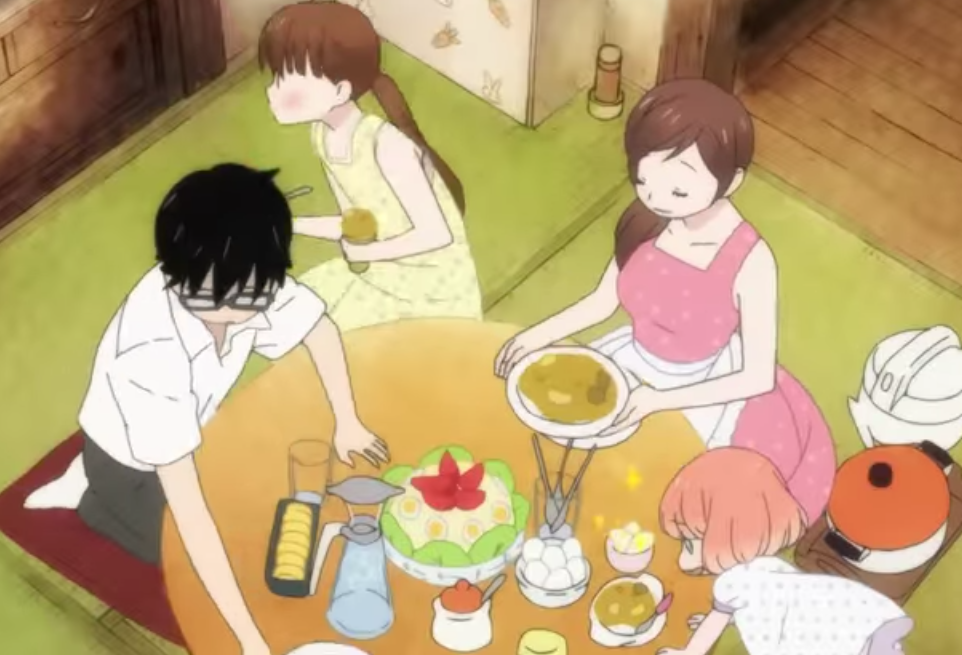
Overall, I think the Kawamoto siblings were a great addition to this otherwise dour anime. Akari, the eldest, Hinata the middling sibling, and Momo who is the youngest lost their parents too. As a family, they managed to get by in life much better than Rei ever did.

The bond Rei makes with them is probably the most endearing, and reasonably “happy” thing, that March Comes in Like a Lion has to offer.

Akari is the oldest, and the motherly overtones as the one to continue to raise her siblings really carries on well for most of the plot. That is a point too, these characters have their own spotlight episodes, separate from Rei entirely. That allows us to really get to know these characters in ways we otherwise wouldn’t.

From a rather sour outlook of school life from Hinata, to Akari’s need to keep the home running smoothly and raise her siblings, there’s a lot going on for these three characters. I won’t spoil too much, as I do find these women more interesting than Rei a vast majority of the time.

There is a little something I should make note of, though. Momo is quite young, and she acts her age. If that prospect annoyed you in Sweetness and Lightning, or particularly young characters aggravate you in general, it’ll likely annoy you here as well.

That being said, without her particular brand of levity, the anime might be considered too dark. The series kind of needs Momo. Without her, scenes that would be naturally infused with the joyous mind of a small child would cease to exist.

Really to me there is only one major and pointed downside to this anime, and that’s the Shogi matches themselves. If you want to learn about this game, this is the wrong anime. If you don’t know how to play Shogi, and have no concept of the rules for the game, you’re going to feel lost.

March Comes in Like a Lion won’t explain the rules to you in a way that’s meaningful, and it won’t attempt to catch even a novice player up to speed, either. You’ll be on your own, and that can make some of the matches feel boring overall.

A vast majority of rules and confines of gameplay are hand-waved away. So little is explained, glossed over at best. At worst, it makes little sense for someone who hasn’t played the game.

However, it’s not really about the game, it never was. It’s about the characters playing the game. That introspection I spoke of earlier comes from the matches in this series, and the way the characters themselves feel at that moment.

At the end of the day, that’s what the entire story of March Comes in Like a Lion comes down to. It isn’t just about their daily lives, it’s not even really what I would call a slice-of-life show. Rather, it comes down to how these characters really feel. None of the characters in this series are entirely unscathed. Everyone has some kind of trauma.

Sometimes that trauma is subdued or hidden beneath a happy facade. Other times you’ll have a character like Rei, who refuses to hide his own emotional scars, having no need to pretend he’s better off than he is. Several other characters do try to hide it, or at the very least, endure it.

From the whimsical Momo, to the completely depressed Rei, the characters run the gambit of emotions. You’ll notice I didn’t touch on Hinata’s story line here. That’s because it is one of the darkest besides Rei’s own. For me it is also one of the most infuriating and depressing, as Hinata faces bullying from her peers and those around her in a way that goes undressed by the adults around her.

With all of that said, I don’t know if you’ll enjoy this series. I don’t even know that you’ll sit there and think it to be a masterwork of narrative story telling….

To be fair to the critics of this show, there are moments that seem a little contrived, and others that feel a little more heavy handed than they needed to be. I think part of that has to do with the name itself, and the poetic narrative surrounding it.

The month of March has plenty of ways to analyze it. In Thomas Fuller’s 1732 compendium, Gnomologia: Adagies and Proverbs; Wise Sentences and Witty Sayings, Ancient and Modern, Foreign and British, we receive once such analysis. The full reference is this: “In like a lion, out like a lamb” and I’d say that’s a very good way to describe this particular anime too.

Sometimes it’s weaker for its additions, and other times it’s very bold for covering them. Either way, I can’t help but love March Comes in Like a Lion. If you like deep, heavily introspective anime, maybe you will too.

This has been Kernook of The Demented Ferrets, where stupidity is at its finest and level grinds are par for the course. I’ll see you next time. Please be sure to follow the block and check out our other platforms for more content like this.

Click to Donate

You can help support us through PayPal or Patreon.

Meanwhile, check out some of our other great content below.

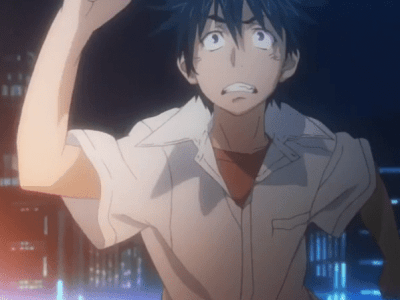
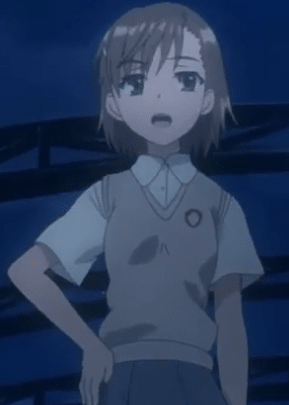
Anime Review: A Certain Magical Index

Hey all, it’s Kernook here, I typically review anime that I like. That’s not the hallmark of a good reviewer though, so I’m starting to dive into anime I’m not particularly a fan of. A Certain Magical Index fits that bill.

I find it hard to talk about this anime without wanting to pull my hair out. It just isn’t that good. I’m not alone in this assessment, either… more on that in a moment.

Before I begin, it’s time for the obligatory shout-out to support our content. Please be sure to subscribe or follow the blog for more content like this. You can support these reviews and help to choose the content over on Patreon as well. Your contribution helps to keep this blog free from advertising.

While many people do love this particular anime, and others find it to be a decent one to watch, there’s a decent number of people who dislike A Certain Magical Index. I’m among that number, and the reasons I dislike the series comes down to a slapped-together feel of the entire series.

Nefarious Reviews also pans the show… and the criticism in that review is heavily warranted. IF you want another poion, check there too.

Frankly, I just don’t see the value in this series, at least not on a personal level. The anime had a good premise, but it failed to follow through. It couldn’t execute on the ideas it tried to present. It’s a weird show, honestly speaking. While I do think A Certain Magical Index will cater to some anime fans, I’m often brought to wonder just who I can honestly suggest this series for.

That’s one of the reasons I hesitated to review it for so long. Just who would watch this series, and who might enjoy it? I honestly don’t know. If you did enjoy the series, please let me know why you liked it. I’d be interested to know.

To me, the themes just fall short, as do the influences of its setting. Futuristic or magical? Science fiction or fantasy? What themes best contextualize the show? Those questions aren’t simple to answer when A Certain Magical Index can’t even decide upon them itself as a series… let alone what I think of it.

Honestly, I expected better from a series adapted from light novels written in 2004 by Kazuma Kamachi and illustrated by Kiyotaka Haimura. The anime itself is produced by J.C. Staff.

While it certainly looks like an action based science fiction, it isn’t even close. The series distinctly lacks action. It doesn’t exactly hold the hallmarks of good science fiction either. Perhaps I’m simply being much too harsh. I’d say this anime falls distinctly into the “guilty pleasure” category for a great many viewers.

It isn’t the cream of the crop, but I have seen worse…

So, maybe it’ll fill a void for you as a viewer. I suppose if you enjoyed Strike the Blood, Guilty Crown, or Charlotte, you may in fact like this series too. For the rest of us, we’re out of luck. Bypass the series. There are better options out there.

Here’s the problem… or rather the list of problems.

To begin with, this is a somewhat long anime to get into. With several seasons under its belt and spin-offs galore it feels like an absolute slog to dive into. While the animation is decent enough and the soundtrack isn’t entirely awful, this is only a standard anime at best. It just isn’t worth the time investment to justify watching the series.

The story isn’t that good, either. This is a real shame too. On the surface, the idea of science and magic clashing against each other could be very interesting. Where A Certain Magical Index drops the ball is that it doesn’t give us a bone to chew here.

The series ultimately fails to offer a compelling narrative or one that even ties together its plot elements. Nothing feels meaningful.

To do this kind of plot justice, you need characters that have a firm ethos one way or the other. You also need a main protagonist that’s interesting in the first place. That’s the next issue. The characters are bland by nature.

They’re happy to pose theories upon their abilities more often than actually using them. It feels trite considering that these characters are also annoying and juvenile. I don’t expect them to be geniuses here, I just want characters to be a little self-aware as a cast.

They’re not… they’re idiots more often than anything else.

Beyond that, the dialogue drags and honestly, so do the fights. I’m all for deep and compelling character introspection. There’s just a time and a place for that. The series can’t figure out how to handle its pacing for the life of it. That’s my biggest issue.

I wouldn’t say you should avoid this anime like the plague, but there are better series worth your time out there.

This has been Kernook of The Demented Ferrets, where stupidity is at its finest and level grinds are par for the course. I’ll see you next time.

Click to Donate

You can help support us through PayPal or Patreon.

Meanwhile, check out some of our other great content below. You can also find more information about supporting us at the bottom of this post.
My Hero Academia Season 2 Review

Hey everyone, it’s Kern here. I recently did a review for My Hero Academia Season 1. As promised, I’ll be slowly reviewing all of the seasons in order. Today I’m moving onto talking about season 2.

As a reminder, the first season of My Hero Academia, also known as Boku no Hīrō Akademia, features the next several steps of Deku and his hero’s journey. The introduction to this series was a strong one. Season 1 introduced us to a strong cast of compelling characters, gave us amazing fights, and deeply intertwined character struggles. There wasn’t much that you could complain about.

Aside from small nitpicks or just a general dislike of the genre itself, it would be difficult to just dislike the show. So, enter in season 2, another strong entry in the series and marked improvement to the My Hero Academia universe.

I personally find that season 2 was actually much better than season 1, raising the bar higher than I thought it would back in 2017. To look at why, we should probably begin with the surface level production.

Production Quality

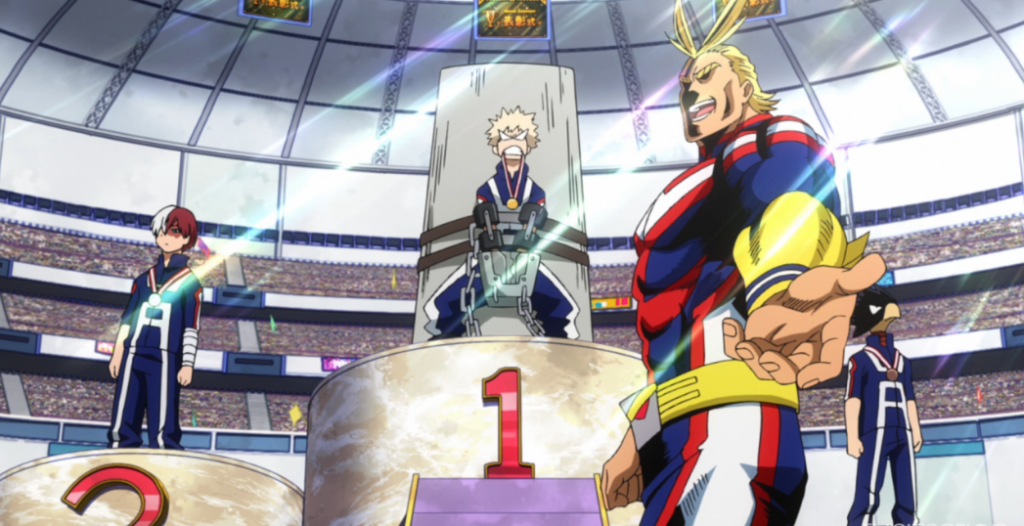
The image above, even though it is completely mundane showcases the worst of the baseline standard. As you can see, it’s far from an insult.

Production-wise, My Hero Academia is a masterpiece of production and planning in season 2. Studio Bones comes back stronger than ever in this iteration. Fluid animation and mindful sound design holds up even at its weakest points. There’s nothing to complain about at its absolute worst.

However, at its best you’re going to get some amazing attention to detail. The series is packed with beautifully bombastic fights, and a fair amount of atmospheric drama. All of that is skillfully wrapped in a fresh coat of hero colored paint. This is a bright and airy series, right up until it isn’t.

The animation follows these dynamic shifts as it needs to, aiding and uplifting the key moments that makes the series stand strong. My Hero Academia lends itself to a certain level of emotional maturity, characters have to work hard and be assets to their society. The imagery and sound design adequately represents these struggles perhaps better than season 1 ever could.

Like its predecessor before it, the pacing in this season is noteworthy and very well done. While it is certainly action packed, it isn’t stifling or overbearing either. Important cast members receive fulfilling character development. The moments are wonderfully conceptualized for the screen, and continue to be entertaining even during a re-watch.

Story and Progression

Overall, the villains and plot moving forward has a steady pace, giving us an actual significant improvement to discuss…. characters, motivations, ego and trauma are the driving factors in this season.

The first half focuses upon the U.A. Sports Festival, which features some of the strongest characterization we’ve seen so far. This section is one of my favorites because it is so dynamically diverse. You’d expect this to be an all hero match-up, battle of the greatest… but nope… we don’t just get that… we get a taste of school life in this quirk filled universe.

The sports festival introduces several new U.A. High students. Many of these characters either couldn’t make it into the prestigious (also in a way pretentious) “Class 1-A”. Others just have different professional pursuits that “Class 1-A” wouldn’t have met the need for.

This is a world that relies heavily upon doing what a person is most suited for. Society in the series focuses heavily upon overall utility, rather than just pure ambition. What a person dreams to become isn’t always as important as they can reasonably accomplish… but here we see the serviceable balance between those two extremes.

Ambition becomes a spark to pure gasoline as characters strive to showcase their talents. What would typically be thought of as a dystopian world works so wonderfully here because the characters intuitively understand their places within it.

Even the weakest among them understand their skills have an intrinsic value to aid in that society… even if they’re still figuring out those limitations, that is a journey they’re willing to undertake.

Todoroki’s characterization and development in this season is probably even stronger than Deku’s overall. His backstory underpins the core ethos of the show. As the son of the #2 hero, he needs to make firm and definitive choices about his place in the wider world… and that means coming to terms with his trauma. He needs to learn to live beside his struggles, and to accept himself as he is.

Truly, that is the centralized ethos in this season, self acceptance, and the acceptance of others in the face of adversity.

This particular arc gives us a deep dive into the personal struggles that our favorite heroes-in-training face down on a daily basis. The Sports Festival arc also calls back to key issues briefly touched upon in the first season, and brings new ones to light.

The rest of season 2 is filled with internships, studying, and exams. It gives us a much deeper in-universe study of how professional heroes maintain a workspace and how they function with the wider society. The world building here is astronomical, and hard to find fault with… only, I wish there had been more.

The teachers are actually skilled in the series, and so are the professional heroes. That’s an important metric, and it’s one that many series often overlook. My Hero Academia takes the time to truly show us how inept these students really are, and just how much more they need to learn. The power and skill barrier isn’t lip service, it’s stone cold fact.

Deku and his buddies aren’t ready for the struggles of the real world just yet, and season 2 drives that point home unflinchingly.

As amazing as these characters seem to us… they’re just small fish in an ocean at the end of the day… it was nice to see all of them knocked down a few pegs. Since the series gave us a chance to see their betters in action in the workspace, we know what the wider world truly expect of them now… and it isn’t a simple thing.

Themes of personal identity, gumption and pride come blazing in, front and center from all around. These moments offer a different kind of conflict. We get deep and private introspection among several of the characters. It truly is a breath of fresh air.

Characters

This is ultimately Deku’s story and it focuses upon him. That said, this season “feels” like an ensemble story encompassing the wider classroom and Deku’s peers. In a way, I’d say it feels a little like Assassination Classroom. Some of the strongest spotlight moments come from other students, and it doesn’t feel out of place in the slightest. Actually, that’s what I think makes season 2 so much more enjoyable.

That isn’t to say Deku doesn’t get plenty of his own spotlight and personal growth. He receives a fair bit, to be honest. As Deku learns to handle the taxing ramifications of his “One For All” quirk, he also begins to conceptualize himself as a hero-in-training realistically. This isn’t always easy for him. However, it is interesting for viewers to watch.

Deku maintains a chord of shyness and humility that we saw encapsulated within season 1. He continues the trend in this season. Frequently, Deku puts his own welfare on the line, for better and for worse. These attempts are often selfless on the surface, but they’re also in a way self-serving to him.

Deku knows what it means to be a hero… and maintaining those key traits are important to him. His personal conscience is so enthralling when you consider just how easily it comes to him. Yet, we as viewers know these values must come easily, or he’ll be little more than a failed byproduct of what he truly wishes to aspire to.

There’s almost a hint of the fourth wall breaking between Deku and the attentive viewer to a point. In his attempt to help his friends work through their own struggles, he also must work through a few of his own. For a shounen series, we get some stunningly emotional and memorable moments both for Deku and a few of the others.

Todoroki, Iida and Uraraka stand out this season, and they’re not the only ones. I do have to give a call out to the episode “Shoto Todoroki: Origin” as I do think that’s perhaps one of my favorite ones in this particular season. As I mentioned above, his story so fully encapsulates the themes of this season in a way even Deku doesn’t quite reach, and I firmly believe that was entirely intentional.

New cast members give us a different bone to chew on as well. You’ve got a little bit of everything in this mixed bag, and each of them are nice additions. The non-hero students in the event are great for world building and context.

Then you have Gran Torino who is batty-as-hell. This old dude is All Might’s mentor. He offers comic relief as well as backstory into All Might and the quirk known as “One for All”. I loved every moment this senile old fart was on screen. Honestly, he’s a great addition to the cast.

On top of that, Hero Killer: Stain is the kind of big baddie we want out of a high stakes, action packed series. He’s ruthless and maliciously motivated towards violent crime. As his name suggests, he’s willing to kill for his beliefs. His implications are much more interesting than what he actually pulls off, but that’s kind of the point with this guy.

Fans know what to expect here. He’s going to be a mainstay, and this is early characterization for massive plot elements later. To that point, the big baddie of season 1, Shigaraki is still around. For season 1, he provided a reasonable threat and a good early start, but now we know what a real threat is. Honestly, Stain is the villain dial cranked to eleven, and no one pulls punches on this guy.

Final Thoughts

Personally, I have only praise for the second season of My Hero Academia. My complaints reduce down to what I wanted more of, and that wasn’t because anything was lacking. It was just that good. The slower moments never drag on too long, the faster ones don’t outstay their welcome.

Less is more in this particular instance.

Season 2 maintains a strong balance between its larger cast of characters, the wider story, and its core themes. There’s a lot to unpack, and to enjoy. I spoke briefly on Todoroki, because he is such a stand-out character this season. However, Iida and Uraraka stand out to me as well.

I just wanted more, plain and simple. When season 2 was over, I felt like I wasn’t done yet. The times the show feels lesser, it doesn’t feel as though I’ve been cheated out of something great.

This is a solid continuation of the series, no question about that. In some ways, it’s much better than before. No wonder why it was so popular, My Hero Academia easily earns its acclaim as one of the best shows of 2017 because it is so incredibly dynamic.

I just can’t think of how they could have done it better, at least not without sacrificing something else. There’s just too many great moments in this season to do that.

This has been Kernook of The Demented Ferrets, where stupidity is at its finest and level grinds are par for the course. I’ll see you next time.

Click to Donate

You can help support us through PayPal or Patreon.

Meanwhile, check out some of our other great content below. You can also find more information about supporting us at the bottom of this post.

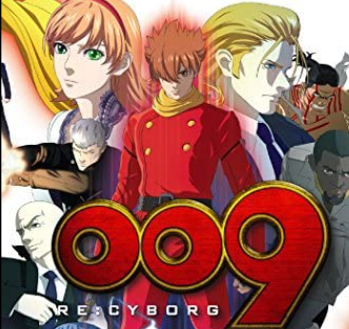
009 Re: Cyborg Review

Hey everyone, it’s Kern here! Who remembers this anime movie that released in 2012? I certainly do, and today I’m reviewing it. That’s right, it’s time for a complete and total mess of an anime. 009 Re: Cyborg is absolutely terrible in my eyes. Even in retrospect, there’s a lot of ways this anime movie fell flat.

It’s confusing at best, and takes itself too seriously at worst. For example, the series tries to feign intellect using religious metaphors. Even in the opening, it tries and fails to live up to its own pretentious ideology. It goes so far as to use skyscrapers as a statement for mankind and the hubris of reaching the heavens.

Some anime can pull this sort of deep and complex metaphor off, such as Monster or Ghost in the Shell (more on that rant later). 009 Re: Cyborg can’t use metaphors in a competent enough way to make any of them hit home.

There’s no subtlety here, it’s all much too overbearing. As far as clean narratives are concerned, that’s a problem. A fairly big one, truth be told.

That said the movie is entertaining to a point. You just have to understand what you’re getting into. I wasn’t able to do that because I went into the movie entirely blind, and to me it was a waste of my time.

Given just who was involved with this movie (this has to do with the Ghost in the shell rant), I expected more than what I got. My best advice is; set your expectations low going into it.

If you do that, you probably won’t hate it as much as I do. That said, I don’t personally like this movie.

There are moments where the animation dips fairly low. Honestly, I have to wonder what Production I.G and Sanzigen could have been thinking. There is some very questionable CGI in this story to be sure… but then again, there are moments when the animation isn’t entirely awful… you’ll get a mixed bag when it comes to visuals. For the era, we have come to expect that from anything involving CGI.

Take of that critique what you will…

A very long story short; 009 Re: Cyborg doesn’t quite know what it wants to be. That is my largest gripe with this movie, and my deepest annoyance over all. Moments of quiet contemplation mixes into the bombastic battle scenes, but neither of them act to uplift the other.

The movie itself feels torn between the two extremes. The pacing suffers a great deal. Hey, I’ll be honest, the movie attempts to have the mental fortitude required to take its deeper themes to the next level. You can tell the team tried to put their effort into fleshing out those moments, it just fell flat… or rather, it was rushed.

At the same time these quiet moments happen, the calls to action that drive the narrative forward often directly interrupt those thoughtful little sections. What results is a narrative that feels poorly timed and blotchy on principle.

This is the point where I need to be completely and totally fair to the wider series…. and yes there is somehow a wider series in this mess… this movie is an outlier even among factions of its fan base.

Maybe 009 Re: Cyborg just wasn’t for a person coming in for a cold watch of the movie… then again I doubt I’m being too harsh.

Many of the reviews on My Anime List and other such sites, claim the same things. The plot is often confusing even to direct fans of the series. A few people claim that the movie was disappointing to them. A few also claim the movie was illogical or lacking proper explanations where they would be needed.

I really do have to admit, that’s not an understatement.

009 Re: Cyborg is incredibly nonsensical in the best of times, completely and unquestioningly misogynistic at worst. Now, I know what you’re thinking. Many anime fall into these two categories.

Why is this one so freakishly bad?

Seriously, I wish I knew how it dropped the ball. The movie doesn’t really explain all that much in the first place. For example the voice… the god forsaken voice… “His voice”, whoever the hell “he” actually is…

Between the good guys and bad guys alike hearing voices calling to them (What anime movie does that sound like), there’s no hard and fast rules to how this voice works. Many characters claim to hear “His voice”.

The voice might as well be an enigma, truly. Almost as if the plot for Ghost in the Shell was poorly replicated, and everything went horribly wrong. Here’s the thing, I feel like that’s exactly what happened.

Kenji Kamiyama, well-known for Ghost In The Shell: Solid State Society was somehow involved in this mess. How did that happen? I don’t know. Why? I wish I knew. Was he trying to revive that same feeling offered to us in the original Ghost in the Shell movie?

Well… that’s certainly what it feels like….

This is why I hate the movie 009 Re: Cyborg. It feels like a cloned copy of an already great series. 009 Re: Cyborg couldn’t locate or keep its own identity in this process at all. That isn’t a good thing, because all you end up doing is comparing it to other amazing series. Ghost in the Shell is just the obvious one to point to, but I could say it feels a lot like Apple Seed as well.

I love Ghost in the Shell and I love Apple Seed, but I’ve already got those to watch. I don’t want some sort of poor imitation. I want something wholly unique. 009 Re: Cyborg doesn’t offer that. Other movies will ultimately do everything this one does, and they’ll do it better because they’re more focused upon the themes in the first place.

I have seen this anime movie twice now… and twice over I have no idea what the hell this mysterious voice is saying to these characters. I also have no idea who in the hell this god-like voice even is. Does the movie itself even know? I sometimes doubt it…

Lastly, let’s talk about that little romance problem the movie seems to have. We really could have done without that strange make-out scene. It falls short both in passion and a direct point…

Yet fan service panders… and that’s what this feels like. Fan service for the sake of it, little more and little less. The girl is in her underwear putting the moves on the guy. What’s not to like, right?

Wrong…

You’re only going to get a facsimile of emotion and the logic behind what romance is. However, it doesn’t feel organic… it just feels tacked on as an after thought. The relationship driven subplot feels more to me like an abundance of over-hyped teenage hormones without much else.

The movie doesn’t have the romantic focus you need to justify this kind of scene. The movie itself is about an hour and forty minutes long. That scene takes place a half an hour into the movie. Due to the timing, the wider themes, and the setting itself… well, I’m just not sold on it.

That’s my big problem with all of this movie.

At the end of the day 009 Re: Cyborg just can’t sell the world and themes that we viewers try to buy into. When we suspend our disbelief, we expect some sort of return for our investment.

I simply didn’t get it… If you did, that’s awesome… that’s just not how it panned out for me.

If you’re going to watch this movie for the first time, be reasonable. This isn’t a timeless classic. No matter the pedigree of the people involved with this series, don’t expect it to be an introspective juggernaut anime. It will pretend to be one, but it simply isn’t.

You need to know that detail going into it. Chances are good that it won’t be able to reach the greatness of predecessors before it… including the wider series itself, which has a strong and devout fan following even to this day.

I would even suggest not to go into the movie blind like I did, and start someplace else first. Wait until you’re ready to watch it with a few friends. Then, if you do hate it, at least you can all rant about it together.

For the average viewer that leads a busy life, you can bypass this one. It isn’t worth the lost time. There are much better movies out there, anime and otherwise.

This has been Kernook of The Demented Ferrets, where stupidity is at its finest and level grinds are par for the course. I’ll see you next time.

Click to Donate

You can help support us through PayPal or Patreon.

Meanwhile, check out some of our other great content below. You can also find more information about supporting us at the bottom of this post.

My Hero Academia Season 1 Review

Like Anime, Gaming, and RWBY Analysis content? Check out our other platforms and support our content. Don’t forget to follow our blog for more content like this.

Click to Donate

You can help support us through PayPal or Patreon.

Hey everyone, it’s Kernook here. Today I’m going to begin my review journey through the My Hero Academia series. Some of you may know this title as Boku no Hīrō Akademia.

I’ll be starting at season 1. Over time, I’ll slowly move my way through all of them. Super hero anime quite like this one are particularly hard to find. It’s worth the effort to re-watch the series and gather my thoughts accordingly.

When it first released I was dubious. I wondered if the series would be another sub-par shounen romp. Thankfully, it really isn’t. Like most anime fans out there, I’m always searching for new anime to watch. While I certainly prefer older anime from the early 2000’s and the 1990’s, I jumped on the bandwagon for My Hero Academia fairly quickly.

I must say, I enjoyed season 1 for all that it had to offer. This 13 episode masterpiece won’t leave you hanging for more. There are plenty of seasons to pick up after you finish this one.

I don’t think I have to tell you that this series is worth the watch for any fan of the hero’s journey, which Deku, our main protagonist displays in spades. Really, I think that’s the most compelling part of this anime; Deku himself and the wider world he faces down.

We can thank  Studio Bones for its high value production quality and intelligent fights. That certainly helps a lot too.

The Basic Story

The world is dominated by two main types of people. Those with powers named “Quirks” and those who don’t have that power. The series is fairly utilitarian. It boasts the concept that a person should do what they most excel at to benefit the wider community. It isn’t a dystopian world though, far from it.

Our main protagonist is a run-of-the-mill guy named Izuku Midoriya, nicknamed fairly early on as Deku. That’s what I’ll be calling him from here on out, by the way, Deku…

This middle school kid has a dream to become a hero. There’s just one problem, Deku doesn’t have a Quirk of his own. Within the series, this excuse happens to be handled this pretty believably too. We get a solid medical explanation in a flashback scene.

During a doctor’s appointment Deku is told he’s absolutely unable to develop a Quirk. The doctor, almost cruelly tells him that he could never become a hero. Those around Deku tell him this continually, believing he should find a new goal in life.

This headstrong boy refuses to believe he can’t become a hero. He absolutely won’t give up his dream for anything. Now I’ve discussed the powerful storytelling found in Deku as a character. If you’re interested in that, check it out here.

The majority of the first season is about challenging the preconceived notions you might have about “hero shows” like this one. Deku spends his time facing adversity, his own mental struggles, and the preparation he needs to take in the power “One For All”. That particular Quirk belongs to All Might. After Deku proves himself, All Might decides to pass it on to Deku.

Note: Not all quirks can be passed on, but “One For All” can be.

Deku dives into his efforts head first at nearly every opportunity. He’s so engrossed in the training it takes to become a hero. You truly do want to root for him. The bond he makes with All Might is really a special thing. It reminds me heavily of Kakashi’s bond with Team 7 of the Naruto series. His role is almost paternal. This bond between them deepens from mentor and protege into teacher and student once Deku is accepted into the “UA” high school.

What makes My Hero Academia  knows exactly what story it’s trying to tell. It doesn’t deviate from the core themes. The series carefully balances humor with emotion, but the story is also tight paced and full of action where it suits. Better yet, the character conflicts hold their own emotional weight.

One of the best characters to facilitate the emotional conflict for Deku is Bakugo. He might come off as your average bully, but there’s more going on under the hood with this character for sure. Even early on, you can see that in spades. While Bakugo’s rage at Deku certainly feels a bit misguided at times, the emotional warfare feels realistic to the universe.

Yet, what would an action series be without stellar fights?

Animation

The animation won’t do you wrong. The combat feels weighty, the animation itself is very slick during the fights. The characters don’t “float” where there shouldn’t be any floating to their movements. All of the Quirks suit the characters well, even if we don’t fully understand the complete magnitude of these powers. Bakugo’s explosions feel bombastic. Todoroki’s ice powers feel layered and amazing.

Combat choreography isn’t something a screen shot can adequately depict. This is a series you have to watch to fully appreciate. I should call it raw magnitude. Well and truly, the fights are raw magnitude for a lack of a better description.

The attention paid to the tiny details really shows how much care the animators put into this series.

Final Thoughts

Honestly, this is a solid first season to a pretty good shounen anime over all. In my opinion, it’s also one of the best seasons because of how clean and concise it is.

There are so many anime in this genre that feel clunky or overdone. I promise you, My Hero Academia comes out of the gate strong. It doesn’t feel clunky in the slightest. Shounen anime often feel like a dime a dozen, but My Hero Academia feels like more than that.
The first season is only 13 episodes long, you could binge watch the first season in a single weekend with time to spare. The ending is wonderful too, paving the way for more great seasons down the line.

With the strong introduction of the main cast, and a few decent villains like Shigaraki, there’s a lot to like here. I often return to this first season for the tight writing, punchy characterizations, and compelling storytelling. If you haven’t seen this series, you probably should.

This has been Kernook of The Demented Ferrets, where stupidity is at its finest and level grinds are par for the course. I’ll see you next time.

With your contributions, you make our efforts possible. Thank you for supporting our content. Patreon supporters receive access into our official Discord server, and a few other perks depending on the tier. If you don’t care for Patreon, and don’t care about perks, you can always support us through PayPal too… links below.

Those who join via Patreon get special perks, such as extra content, quicker updates, and more.

Click to Donate

To Our Supporters

Thank you for helping us to enrich our content.

Patreon Supporters:
($3) Little Ferrets: None
($5) Demented Minions: Andrew Wheal.
($7) Fandom Ferret: None
($14) True Blue Ferret: Francis Murphy and Bryan BSB.
($25) Premium Ferret: None.
($50) Round Table Ferret/Fluffy Ferret: Josh Sayer