Gameplay: Spyro 3

Hey everyone, it’s Kern here, back with another gameplay video. This time we’re finishing off the Spyro Reignited Trilogy. Want to watch the other games first?

Watch Spyro the Dragon gameplay.
Watch Spyro 2: Ripto’s Rage gameplay.

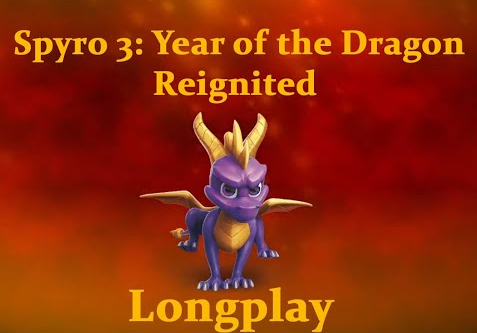
As you can probably guess, the third and final game in this three part series is named Spyro: Year of the Dragon. Like the other two games that preceded it, the game was developed by Insomniac Games and published by Sony Computer Entertainment. Insomniac would later develop Ratchet & Clank for the PlayStation 2.

This particular rendition is from the Spyro Reignited Trilogy, released for PlayStation 4 and Xbox One in November 2018. Later in 2019, Microsoft Windows and Nintendo Switch would get their own versions as well.

Spyro: Year of the Dragon (Long Play)

Click to Donate

You can help support us through PayPal or Patreon.

Like all games in the franchise, this one is a platformer. This time around Spyro and his buddies are celebrating the rare “Year of the Dragon”. According to them, this special occasion takes place when new dragon eggs are brought to the realm. You know how this goes. A big baddie comes to crash the party and the eggs are stolen. Spyro and his friends have to go and save the eggs.

If you’ve played a Spyro game before then you know what to expect here. Spyro: Year of the Dragon doesn’t make any huge changes to the general standard formula of its predecessors. Fly, charge enemies, breathe fire, Spyro is a dragon after all.

With bright world, mini-games, and Spyro’s signature style this is a wonderful game for kids and adults alike. I’d be remiss if I didn’t say that it suits family friendly fun. For that alone it belongs in any gaming household that may have kids around. If platformers are your style, this is a good one.

This has been Kernook of The Demented Ferrets, where stupidity is at its finest and level grinds are par for the course. I’ll see you next time.

Click to Donate

You can help support us through PayPal or Patreon.

Meanwhile, check out some of our other great content below. You can also find more information about supporting us at the bottom of this post.


My Hero Academia Season 1 Review

Like Anime, Gaming, and RWBY Analysis content? Check out our other platforms and support our content. Don’t forget to follow our blog for more content like this.

Click to Donate

You can help support us through PayPal or Patreon.

Hey everyone, it’s Kernook here. Today I’m going to begin my review journey through the My Hero Academia series. Some of you may know this title as Boku no Hīrō Akademia.

I’ll be starting at season 1. Over time, I’ll slowly move my way through all of them. Super hero anime quite like this one are particularly hard to find. It’s worth the effort to re-watch the series and gather my thoughts accordingly.

When it first released I was dubious. I wondered if the series would be another sub-par shounen romp. Thankfully, it really isn’t. Like most anime fans out there, I’m always searching for new anime to watch. While I certainly prefer older anime from the early 2000’s and the 1990’s, I jumped on the bandwagon for My Hero Academia fairly quickly.

I must say, I enjoyed season 1 for all that it had to offer. This 13 episode masterpiece won’t leave you hanging for more. There are plenty of seasons to pick up after you finish this one.

I don’t think I have to tell you that this series is worth the watch for any fan of the hero’s journey, which Deku, our main protagonist displays in spades. Really, I think that’s the most compelling part of this anime; Deku himself and the wider world he faces down.

We can thank  Studio Bones for its high value production quality and intelligent fights. That certainly helps a lot too.

The Basic Story

The world is dominated by two main types of people. Those with powers named “Quirks” and those who don’t have that power. The series is fairly utilitarian. It boasts the concept that a person should do what they most excel at to benefit the wider community. It isn’t a dystopian world though, far from it.

Our main protagonist is a run-of-the-mill guy named Izuku Midoriya, nicknamed fairly early on as Deku. That’s what I’ll be calling him from here on out, by the way, Deku…

This middle school kid has a dream to become a hero. There’s just one problem, Deku doesn’t have a Quirk of his own. Within the series, this excuse happens to be handled this pretty believably too. We get a solid medical explanation in a flashback scene.

During a doctor’s appointment Deku is told he’s absolutely unable to develop a Quirk. The doctor, almost cruelly tells him that he could never become a hero. Those around Deku tell him this continually, believing he should find a new goal in life.

This headstrong boy refuses to believe he can’t become a hero. He absolutely won’t give up his dream for anything. Now I’ve discussed the powerful storytelling found in Deku as a character. If you’re interested in that, check it out here.

The majority of the first season is about challenging the preconceived notions you might have about “hero shows” like this one. Deku spends his time facing adversity, his own mental struggles, and the preparation he needs to take in the power “One For All”. That particular Quirk belongs to All Might. After Deku proves himself, All Might decides to pass it on to Deku.

Note: Not all quirks can be passed on, but “One For All” can be.

Deku dives into his efforts head first at nearly every opportunity. He’s so engrossed in the training it takes to become a hero. You truly do want to root for him. The bond he makes with All Might is really a special thing. It reminds me heavily of Kakashi’s bond with Team 7 of the Naruto series. His role is almost paternal. This bond between them deepens from mentor and protege into teacher and student once Deku is accepted into the “UA” high school.

What makes My Hero Academia  knows exactly what story it’s trying to tell. It doesn’t deviate from the core themes. The series carefully balances humor with emotion, but the story is also tight paced and full of action where it suits. Better yet, the character conflicts hold their own emotional weight.

One of the best characters to facilitate the emotional conflict for Deku is Bakugo. He might come off as your average bully, but there’s more going on under the hood with this character for sure. Even early on, you can see that in spades. While Bakugo’s rage at Deku certainly feels a bit misguided at times, the emotional warfare feels realistic to the universe.

Yet, what would an action series be without stellar fights?

Animation

The animation won’t do you wrong. The combat feels weighty, the animation itself is very slick during the fights. The characters don’t “float” where there shouldn’t be any floating to their movements. All of the Quirks suit the characters well, even if we don’t fully understand the complete magnitude of these powers. Bakugo’s explosions feel bombastic. Todoroki’s ice powers feel layered and amazing.

Combat choreography isn’t something a screen shot can adequately depict. This is a series you have to watch to fully appreciate. I should call it raw magnitude. Well and truly, the fights are raw magnitude for a lack of a better description.

The attention paid to the tiny details really shows how much care the animators put into this series.

Final Thoughts

Honestly, this is a solid first season to a pretty good shounen anime over all. In my opinion, it’s also one of the best seasons because of how clean and concise it is.

There are so many anime in this genre that feel clunky or overdone. I promise you, My Hero Academia comes out of the gate strong. It doesn’t feel clunky in the slightest. Shounen anime often feel like a dime a dozen, but My Hero Academia feels like more than that.

The first season is only 13 episodes long, you could binge watch the first season in a single weekend with time to spare. The ending is wonderful too, paving the way for more great seasons down the line.

With the strong introduction of the main cast, and a few decent villains like Shigaraki, there’s a lot to like here. I often return to this first season for the tight writing, punchy characterizations, and compelling storytelling. If you haven’t seen this series, you probably should.

This has been Kernook of The Demented Ferrets, where stupidity is at its finest and level grinds are par for the course. I’ll see you next time.

With your contributions, you make our efforts possible. Thank you for supporting our content. Patreon supporters receive access into our official Discord server, and a few other perks depending on the tier. If you don’t care for Patreon, and don’t care about perks, you can always support us through PayPal too… links below.

Those who join via Patreon get special perks, such as extra content, quicker updates, and more.

Click to Donate

To Our Supporters

Thank you for helping us to enrich our content.

Patreon Supporters:
($3) Little Ferrets: None
($5) Demented Minions: Andrew Wheal.
($7) Fandom Ferret: None
($14) True Blue Ferret: Francis Murphy and Bryan BSB.
($25) Premium Ferret: None.
($50) Round Table Ferret/Fluffy Ferret: Josh Sayer

Anyone Can Leave a Critic Review on “IMDb”

Hey everyone, it’s Kernook here. I’m back with a particularly quick post and a few little tips. This is just a write-and-toss, but I promise it’ll be of help to you.

So, you need eyes on your reviews, right? If you write reviews for the media that is already listed on IMDb, you’ve got to post it up in the critics section. I’ll show you how to do it.

First, let’s talk about why you should.

The Value of Trusted Databases

If you don’t know, IMDb stands for Internet Movie Database. A database means links and searchers. These are two critical things any blogger wants. You will find all kinds of shows, movies, and streaming media there. You can leave a linked review that takes a reader directly to your review.

The best part is, the approval process doesn’t take too long and the barrier to entry is particularly low. The big pros use IMDb to leave critic reviews, but you can too. This is important, you want to have your name up there with the bigger names. You want to be noticed and taken seriously.

When you share your links over on IMDb you give yourself a tiny edge in the analytics game too. People will search for things on Google and IMDb. Even if you can’t top the google charts just yet, this gives you another way to get your name out there.

Beyond that, you can use the database to find other bloggers like yourself. You can try to form friendships and network with them. Go read a few other critic reviews, leave a constructive comment on their post. Put yourself out there, get known.

All in all, IMDb does two things for even the most novice blogger…

Firstly: You to find people who’ve written content directly in your own niche. If you’ve both reviewed the same piece of content, you don’t get more direct than that. It hands you fellow reviewers on a silver platter, this makes it easier to find people working with similar genres.

Secondly: More links help you. IMDb is a trusted website by the masses.

With a little bit of research, we can see that IMDb has a global ranking of #58 at the time of this post. That means it is a very highly used website, and that makes it perfect for all of us. Pros and novices alike should be leaving our reviews in the critics section.

After you’ve written your review and shared it around, post it up there.

How To Do It:

This is super easy, anyone can do it. For this guide, I’ll be doing it with an anime. You can do it with all kinds of shows. If the media is on the site, you can leave a review.

Step 1: Go to IMDb. Make sure the media you’ve reviewed is on the website to begin with.

Step 2: Scroll all the way down until you see “edit page” button, and then click on it.

Step Three: It may ask you to make a “contributor account”. Go ahead and do that. It doesn’t cost you anything, totally free. I’ve already got a one, so I’m good to go.

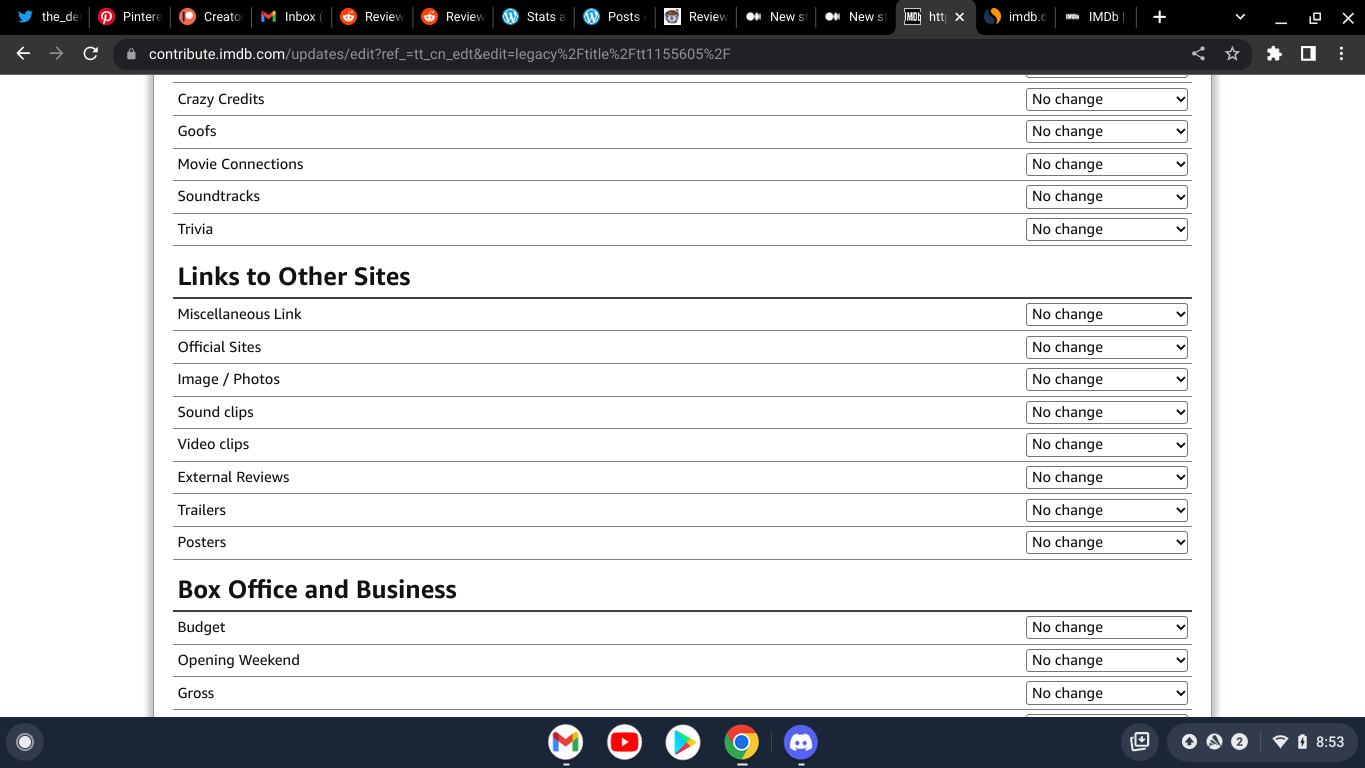
Step 4: If you’ve got a contributor account, you’ll see a page like the one below with a lot of categories. Go all the way down to “Links to Other Sites”. There you’ll see “External Reviews”. Click on the drop down in that section. You’ll want to switch it from “no change” to “add 1 item”.

Then confirm the changes.

Step 4: Then you’ll be taken to the that you can leave your review. Put the link in the URL spot. For the description use your pen name, or the name of your website. Then click “Check these updates”.

It will take you to another screen asking you to confirm the updates you’ve made. If you’re good to go, then submit them. On their end, there will be a quick overview process. I don’t know what that is exactly, but as long as you’re not being completely disingenuous, you’re in the clear.

It should put your review through fairly quickly. On average it never takes me more than an hour to see my review posted up.

After it’s been posted, you’ll see your critic review added in that section along with all the others. Sometimes, you might review a series that doesn’t have any critic reviews at all. You can be the first one, just like I am here in this image.

See? It really is that easy.

Hip Shot: Don’t know what to write about? Here’s a prompt for you. Find a series with no citric reviews. Watch that series and then write your own. Share it on IMDb like I did with my review of A Little Snow Fairy SugarYes, I know that was a completely shameless plug. No, I don’t care. My point still stands.

Following Trends: If you click on the search menu for IMDb, you can find “Most popular movies” and “Most popular TV shows”. You can also see the top 250 movies and top 250 television shows. If you’ve suffered writers block, you’ve probably seen at least one of these. Find a short series or a movie, watch it and write your review on it.

Many of you can benefit from writing reviews. Even if they aren’t your main form of content, don’t overlook them. A review can provide a tangentially tied experience for your readers.

More importantly, a review can bank upon your larger backlog of content and bring in new readers. Reviews provide entry level content and simple accessibility, we need to remember that.

A few key demographics can really benefit from this.

Gamers:

Plenty of games are actually tied loosely to anime or live action movies. Sometimes you can get both. You can diversify your content by writing reviews about those series. This is particularly true for horror and the RPG/MMORPG/ARPG genres. Brawlers, you guys are in the clear too.

RWBY, Halo, World of Warcraft, Resident Evil, Walking Dead, Final Fantasy, Dragon Ball Z, Inuyasha, Naruto and even Mortal Combat has a movie.

Take advantage of these titles. There’s even more too, like Prince of Persia: The Sands of Time. It released just this year. I promise you there’s plenty more where that came from.

Use them…

Newbies in Celebrities/Politics/Sports/Hobbies:

When we love a hobby, we are likely to watch content based around that hobby. This is a no brainier. There are movies, shows and documentaries based around these things. Use them to gain early attention. If you’re new and unknown, grasp onto this kind of media with a vengeance.

This is a key aspect of diversifying your content. When you’re new this can be difficult.

Nero-divergent/Otherwise Able:

If you are a lifestyle blogger with a disability, see if there might be media based on that. You can review that series and provide a personal perspective as well. There’s something to be said about providing insight to these important topics.

Final Thoughts:

At first, blogging can be hard. Getting your name out there requires thinking outside of the box. Many people don’t realize how easy it is to get onto websites such as IMDb. They see the word “critic” and quickly become intimidated. It’s okay though, you don’t have to be.

Use all of your tools to get your name out there. Use every advantage. This is a free one, and it’s easy to do. Go ahead, give it a try and let passive views slowly flow in over time. In the meantime, keep putting your best foot forward. Work to get better and continue your endeavors as a content creator. In time, you will succeed.

That’s it for today. Was I of any help to you? If so, drop me a follow. You’ll be getting more tips and tricks for bloggers soon enough.

This has been Kernook of The Demented Ferrets, where stupidity is at its finest and level grinds are par for the course. I’ll see you next time!

Anime Review: A Little Snow Fairy Sugar

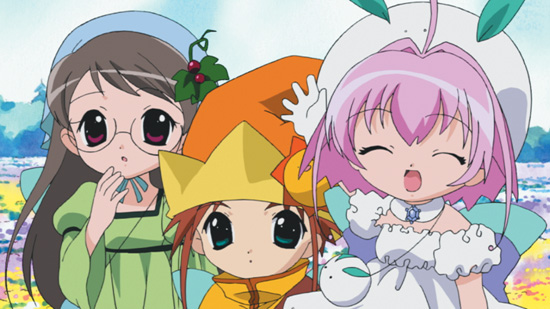
Hey all, this is Kernook here. Today we’re going to talk about a series that’s gentle and easy to watch. However, it’s not all sunshine and rainbows either. Sometimes this anime is a little bitter-sweet and contemplative above all else. While it touches on the subject of loss, you’ll find the themes to be easily digestible and never too dark.

Today I’m talking about A Little Snow Fairy Sugar. Please don’t forget to follow this blog and out social media for more content.

Before I dive into the series, let’s talk about the usual technicalities. As of right now the series can be hard to find. You can rent or buy it digitally on Amazon Prime. I’m not sure if you can locate it anywhere else. I still have my old DVD copies so that’s how I watch the show.

Speaking of that, the series was originally released on DVD in North America by Geneon Entertainment.  Sentai Filmworks partook the license later on. The animation was done by J.C. Staff, for better and for worse. For the time it was pretty decent, average at the very least. That said, it hasn’t aged well.

Thankfully, the character designs by Koge-Donbo save this problem. The characters are wonderful. Let’s dive into the meat of the show properly.

This is a short 24 episode series, centering around the main protagonist, Saga. She’s an interesting girl. She likes to have everything organized to perfection. To some degree her this nearly obsessive character flaw stems from hardship, but I’ll get to that later. Saga lives with her grandmother in Muhlenberg, Germany.

Side note: As far as I can tell, this is a fictional place. It isn’t real. Although interestingly enough, there was actually a man by the name of Frederick Muhlenberg. If what the urban legend says is true, then that is the guy who prevented German from becoming an official language of the United States. This is the sort of thing you find while researching for blog posts, I swear. Tangential learning, everyone! Anyway, I digress.

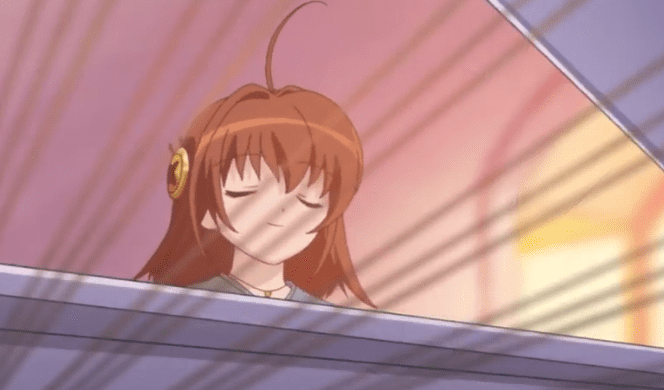
At the time the series begins, Saga is 11 years old. She goes to school and keeps a part-time job at the “Little Me” coffee shop. As a hobby she visits the local music store to practice playing her late mother’s piano.

As you can see, Saga’s life is entirely ordinary with nothing out of place. One day during a rain storm, Saga encounters Sugar, an apprentice Season Fairy. As you can guess, everything neat and orderly in Saga’s life goes completely askew as soon as she meets Sugar.

The seasons and weather such as snow, wind, rain and the sun are controlled by these little creatures. Also as expected, we find out that these little buggers are entirely invisible to humans. Saga can see Sugar. That is the crux of the show. The next thing Saga knows, she’s befriended the adorable little pain-in-the-butt. The general story goes like this…

In order for Sugar to become a full-fledged Season Fairy, as an apprentice she must first journey to the human world. These little fairies have a lot to learn during training. Naturally this causes problems for Saga as she tries to keep the little snow fairy out of trouble. 

A Little Snow Fairy Sugar is full of simple everyday adventures, nothing more, nothing less. All in all, this show is light and airy. It’s a breath of fresh air, really… however there’s a few sad little elements too. Beneath the overtones of gentleness and spunky characters, the series has a very clear and honest tone.

You see, ultimately this is a story about life and loss. Growing up can be awkward and painful. This show speaks to that in a very real way. Really, the themes are about letting go of the past. The sincere friends and beloved family that we inevitably and tragically lose can’t put our lives at a standstill. We don’t get the time back after those emotional ties are gone, but we have to move on.

In this way, you might say A Little Snow Fairy Sugar is very similar to Sweetness and Lightning.

Although the series never beats you over the head with this concept, it is a pervasive theme. A Little Snow Fairy Sugar heavily and constantly implies that Saga can see Sugar because of her own childhood traumas. This is concept lampshades further due to the memory of Saga’s deceased mother.

Saga’s constant recollections of the woman speaks volumes. In some facets this is her journey of personal catharsis after grief.

Saga needs to learn to move on with her life. The show makes it clear. Every week, she visits her mother’s old piano. To her, this is the replacement for a gravestone. As I said above, she is an obsessive type character. Her routine visits are deeply tied to her emotionally.

There comes a time when Sugar finally discovers what she needs to know. That’s it, her training is done. She can go back home, if she only wanted to. She doesn’t want to return to the fairy realm. If she did that, it would mean leaving Saga behind forever.

This is a wonderful series, and it certainly is worth your time. The series is certainly aimed at a slightly younger audience. Adults may not get the same sort of benefit or enjoyment from the series. A middling or younger teenager would likely benefit best. That being said, the series is kid friendly and that makes for wonderful family viewing.

If you’re an adult anime fan that requires anime appropriate for small children around, this is reasonable viewing. Honestly, if you like these kinds of stories, the series will probably be a solid choice for you regardless of age.

Importantly though, it won’t offend the sensibilities of small children and it won’t be so absolutely annoying that older kids flat out hate it. It’s certainly aimed at girls more than boys. That being said, I know a lot of boys who do like it, so don’t let that stop you.

This has been Kernook of The Demented Ferrets, where stupidity is at its finest and level grinds are par for the course. I’ll see you next time.

With your contributions, you make our efforts possible. Thank you for supporting our content. Patreon supporters receive access into our official Discord server, and a few other perks depending on the tier. If you don’t care for Patreon, and don’t care about perks, you can always support us through PayPal too… links below.

Those who join via Patreon get special perks, such as extra content, quicker updates, and more.

Click to Donate

To Our Supporters

Thank you for helping us to enrich our content.

Patreon Supporters:
($3) Little Ferrets: None
($5) Demented Minions: Andrew Wheal.
($7) Fandom Ferret: None
($14) True Blue Ferret: Francis Murphy and Bryan BSB.
($25) Premium Ferret: None.
($50) Round Table Ferret/Fluffy Ferret: Josh Sayer

The First Thing Bloggers Need to Know – Readability

You know, it’s funny. When I graduated from high school back in 2007, I knew one thing about my life and only one thing. I was never going to enter a university or higher education. It just wasn’t for me. Then again, it seemed to me that so little in the world could be “for me”.

I was adrift with what to do in my life. I ran through the gambit of jobs that you get right out of high school. Corner store clerk, Yep. I’ve been there. Hamburger flipper, yep, I’ve done that too. I was also the poor unfortunate soul that management crams behind a service desk during peek holiday seasons… the dreaded “temp” worker.

From babysitting to mowing lawns, I drifted through many jobs trying to find my place in this vast world. Eventually though, I found my calling; freelancing. Now, I’m not your typical “gig worker” in the sense that I only write blogs or that I only work for writing mills.

I don’t make my income entirely based on that, and most bloggers don’t. It really is nice when someone can have a mastery and build that following to only be a bloggerI’m going to tell you a little secrete of the trade, something a lot of people don’t want you to know.

We’re jacks of all trades, but we’re rarely masters at any of them. Success is easy to brag about, once you’ve got the clout. What about if you don’t though?

I’m not writing this to get your attention, I’m writing this because I’m going to tell you the truth. You’ll follow me of your own volition, or you won’t. If not, that’s fine, but I promise you this; I’m going to give you good advice.

How many times have you read about finding your niche audience? What about defining keywords? Oh, here’s a good one. How many times do you see bloggers talking about the big traumatizing “algorithm” we all battle on a daily basis?

Now I have real hard hitting question for you. Do you, as an aspiring blogger, know what “REI” stands for? What about just the word readability? Do you know what that means?

This is your first lesson. “REI” stands for Reading Ease Ideal.

To be simple, it is just a tool we use. Reading comprehension is a requirement of a good blog. Reading ease tools measure reading comprehension. It tells you how easy your written word is to understand. That’s all “readability” actually means.

Understanding the reading level of your target audience matters. Your blog will be useless if your target demographic can’t comprehend it. You need to master this before you try to master keywords and algorithms.

If you want to get an edge, begin at the heart and soul of the craft. Master your ability to understand your own writing. There’s all kinds of reading ease measurements out there. You need to learn about them.

You need to have all the tools in your tool belt. You’ll gain an edge over other bloggers. Many don’t understand this concept. If you understand what REI means, and how it needs to be used, you’re going to have a better shot against the competition.

Getting your foot into the big media doors isn’t always easy. If you write effectively from the onset, you’ve got a much better chance. That’s the reality. Major publications have standards for reading comprehension.

For example, Time Magazine has a median reading level of “grade 7”. This means the average 13 year old can read the magazine and understand the content in it. Reader digest aims for a baseline of around 15 years old.

That’s not to say the content will appeal to those ages, mind you. The basic reading level of your blog and your target audience are not the same things. However, they are symbiotically tied together.

Therefore, I repeat: Reading Ease Ideal.

Cram those three words into your heads. Old veterans in blogging can roughly determine these things on their own. We can do this by sight alone. That takes practice. If you don’t have the skill, learn the skill.

Step 1: Before you start digging into keywords and algorithms, make sure you have a good word processor.

Step 2: Figure out what metric for reading ease that processor uses.

Step 3: Then you decide what sort of content you want to make. Find out the target ages and the reading level of that group. Look at what the reading level is for major publications in your niche. You can google this, for a lot of big industries.

Step 4: Make sure ALL of your posts are within the target metrics.

If you are writing for a relaxed reader, you’d better not be posting university level reading material on your blog. If you are writing to be understood by the average reader, keep that in mind. You should not go above the reading level of the average young teenager. Unless you are writing Reader’s Digest level material, don’t toss around “grade 9” blog posts.

The lesson here: write for your readers.

That is the most important detail. Do not deviate from that mindset as a newbie. If you do, your posts feel inconsistent and sloppy. During your editing phase, edit to suit your target demographic directly. How educated is that group? Does your post meet the reading ease required for that group?

Figure that out before you post.

Once you start doing this, you’ll be a better blogger. I say this because it is resoundingly true. Every blogger making the big bucks, knows this is true. Middling bloggers like myself, wishing to compete with the pros, learns this is true.

It will help to improve your SEO rankings. You will have a much easier time defining your keywords later on. If you found this helpful, follow me here on Medium. You’ll be getting more tips and tricks like this soon enough.

I’ll leave you with my scores for this blog post. That way you’ll know I’m not feeding you a bunch of nonsense:

Readability Consensus
Based on (7) readability formulas, we have scored your text:
Grade Level: 5
Reading Level: easy to read.
Reader’s Age: 8–9 yrs. old (Fourth and Fifth graders)

After Post:

See what I mean? A child could read this post if they wanted. It’s not aimed at them, but that doesn’t rightly matter. I just wrote it and tossed it. Sure there may be spelling errors, I’m not going to edit this stupid thing. It isn’t because I don’t care. I just wanted to prove a point, reading ease matters. If you can do it by sight alone, you’re a step ahead of the game.

Follow me for more content, you’ll be glad you did.

Fort

Hello everyone! It’s Demented Ferrets resident artist, Ruka. Welcome back to another “Universal Language of Art”

Today I will be talking a little about the history and the story behind this picture and why it’s so captivating to me.

Fort by Rukangle

This picture was taken at Fort Zachary Taylor located in Florida’s Key West Historic State Park. The fort was completed in 1866, taking 21 years to complete. The fort’s foundation consists of oolitic limestone and New England granite. Its five-foot-thick walls rose 50 feet above mean low water, and included two tiers of casemates plus a terreplein or barbette at the top.

There are three seaward curtains, 495 feet between bastions, each containing 42 guns on three levels. Each of them were augmented by a land-facing gorge. The troop barracks were built into this gorge with a capacity for up to 800 men. At either end of the barracks was a large gunpowder magazine while a Sallyport was located in the center, connected to land by a 1200-foot causeway. Rainwater was collected in underground cisterns along the perimeter of the fort.

It served as a deterrent for confederacy ships during the Civil War of the United States and was a stronghold in the Spanish-American War in 1898. Today, the forts hold a large variety of preserved weapons and have the largest collection of Civil War cannons in the United States.

Now, I am currently trying to get my B.A in History. When I think about what makes me want to study something that for many would-be considered boring, it comes down to my love for people, art, and architecture that really brings it all together.

Learning the stories behind places and the reasons why they still stand is a psychological part of its people. What it was and how it has evolved through the years, is also part of that wider culture.

This fort also brought back memories of my childhood, and they have nothing to do with this particular fort. Rather, they have to do with the one on a small island in the Caribbean. That one is called San Felipe del Morro Castle, located in San Juan, Puerto Rico.

Now I’m not here to give you all a history lesson or anything like that but places like these really make me want to just let go and explore its wonders with childlike eyes and a need to understand what happened there and how it still stands. (Of course, they would give yearly maintenance and all that. )

Yet with this fort, there was an interesting play of lights and shadows. Every corner was a play of what could be behind this archway, would it be more beams of lights or would it be more shadows? This play created some confusion but for an artist, it was a great source of contrasting lights. If you look closely we can distinguish each path and this includes the ceiling. It shows you how the support columns and ceiling round themself to make a tunnel-like structure to be able to support the artillery and all the men that were responsible for its defense. In a way, it can get a bit creepy and I do have another photograph that shows a darker side of the fort where it’s colder and there was almost no light coming thru.

It was a good time and we had fun exploring, learning, taking pictures, and having a piece of the ceiling fall on me while taking a picture, witnessed by multiple people, to me was a testament to how old the place was really is. And could you imagine, that dressing up as a pirate and running around the fort while being chased by confederate soldiers would be amusing, would it not? So, if you guys have any questions comments, or concerns, please don’t hesitate to leave me a comment below.

Until then, if you like this content, please consider supporting us on Patreon, and follow us over on our Twitch channel for gaming-related content, where I make an appearance via chat.

Well like always, this has been Ruka of The Demented Ferrets, where stupidity is at its finest, and level grinds are par for the course. I’ll see you around! Until then please be sure to check out our other content below.

5 Great Anime from the 90’s

Hey everyone, it’s Kernook here, from The Demented Ferrets, and I’m here to bring you another anime post. I’d hesitate to call this a “top list”. Frankly, I think that does a grave disservice to all of the amazing anime that you can find from this particular decade.

Don’t forget to follow this blog and our social media for anime and game content.

 There should be more to the medium of anime than top lists of series that dominated the billboard charts. Honestly, a “top ten” list is difficult to make because the 90’s were a treasure trove of anime to discover and love. Therefore, these are merely the suggestions of a humble anime fan.

Those of you who happen to be older anime fans like myself have likely heard of most of these. For those who haven’t, or for those who missed out on that decade entirely, I hope this list finds you well. 

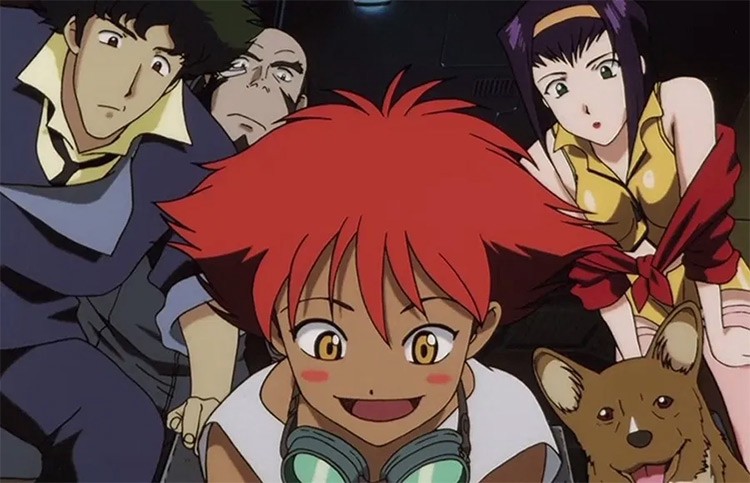
Very Honorable Mention: Cowboy Bebop

So, you may be wondering; why isn’t this number 1 on the list. You’d be right for asking about that. This list isn’t in any particular order. The genres involved are so varied you can’t force them to compete. If we were discussing the space opera genre particularly, this would top that list.

Frankly put, it would smash out the other contenders by such a wide and far margin it would be astronomical. Let’s be real honest with ourselves here. It wouldn’t even be fair to the other candidates in the list. This series is that good, and no, that’s not hyperbole.

Here is the thing, I should not have to tell you to go watch Cowboy Bebop. If you don’t know that you need to watch this series, I can’t help you. The only reason this isn’t taking the number 1 spot is because I want to save that one. There are plenty of anime that may be lesser known to someone. This anime will never have need to fear getting buried by time. It’s a classic and always will be.

For the rest of you connoisseurs out there, if you just spit your drinks at the screen, I’ve done my job and gotten your attention. While I have that attention, make sure to follow me here or on medium for more content.

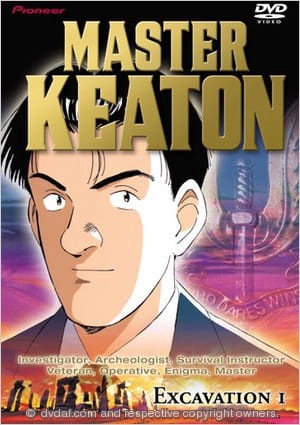
5. Master Keaton

This amazing anime was adapted from its manga counterpart by studio Madhouse, so you know you’re going to get wonderful animation quality here. The anime has a sub and a dub. It can also be a little hard to find these days, but it is worth your time.

Truth be told, I really do enjoy watching Master Keaton every now and then. It doesn’t feel too dated. There’s a real charm to this compelling series. It isn’t so centrally focused Keaton, but rather he feels as though he belongs in this wider world of character focused narratives.

Moreover, this is an intelligent series, and prides itself on showing off Keaton’s many skill sets. You’ll get a little taste of everything in this show, a little romance, a tiny sense of adventure, and a feeling that will leave you satisfied after the show concludes.

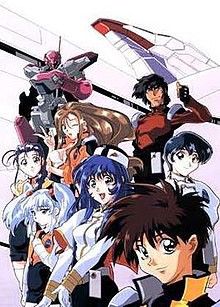
4. Martian Successor Nadesico

Now this one is a true sci-fi classic. Like many anime of this genre, you’re going to get strong characters and an awesome setting. Any anime fan of the 90’s will truly want to have this on their shelves.

To simplify the plot in the best way that I can, in the year 2196 it seems that planet Earth is in the middle of waging war with a race of aliens. These notorious invaders are called “Jovian Lizards” and the people of Earth see them as a well and true threat to mankind.

A company called Nergal gets the bright idea to design a space battleship, lovingly called the ND-001 Nadesico. This ship is built for war, and it is a powerhouse. There’s just one problem. The crew consists of the top civilian experts in their fields, these characters are total screw-balls. There’s some humor to find in that. 

It isn’t all fun and games though. These characters will have to face down a decent level of hardship. Like most mecha out there, you’re going to get decent battles and compelling sci-fi action. You’re also going to get some drama too.

3. Serial Experiments Lain

Okay, so now it’s time for something darker, edgier, and profoundly more confusing. Serial Experiments Lain isn’t exactly for the average popcorn anime viewer. It isn’t mindless in the slightest and it will expect a fair bit from you, the viewer.

This series is packed with subversive symbolism and darker themes about how technology can directly and indirectly impact society. Like its name suggests, it feels like a largely experimental show, rife with physiological horror elements that are sure to leave you unsettled. 

I wouldn’t say that the show is for everyone, far from it. This is for the sort of viewer that enjoys physiologically bent series, and the study of unsound minds. 

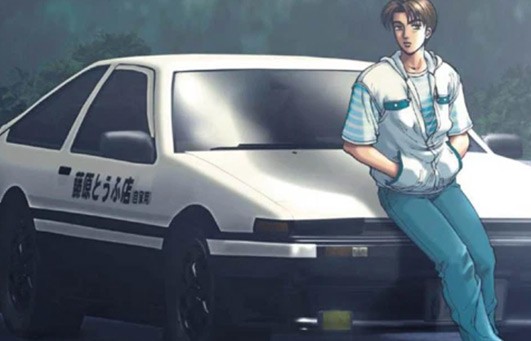
2. Initial D

Okay, this one is kind of a sleeper. We all knew that it would end up on this list, because you just can’t talk about 90’s anime as an adult without bringing it up. It’s a bit clunky by today’s standards too, and I wouldn’t fault you for asking me why I would put this series on this list. I’ll be honest, the CGI is absolutely awful by today’s standards. 

That being said, Initial D is all about street racing and the underground counter-culture that you find within that particular community. It’s bombastic at times, very slow paced and thoughtful during others.

Car fanatics will love this series for one distinct reason; the show gives accurate explanations about how cars need to be handled. There’s a real technical element here that makes me want to place the series on the list. It hasn’t aged the most gracefully, no…

However, it still stands out to me as an iconic 90’s anime that is worth your time to watch. This is particularly true if you like faced paced drag-racing.

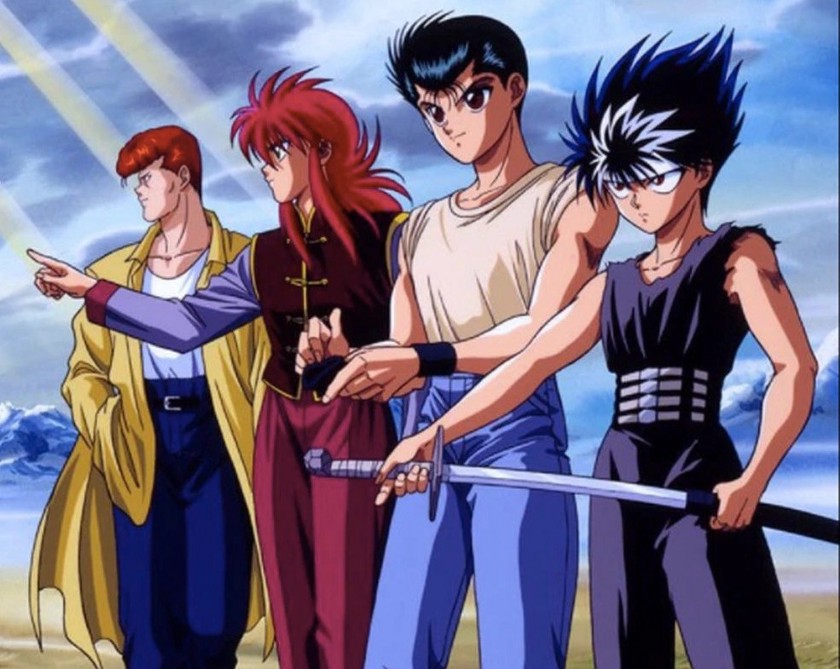
1. Yu Yu Hakusho

Okay, shounen fans listen up, this one is for you. I don’t think I’m overstating the matter when I say point blank; this is one of the best shounen anime from its time… and dare I say it, all time. You’ll be hard pressed to find one that’s better. On par perhaps, more innovate surely, but not done better. 

Even if you watch nothing else from this show, at the very least sit through enough of the series to complete Season 2’s black tournament arc. Trust me, you’ll be glad that you did. This holds especially true if you’re a Naruto fan who praises the chunin exam arc in that series. 

Do not bypass Yu Yu Hakusho, just don’t it… it’s too fundamental of a series for any hard core shounen fan to ignore.

This has been Kernook of The Demented Ferrets, where stupidity is at its finest and level grinds are par for the course. I’ll see you next time.

With your contributions, you make our efforts possible. Thank you for supporting our content. Patreon supporters receive access into our official Discord server, and a few other perks depending on the tier. If you don’t care for Patreon, and don’t care about perks, you can always support us through PayPal too… links below.

Those who join via Patreon get special perks, such as extra content, quicker updates, and more.

Click to Donate

To Our Supporters

Thank you for helping us to enrich our content.

Patreon Supporters:
($3) Little Ferrets: None
($5) Demented Minions: Andrew Wheal.
($7) Fandom Ferret: None
($14) True Blue Ferret: Francis Murphy and Bryan BSB.
($25) Premium Ferret: None.
($50) Round Table Ferret/Fluffy Ferret: Josh Sayer

The Simpsons Season 1 Retrospective Review

Hey everyone, it’s Kernook here. When I think of influential television shows, The Simpsons comes to my mind instantaneously. I wanted to discuss the first season, so that’s what I’m going to do.

Click to Donate

You can help support us through PayPal or Patreon.

Honestly, I doubt that The Simpsons even needs an introduction at this point. It’s hard not to know of this series. With fifteen separate dubs and nearly thirty subs, The Simpsons stands right up there with some of the most prolific shows of our modern age. When it comes to worldwide appeal in the animation space, this series is something of an enigma.

Plenty of cartoons are, sure enough, but The Simpsons wasn’t exactly intended for children and it sits within an odd middle ground. It isn’t a Japanese anime, it’s not your average American cartoon, either.

Rather I should say that it didn’t used to be an average one. Back in the day, the series wasn’t directed at family friendly viewing. It just wasn’t so egregious that you need to slam the television off the moment a small child walked into the room. It’s no Family Guy or South Park in that way. It just wasn’t intended for children and appeared on a network and time slot that children wouldn’t gravitate towards.

The Simpsons got a start on the Tracy Ullman Show back in 1989, when the Fox Network wanted to appeal to young adults in the late teens and early twenties. My memories don’t actually include that, it’s just hard to be a Simpsons fan and not know that crucial little detail. I was also born in 1989. As you can probably guess my earliest memories of the show happened during my early childhood in the 90’s.

I remember The Simpsons as its own separate series. I grew up with it because my family watched it, thus I did too. I’d suspect many of you out there are the same as me.

In 1990, it began airing regularly as its own separate television show. The first season is about as messy as you can get. It was a new thing back then. Animation of the era, particularly american cartoons were sometimes questionable at best in terms of art style and quality. The Simpsons as a show wasn’t really any different.

Matt Groening, the cartoonist and creator of The Simpsons deserves his own separate blog post, but the key thing to note is that he wanted to put a lampshade on what a real american family was at the time. With his finger on the pulse he managed to do just that.

I don’t think any Simpsons fan would disagree that season one has a strange feel to it. It’s both a classic to television history, just as it is a complete and total mess by today’s standards. As a series in its infancy though, it was very well-liked and highly regarded. The distinctive feel of the early concepts we know and love today were just beginning.

These days if you were to look at the first season without context, it would be like walking into a bizarre world.

Waylon Smithers doesn’t look like this anymore. He’s yellow, like a large majority of The Simpson cast. I think it just goes to show how much the series was still in its infancy.

It’s funny, because when a lot of fans are “purists” about something, they’re usually referencing the earliest seasons. However, when it comes to fan of The Simpsons the idea of a “purist” usually refers to slightly later seasons, when characters began to feel fleshed out and the animation quality became stable.

Generally speaking, you either love or hate The Simpsons in the first season, or you just don’t remember the first season at all. Really though, I just can’t fault anyone for that. This animated series had a lot of bumps and bruises along the way to being the cultural icon as we know it today.

High Concept, Low Execution

The Simpsons was closer to a sitcom rather than it was a children’s cartoon, and that was by design. The colors were chosen to be bright and catch the attention of channel surfers, but despite the brightly colored characters, this was never meant to be for kids.

The characters themselves were generally down to earth when they needed to be, however the animation was experimental and occasionally that resulted in a total mess. While real character focused stories often took center stage, the scenes with a lot of characters on screen at once made for something of an eyesore.

If you look closely at almost every crowd shot within season one, you’re going to find a goofy little thing or two. It’s good for a small chuckle, I’ll give it that. This particular moment of unintentional hilarity comes from the episode Homer’s Odyssey. If you look carefully, you’ll see that it looks like two guys are either joined at the skull or they’ve freakishly snapped their necks.

I’m not sure if the creators intended it that way, or if it was just an accident. Either way, the first season of the Simpsons is absolutely bursting with moments like this. This is honestly one of my favorite ones to point to because it’s just so goofy that I easily remember it.

However, it wasn’t the animation that kept us viewers glued to our seats. The show almost always had something interesting to say. You see the thing is, The Simpsons portrayed a typical American family. At the time shows didn’t like to display families that were dysfunctional at best and absolutely downright awful at worst. The Simpsons refused to shy away from dysfunction. In fact, nine times out of ten, real and direct family dysfunction was the centerpiece.

The usual concentric focus of family related sitcoms get put under a looking glass where temptation and personal character failings demand attention too. While Homer and Marge do have a loving relationship, and arguably a more stable one, the failings of the romance still shows through plainly.

They can discuss marital issues, such as Homer going to a stag party and make notes of objectifying women with an earnest bent. The theme of the episode aside, in Homer’s Night Out the series still maintains the close family bonds that the family struggles to keep close at hand. The party itself is one thing. However the deeper theme is about how this impacts Bart’s view of women and Homer’s ability as a father to correct that.

Every episode is handled with similar attention paid to family drama and muddling their way through life. The same holds true for all the characters, although here in the first season we get more Homer or Bart related stories than anything else. They monopolize half of the episodes to stories centered around at least one of them.

Since the first season is only 13 episodes long, that’s a pretty large monopoly of screen time for these two characters. Although, I have to admit, that was probably a solid decision. These two characters certainly add a larger measure of flair to the family dysfunction.

We shouldn’t overlook the fact that the other family characters still get a large portion of screen time too within these focused stories. There’s a lot to be said about Lisa and Marge getting great early character development because of the stories that were told.

There’s a real sort of emotional focus upon the actions these characters take, and what impact it has on the family unit. We can have moments of Bart and Lisa arguing about who loves their father more, only to then have the joke subverting our expectations.

That’s not to say every episode hits it out of the park, or even manages to flawlessly get its point across. Many times, The Simpsons isn’t able to do that. What it can and does do flawlessly is leave the viewer with a loose ethos of what the series tried to represent. It asks you to either take it or leave it, and it doesn’t particularly care what you do with it.

The show is full of parody and satire culture, along with hot button issues of the era. You didn’t have to like the show back then, you just had to take notice of it. The series wasn’t trying to be a mindless popcorn viewing for the masses. Even though you could do that and enjoy the show just fine as it was, The Simpsons refused to be ignored either.

It gracelessly showcased the often questionable cultural identity of the white American family when “proper” sitcoms of the day hesitated to do strictly that. Homer was not the perfect father figure or husband, Marge while supportive was often short sighted, and the children were merely that; children. Bart was the wayward hell-raiser, and Lisa was the intelligent, if mischievous little artist. Maggie was the baby back then, clearly a very smart one, but she hadn’t come into her own as a character just yet.

There was a lot to unpack if you cared to, and many people did. The series was relatable, and that meant a lot.

Does The Simpsons Season 1 Hold Up?

Yes… surprisingly so, actually.

The Simpsons still continues on today, even though many fans often think the series has been milked for all it can be worth at this point. It lives on anyway. Perhaps it is a bit geriatric these days, lacking the more pin-point accurate depiction of what a microcosm of America should look like. However, you can look back on the first season of The Simpsons and find a relevancy there that hasn’t quite gone away.

Yeah, it looks dated, sure it does. The animation is a bit goofy looking sometimes. The series is over thirty years old, give it a little bit of slack there. It might not be perfect, in fact I’d say the show is very flawed. In a way though, that was the point.

The Simpsons should feel flawed. It should feel off kilter and askew while still feeling entirely relatable, and that’s exactly how season one feels even to this very day. Be it school yard woes and the topic of bullying, or martial problems and the struggles of faithfulness, there’s downright honesty to be found here.

It is satire, meaning it’s never too dark, or too gritty. There’s a humor and a light to be had at the end of the darkest moments. However that darkness pervades a little too. At the end of the day, the series has a lot of heart and soul embedded deep within every episode of this first season.

It can be funny and it can be dumb on occasion. No matter what though, it will always be astoundingly honest with you, the viewer. The Simpsons has a first season that doesn’t quite know what it is, and its beginnings are as humble as they are unsteady… but, well… we wouldn’t have so many seasons of the show, if it hadn’t started someplace.

If the series is a cash cow still to this day, then we only have these early seasons to thank for it, this first one most of all. That start really isn’t half bad even nowadays, either.

It truly is worth the watch. Even if you’ve already seen it, go back to the very start and get yourself a good dose of nostalgia. Enjoying the good old days every now and then really isn’t as much of a sin as we all make it out to be.

This has been Kernook of The Demented Ferrets, where stupidity is at its finest and level grinds are par for the course. I’ll see you next time.

Click to Donate

You can help support us through PayPal or Patreon.

Meanwhile, check out some of our other great content below. You can also find more information about supporting us at the bottom of this post.

With your contributions, you make our efforts possible. Thank you for supporting our content. Patreon supporters receive access into our official Discord server, and a few other perks depending on the tier. If you don’t care for Patreon, and don’t care about perks, you can always support us through PayPal too… links below.

Those who join via Patreon get special perks, such as extra content, quicker updates, and more.

Click to Donate

To Our Supporters

Thank you for helping us to enrich our content.

Patreon Supporters:
($3) Little Ferrets: None
($5) Demented Minions: Andrew Wheal.
($7) Fandom Ferret: None
($14) True Blue Ferret: Francis Murphy and Bryan BSB.
($25) Premium Ferret: None.
($50) Round Table Ferret/Fluffy Ferret: Josh Sayer

Gameplay: Resident Evil 2 (1998)

Hey everyone, it’s Kernook here. The Demented Ferrets are finally coming to you today with gameplay of Resident Evil 2. This is a long play run-through of the Clair A/Leon B story.

Resident Evil 2 takes place about two months after the events at the mansion. The surviving S.T.A.R.S. members have done all they can, but the city can’t be saved. It’s come down with a bit of an infestation, and these buggers mean business. No exterminators are going to get rid of this viral mess.

Zombies have overtaken the city. Most of the residents are doomed to die in this hell, but if you’re lucky you’ll survive. You get to play as one of two characters.

The first is Leon Kennedy, a rookie police officer suffering his first day on the job. Today is just not a good day for him at all. The Second is Claire Redfield, a young woman in search of her older brother, Chris Redfield of the first game. To see the full game, you’ll have to play both of them.

Resident Evil 2 (1998): Clair A/Leon B Story.

I’ve done a proper review of the game, so if you want an in depth review, you should really check that out.

As a cursory overview though, if you’ve played a Resident Evil game before, then you know exactly what you’ll find here. There’s puzzle solving and item management galore. You’ll want to conserve ammo since the good bullets and weaponry will always be in short supply.

Zombies run rampant, along with several other monster types. Let’s not forget about our good old friend from hell, “Mr. X” himself.

Honestly, I absolutely love the original Resident Evil 2. It’s not just the horror, it’s the heart. To me that defining factor makes this version of the game the definitive Resident Evil 2 experience. If you call yourself a fan of this series at all, you should play this version at least once.

This has been Kernook of The Demented Ferrets, where stupidity is at its finest and level grinds are par for the course. I’ll see you next time.

Click to Donate

You can help support us through PayPal or Patreon.

Meanwhile, check out some of our other great content below. You can also find more information about supporting us at the bottom of this post.

With your contributions, you make our efforts possible. Thank you for supporting our content. Patreon supporters receive access into our official Discord server, and a few other perks depending on the tier. If you don’t care for Patreon, and don’t care about perks, you can always support us through PayPal too… links below.

Those who join via Patreon get special perks, such as extra content, quicker updates, and more.

Click to Donate

To Our Supporters

Thank you for helping us to enrich our content.

Patreon Supporters:
($3) Little Ferrets: None
($5) Demented Minions: Francis Murphy and Andrew Wheal.
($7) Fandom Ferret: None
($14) True Blue Ferret:
($25) Premium Ferret: None.
($50) Round Table Ferret/Fluffy Ferret: Josh Sayer

Script RWBY White Trailer Analysis

Hello everyone, it’s Kernook here, and it’s time for my RWBY White Trailer analysis. This is not to be confused with my review of the trailer. That is a separate video.

To our patrons; thank you for supporting this content. For those of you who aren’t, and enjoy content like this, videos like these take time to produce, so if you like this content, please help to support it.

Before I begin, I just want to make it clear that this is not the first video production of my analysis series, and there is other content available. There was a lull in making these videos as they take time to make, and I was super slow with them for a larger number of reasons. That being said, the RWBY Red Trailer Analysis and the RWBY Red Trailer Review were completed some time ago, and these two blog posts each come with video content as well.

At the time though, admittedly, I was still figuring out my personal style at the time. Due to that, you’ll notice a lack in the quality of those older videos compared to the video that I have for you today.

In any case, after those two posts were complete, I slowly moved onto Weiss Schnee and the RWBY White Trailer Review. From this point on, I’m going to assume you have some insight into the RWBY series, and that you’ve watched at least the first volume.

If you haven’t done that, go watch the series. It is free on the Rooster Teeth website. As always, please support the official release.

You can either read the blog post or watch the video. I hope you enjoy this trailer analysis.

RWBY White Trailer Analysis

The video production of this particular blog post.

Previously, in my RWBY Red Trailer analysis, which can be found on this blog here, I stated that the RWBY series has a lot of themes embedded deeply into the subtext of the narrative. That despite the many flaws within the show, there rests a much deeper and compelling story than you’d find on the surface. Fan theories take on a life of their own, and perspectives on the show are as vast and deep as you can imagine.

Therefore this is only my take on the series. I don’t expect you to agree with everything I say, and I don’t consider my viewpoint to be the end-all, be-all interpretation of the show. This is only how I’ve interpreted the series, so please bear that in mind.

With the mindset that hindsight in the RWBY series really is of utmost importance, let’s go back and study all that the RWBY White Trailer has to offer when it comes to understanding Weiss Schnee. Before we do that, though, we must reflect upon a few lyrics found in the RWBY Red Trailer. It is absolutely paramount to do so, because all of the trailers build upon one-another for the greater narrative.

I’ve stated before that Ruby’s trailer is a simple view of the world. A nutshell, if you will. The lyrics that reference Weiss in the song Red Like Roses state this:

This is the first real interpretation we have of Weiss. Furthermore, this is a very apt description of the RWBY White Trailer and the themes of the RWBY series in regards to Weiss Schnee. Moreover, it allows us a lens upon which to view the RWBY White Trailer. You couldn’t get more obvious about that unless the creators beat you over the head with with the concept using Nora’s hammer, but I digress.

So, here we are then, in the RWBY White Trailer, and one such royal test is playing out in plain view. Weiss is on stage, and she’s about to sing a song, all while facing up against a rather formidable opponent in her memories. Her introductory character song is named “Mirror Mirror” which is more than a little fitting.

In my RWBY White Trailer review, I mentioned the fact that the song almost breaks the fourth wall. That Weiss seems to be speaking to us, the viewers as if we were the mirror in question. When I said this, I was using the lyrics as a basis for this assessment. At the time of this trailer, we have no voice acting. The song composition and battle mechanics were all that we had to go on.

Using the ethos that the trailers help to train the viewer to really enjoy the RWBY series to the fullest, subtext is the foremost tool that a viewer can use to dig into Weiss this early on.

So, let’s dive into the lyrics of Mirror Mirror, and how they apply to the greater narrative properly. The song begins with a soft and gentle melody along with these lyrics.

Mirror, tell me something,
Tell me who’s the loneliest of all?

The question is melancholic and gentle. At first, we can assume from this that Weiss is talking down to her reflection that stands upon the stage, her mirrored image. However, the lyrics then repeat and extrapolate further.

Mirror, tell me something,
Tell me who’s the loneliest of all?
Fear of what’s inside of me;
Tell me can a heart be turned to stone?

By this point, the song has reached a sense of urgency both in musical composition, and lyrical narrative. It is now almost bombastic compared to how the song started. At this point Weiss is reflecting on a battle she once had to face down, likely in recent memory.

It is at this point that we can begin to dig deeper into the content. We can begin to think outside of the box. I’ve always taken this to mean that perhaps Weiss isn’t speaking to her reflection at all, but rather the audience that she sings to. We viewers can be seen as part of that audience she performs for. These questions are abstract, but she’s asking for an answer.

This is a constant theme all through Volume 1 for Weiss Schnee. She is a teenage girl, standing in a place between her dreams and expectations. Aspirations melting under the weight of what she knows to be cold hard reality. The two cannot stand as equals. She often demands answers from others to find out what the truth really is.

A few key examples would be in Volume 1. Firstly, when she asks Professor Port why she shouldn’t be the leader of her team. Secondly, when Weiss and Blake fight in sections of the show such as “The Stray” or the “Black and White” finale in Volume 1. Weiss prefaces all of her moral questions with opinions, but really validation is a secondary goal in most of these cases. She’s looking to find a deeper truth hidden beneath what she finds to be mere conjecture.

Weiss isn’t always successful in her search for answers, but the context here gives us good reason for why she so easily comes to accept both Blake’s existence as a Faunus, and Professor Port’s rebuttal about leadership. People often say that having Weiss so readily accepting Blake at the end of Volume 1 was poorly handled, but as we can see, the subtext was here from the start.

If we look at this song from the viewpoint that Weiss is singing to us directly, and that we are the metaphorical mirror in question, then we are seeing the real person buried deep beneath the Schnee family mask. What we expect of her as a Schnee cannot live up to the reality, because she has no desire to act and think in such a way to begin with.

The next part of the song contains haunting operatic vocals, and while this is wonderful for atmosphere, it adds a context for Weiss as a person. We can see the true struggle that Weiss has within herself. The singing here is as delicate as it is strong. A tone that fights with its own duality. This could be seen as a window into the moral questions that Weiss wants answers for. She’s an inquiring mind, she demands these answers, they’ve just never been given in a way she can truly accept. There has always been something missing for her.

Continuing on, we have even further proof of her unanswered questions. The next set of lyrics give us insight to this, and once again there is an urgency here. The lyrics go like this:

Mirror, mirror, what’s behind you?
Save me from the things I see!
I can keep it from the world,
Why won’t you let me hide from me?

This, once again certainly reflects the struggles Weiss will face in Volume 1 surrounding her teammates, her academics, and her goals as a huntress. Her teammates and Professor Port will challenge her birthright given authority. Blake’s heritage as a Faunus will challenge the conjecture of the victim-hood Weiss carries around like a shield.

She sees the world in a way that terrifies her, it isn’t a safe place. She can’t trust it. She wants to, desperately so, but in these lyrics we see a terrified little girl screaming out at the world. A little girl that likely grew into what she became when Weiss decided to become a huntress. In this way, Weiss and Ruby are very similar.

While Ruby’s lyrics in Red Like Roses seems to compare herself with the world on a surface level, Weiss seems to use the lyrics in “Mirrior Mirrior” to pull that world inward. A reflection of it within herself that she cannot break free of. She is a product of her upbringing and she knows this. With an incredibly high intellect at her disposal, she can see the true nature of her own cruelty. She isn’t blind to it, and she even hates it. To a point, you may even say she hates herself.

However, to get rid of the qualities she dislikes about herself, would put her at risk too. She is more at peace with the things she doesn’t like about herself, than she is with the idea of letting them go.

She asks can a heart to to stone, after all? Can she hide from the darkest parts of herself?

That is the larger question, but for her narrative, the answer is no. She cannot be an unfeeling person, and despite herself, she isn’t a hateful person either.

She isn’t a bigot, even if it would be easier to simply hate Faunus. She distrusts them, but she doesn’t hate them. For her past and her upbringing it would be easier to see herself as superior because she is a Schnee. She knows there is no joy in that for her. There is no solace for a person who cannot find the greater good beyond the darkness of the world.

Weiss knows that, and it scares her.

Finally, we go back to the core question that Weiss has in the next set of lyrics. The selfsame question that began the whole song to begin with. We get one last repeat of the lyrics:

Mirror, mirror, tell me something,
Who’s the loneliest of all?

Weiss can only wonder this, because loneliness itself is a burden that cannot be understated. The trials and tribulations of Remnant are not things that characters should face alone. Be it the Faunus plight, grief, homelessness, the Grimm themselves, or so many other factors, it really doesn’t matter. Those struggles are not solitary fights, and in solitude they tend to end badly.

Even in the real world, the mindset Weiss keeps before the events of Volume 1 is impossible to uphold. You cannot discover yourself as a person without discovering the ideologies that best suit your personal ethos. To expect someone to forge their own path alone, with very little help at all, forges an echo chamber of negative thoughts. This cultivates dangerous biases that have to way to be challenged.

Weiss is isolated due to the way she sees the world, and those circumstances are not simple or easy to navigate. Doing so alone, as she feel she has, only complicates the issue. Letting go of her stringent upbringing and narrow views would bring Weiss validation, and a sense of belonging.

We know this to be true, and see the reality of this come to fruition in her later volumes and character songs. However, for now that fruition has yet to happen, and the song ends on these final lyrics:

I‘m the loneliest of all.

This is a statement, not a question, not this time. This means that she is telling us what she knows to be fact. She is lonely, she doesn’t like the person she is becoming. She doesn’t want to be this way, and if there were a way to change herself, she would. This is evidenced by all of her key character progression in Volume 1.

These are hard won battles for Weiss, no different than her hard won battle with the knight that leaves a scar on her face. It never comes easily for her. She had to relinquish blood, sweat, and tears to reach that victory, and in volume 1, she will go through that turmoil again.

In order to shape herself into a better person once more, she has to. That is the path Weiss really wants to take. In the depth of these questions, she knows continuing on as she is won’t make her happy.

We have one final clue to all of this insight, and it is found within the quote at the beginning of the trailer. It says this:

It is here that we find that direct line of sorrowful ideology. Weiss stands her ground in every emotional and physical fight she gets into during volume 1, but here we see how she really feels. In this quote, we see that she never thought Blake’s ideologies regarding Faunus to be something pointless. She never really though Ruby to be a lesser person. Instead, it comes down to one simple concept.

To Weiss those fights are worth having. Anything that matters at all, is a thing that matters enough to fight for, and to fight hard enough to win. This is why she continues pressing Blake about Faunus. To Weiss, fighting the matter out helps her to understand. That she eventually stands down in these arguments proves that she begins to understand the heart and soul beneath the battles.

To both Ruby’s leadership and Blake’s heritage, Weiss accepts these outcomes because they fought so hard for it. That they too, sought validation they way she does. That they too, while emotionally wounded, needed someone to listen.

Like Anime, Gaming, and RWBY Analysis content? Check out our other platforms and support our content:

Click to Donate

You can help support us through PayPal or Patreon.

Weiss chose to listen, and in turn she finds a place to belong.

She finds her implied commonalities, because her teammates are not so different from herself. In the early volumes of the RWBY series, it all really comes down to the heart of the matter. For Weiss her strongest content and progression really comes down to teammates most of all. When it comes to fighting for ideologies in Volume 1, they are her strongest allies and adversaries. In later volumes, Yang plays a much larger role her progression particularly in volumes 2 and 3, when Weiss begins to act more carefree, and starts to take every day as it comes, an ideology that Yang seems to teach her. All of this is buried within everything the RWBY White Trailer has to offer.

This is why I say that Weiss’s choice at the end of Volume 1 didn’t come out of left field. It wasn’t abrupt. It wasn’t mishandled. It had no need to be extrapolated upon, because it was all here from the start. The subtext speaks loudly, nothing has gone to waste when it comes to outlining Weiss and her future among her team.

At the end of her trailer, she sees a glimpse of her mirrored image, and what she is capable of. For us, the image is blurry, but Weiss probably sees it clearly. She will ask the world her questions, she will demand answers. She will forge a new path because of them, that isn’t a spoiler, that’s simply her determination as a person at play.

It isn’t that Weiss wants the answers to her questions to be satisfying, it’s that she wants to know the truth. She can handle the truth, if it’s honest. We see this in all of the volumes. This is a character trait that never leaves Weiss, not even as late as Volume 8. Once she knows enough to get by, she leaves the inconsequential details by the wayside.

In volume 1, this culminates in her two largest arguments. Blake is no longer in the White Fang, and does not support their violence. Ruby is doing her best as a leader. Those facts are the ones that matter. When Weiss states that she doesn’t care to get into the finer details, that is honesty too. In truth, she doesn’t need to know them right then and there.

The fight was worth having, the insight she gained was enough.

Weiss is many unflattering things in Volume 1, but she is also honest. Even if it is sometimes to the point of cruelty. That she expects this same sort of honesty offered in return is something I will dive into when I dig into the meat of Volumes properly.

For now, this is where I leave the trailer. There is more to speak upon regarding Weiss. Her contradictions and flaws linger deep in the subtext, but I need to dive deep into the volumes to explain that, and those are other videos. In my next analysis, I’ll be covering Blake’s trailer analysis, so I hope to see you there.

This has been Kernook of The Demented Ferrets, where stupidity is at its finest and level grinds are par for the course. I’ll see you next time.

Click to Donate

You can help support us through PayPal or Patreon.

Meanwhile, check out some of our other great content below. You can also find more information about supporting us at the bottom of this post.

With your contributions, you make our efforts possible. Thank you for supporting our content. Patreon supporters receive access into our official Discord server, and a few other perks depending on the tier. If you don’t care for Patreon, and don’t care about perks, you can always support us through PayPal too… links below.
Those who join via Patreon get special perks, such as extra content, quicker updates, and more.

Click to Donate

To Our Supporters

Thank you for helping us to enrich our content.

Patreon Supporters:
($3) Little Ferrets: None
($5) Demented Minions: Francis Murphy and Andrew Wheal.
($7) Fandom Ferret: None
($14) True Blue Ferret:
($25) Premium Ferret: None.
($50) Round Table Ferret/Fluffy Ferret: Josh Sayer

Music, anime, games, movies and more. Where stupidity is at its finest, and level grinds are par for the course.