Tag Archives: review

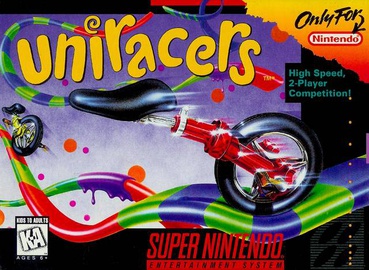
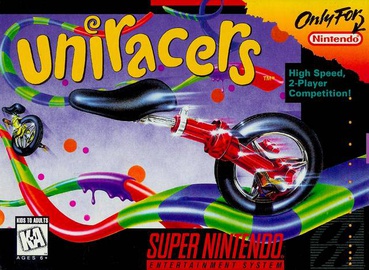
Uniracers Review – Bombastic Fun

Unicycles, high speeds, colorful tracks and a plethora of tricks have made this SNES title a classic for any collector. Tragically, the game is super rare due to a lawsuit, and only 300,000 copies were ever distributed.

Like Anime and Gaming content? Check out our other platforms and support our content:

Click to Donate

You can help support us through PayPal or Patreon.

Hey everyone, it’s Kern here. Welcome to my review of Uniracers. In some areas of the world, this game known as “Unirally“, I shall be using the american title, as that’s what I’ve always called it.

The game was designed by British developers known as  “DMA Design Limited,” now known as “Rockstar North Limited“. On the surface, Uniracers plays like any standard racing game.

The goal is to come in first place, or pull off stunts to achieve points in order to pass the stage. The game is sometimes silly or completely absurd. When it comes down to the naming of the tracks or the trick, this all boils down to the game’s core goal.

Uniracers is all about plain stupid fun. Unabashedly wearing idiocy on its sleeve and not giving a rats ass about who that annoys. Unicycles ride on a bombastic 2D tracks, riderless, and with a tenacity that could only come from the most insane stunt rider.

You’re more likely going to be paying attention to the track rather than what your unicycle happens to be doing. This is by design, as stunts will be your key game-play mechanic. They can’t be readily ignored.
Performing stunts causes the unicycle to go faster during races, and certain stages require stunts in order to reach a point threshold.

Overall, the stunts that can be performed are generally easy to do. There is a very low barrier to entry on basic tricks. For one of the easiest, all you do is to get some air and mash a single button. By doing that your unicycle will twist around in the air. This is called a twist, or some variation of the name

None of the stunts are overly difficult on their own, but the tracks can make them exceptionally harder to pull off. The idea is to be able to perform these stunts quickly in tight situations, all while avoiding a “wipe out” that will slow you down.

There are a few types of stages, obviously called tracks. Race tracks, circuit tracks and stunt tracks are evenly spread across the entirety of the game. There are nine total tours with five tracks each. Each tour contains two race and circuit tracks, and one stunt track. Mastering each type is the only way to achieve gold medals.

There are two types of skill curves in this game. The racers you face and the tours you race in.

The Tours

So, let’s talk tours first. As I said, there are nine tours. Each tour is named after an animal, complete with a goofy looking icon letting the player know exactly what they’re in for. Filling the early game you have Crawler, Shuffler and Walker respectively.

Frankly these are the tracks I like the best. I’m an average player, by far not the best. I flat out suck at some of the tours. I’ve beaten all the gold metal tours before as a child, and for the sake of this review, but that was only after months of playing.

I’m not great at this game, but I know it isn’t just me. This is a hard racing game to play to completion due to the style the game is played in. The tracks in every tour can be hard on the eyes due to the color splashes, and depending on the opponent it’s supposed to be completely unfair. More on that later.

Crawler acts as your starting tutorial. It is easy to play even on the bronze setting. It edges the player into the game fairly gently given that it is a high octane racing game.

Meanwhile Shuffler and Walker hone your newly discovered skills. You’re going to need them. The game isn’t unfair with it’s skill curve, but it’s certainly steeper in later tours on bronze and completely unforgiving on gold.

Hopper is your first step into intermediate tours and tracks. By this point in the game, you not only need to know tricks, you need to know when to best utilize them. On bronze it’s a clear ramp up, on gold it’ll eat an unprepared player alive.

Prior to this point, the need for tricks were fairly minimal, and most tracks could be won simply by paying attention to the course, or getting some air and just spinning around in circles.

In fighting games there are techniques known as “first order optimal strategies” or “FOO strategies”. This is a strategy that new players repeat on end because the attack is effective enough to serve their needs. They have no need to learn other stunts until the skill curve rises above the simple ones they’ve picked up. I use this this same analogy when it comes to Uniracers.

The easy tricks will carry you all the way to Hopper. Then you’re going to get slapped in the face by tracks that are no longer toying around. You’re not going to be able to pass the Hopper tour without knowing when to utilize your tricks.

Still, you don’t need to use many of them on the races. You just need to use them well. Jumper and Bounder continue this upward curve in skill steadily.

The next huge stretch in difficultly curve is Runner and Sprinter. These tours promise to make you eat dirt on your stunts, and demand that you’re able to follow the flow of tracks effectively.

I don’t have much to say on Runner or Sprinter because even though it’s a jump in difficulty, it’s an expected one. Let’s be honest, we all know what the worst set of tracks really are. We also know what unicycle is to blame for all of it. That is what’s really worth talking about.

Hunter is the final tour, and it’s as intense as the name sounds. All of your skills need to be utilized, and sometimes it comes down to good RNG, and sometimes you just luck out.

There is very little room for error on the tracks, and the errors you do make can only be corrected with a combination of well placed stunts and pure luck. Even on bronze, Hunter is no joke. Now, you’ll also notice this is the only one showcasing a “gold” rating, and that’s because to see the final boss in all of his glory I had to get it.

To get that gold rating, it took me several weeks of playing races over and over again to even get all the medals required. It wasn’t very fun because I hate gold level play, but there it is… stupid thing…

Though, as I said, there are two forms of difficulty in this game. The tracks are only half the battle.

The Racers

Onto the racers then. Each track has a bronze, silver, and gold opponent to race against. That means each track needs to be completed three times to have a chance at completely clearing the game.

I won’t bother with screenshots for the first three opponents, since they’re all just different colored unicycles. It’s the last one you face that matters. If your persistent enough to get all the medals the final boss is a special kind of hell.

Bronze medal courses have you racing against Bronson. In the vast majority of my time playing the game as a child, I raced against him. For my casual style as an adult, bronze races suit me best when I’m trying to just relax.

In the early game, Bronson rarely performs stunts to gain speed, and to my experience doesn’t seem to take provided shortcuts. In later tours it’s the tracks that provide the upward difficulty curve, not Bronson himself. He is your baseline barrier to entry on every track, and beating him opens up the silver race.

Silver medal courses have you racing against Silvia, a much more skilled opponent. Silver races are where I find myself most commonly playing when I want a decent challenge. She’s not too difficult, but if you have mastery of the tracks, she’ll give you a good test.

Unlike Bronson, Silvia uses tricks often, and in the right places. She will occasionally use shortcuts as well. She’s difficult to play against if you aren’t using the track to your advantage. New players will be able to learn by observation. A skill that you’ll need in any gold medal race. If you have a track giving you problems, learn by following her.

In gold medal courses, you’re up against Goldwyn. The training wheels are off with this guy. He’ll put you to the test as early as Crawler for casual players and by the Hopper tour he means serious business for anyone that isn’t an expert in the game.

Completing every tour against Goldwyn unlocks the final boss of the game. This monstrosity is named “Anti Uni”, a black and red unicycle that plays dirty. It openly cheats and often ends up throwing attacks at you. Honestly, I hate this thing for all the right reasons.

“Anti Uni” will do everything in its power to screw you over. From making the screen wobble, forcing sections of the track to disappear, and just flat out slowing you down.

This jerk even goes so far as to cackle at you like a deranged chipmunk when it has gained the upper hand. With attacks such as “barf mode” and “screen flip” messing with you at every opportunity, this boss is the most aggriavating thing I’ve ever seen in a racing game.

I won’t lie, I couldn’t get a decent image of “barf mode” because I can’t really look at it for too long without it hurting my eyes. For me, it’s a bit blinding. Screen flip, which turns everything upside down, is by far bad enough.

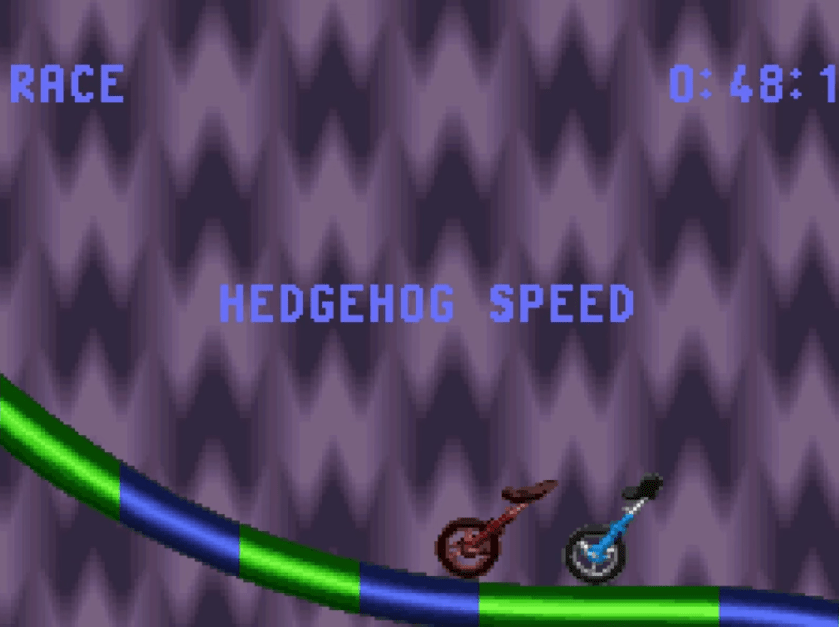
“Anti Uni” only appears on the Hunter tour, and as an average player I’ll openly admit I’ve never beaten this stupid thing in a gold race.

That’s why I much prefer Bronze and Silver metal races and earlier tours. Playing beyond Silvia just doesn’t have appeal to me. The fact I can choose the skill curve I like best and still enjoy all of the tracks is why I love this racing game so much.

Now, to be fair I have seen my older brother win races against “Anti Uni” at his most difficult when we were kids several times, so I know it’s beatable. I was just never able to do it myself.

In Conclusion

With all of that, said I come down to one simple conclusion. The sentiment at the start of this post bears repeating. Uniracers is plain, stupid fun.

At the best of times, the game is tenacious and bombastic in every aspect. Sentient unicycles speeding around on flashy track designs, with over the top rock music playing over them.

As a player you’re pulling stunts that have dumb names sometimes. The combination of gameplay is incredibly immature in some places, and just goofy in others. The game is better for it. In that way, Uniracers offers a high octane experience that’s just hard to match.

In the worst of times, the game is just flat out annoying and sometimes it even tries to be. It can also be very hard to play due to some of the tracks being hard to look at. One of Hunter’s tracks named “Neon” proves my point perfectly.

All that black background smashed against neon green and red? Yeah, that’s grounds for a bunch of not so very nice four letter words in my book. Especially when I need to redo the track for the umpteenth time.

To make that worse, the cocky and belligerent boss unicycle at the end of the game will absolutely screw with you. It has a laugh that inspires the sort of fury that can have you tossing your controller at your screen.

Then again, this game is from the same company that made the original “Grand Theft Auto“. I shouldn’t need to say any more than that. If you love racing games with that kind of devil may care attitude, you’ll love Uniracers.

It’s just that simple.

Maybe someday soon I’ll talk about the lawsuit that crippled Uniracers from being a common household name. However, that’s a complicated topic that requires a video all of it’s own, and that’ll be for another day.

This has been Kernook of The Demented Ferrets, where stupidity is at its finest and level grinds are par for the course. I’ll see you next time.

Click to Donate

You can help support us through PayPal or Patreon.

Meanwhile, check out some of our other great content below. You can also find more information about supporting us at the bottom of this post.

With your contributions, you make our efforts possible. Thank you for supporting our content. Patreon supporters receive access into our official Discord server, and a few other perks depending on the tier. If you don’t care for Patreon, and don’t care about perks, you can always support us through PayPal too… links below.

Those who join via Patreon get special perks, such as extra content, quicker updates, and more.

Click to Donate

To Our Supporters

Thank you for helping us to enrich our content.

Patreon Supporters:
($3) Little Ferrets: None
($5) Demented Minions: Francis Murphy and Andrew Wheal.
($7) Fandom Ferret: None
($14) True Blue Ferret: None.
($25) Premium Ferret: None.
($50) Round Table Ferret/Fluffy Ferret: Josh Sayer


Anime Review- Bartender

Before I begin this post, please understand that today I am reviewing an anime that contains a bar and the one thing that usually happens in bars. Namely drinking… lots of drinking… hence this warning up top…please do not ignore this warning.

I do not advocate addictive and damaging behavior that sometimes revolves around drinking and drugs Therefore, if you are an alcoholic that struggles with sobriety, or you are easily triggered into wanting a drink based on the content you consume, please bypass this post. Sobriety is not always an easy thing to commit to, so every day sober is a day of victory.

You have now been warned. If you read beyond this point, you will be reading a review of Bartender an anime based around a bar and the lonely souls that wander in.

Like Anime and Gaming content? Check out our other platforms and support our content:

Click to Donate

You can help support us through PayPal or Patreon.

Bartender stands out as a refined slice-of-life series for older viewers. It isn’t your standard formula by far, and it doesn’t pretend to be.

It is soft and sophisticated without being obnoxious. Themes are sometimes vague, but not needlessly obtuse. Character stories are personal and often layered in simple but deep symbolism .Ideally a viewer would take the time to savor this series. It’s only eleven episodes long.

So, why do I give this show such high praise? Simple, I enjoy anime that doesn’t try to cram itself into the typical mold. Bartender stick out to me as an anime that doesn’t feel like an anime. It certainly is an anime, to be sure. Still, it lacks a lot of the mindless slapstick humor and overblown gags that make anime what it is.

Even anime aimed at older viewers can take a nosedive into childishness on occasion. While that can be fun, that can also get old fast. This series doesn’t do that. Bartender understands that it’s trying to cater to a more refined and thoughtful audience. That’s strictly what it does.

I highly suggest watching this series if you haven’t. There isn’t much conversation around this series, and since it’s a bit older it seems to have gotten buried under a flood of other anime over the years.

This is a crying shame to me, because Bartender is without a doubt a solid entry for an older viewer who doesn’t know what anime is, or may even be adverse to it. This is easily a gateway anime for someone over the age of twenty-five because it lacks many of the overblown tropes you often see in the medium.

It’s perfect for a viewer that has grown tired of the anime that continue clogging the typical seasonal line-up. Experienced anime fans may not have heard of this gem. Non-anime fans may be drawn to its down-to-earth representation of the characters and its story driven focus.

So with all of this said, let’s begin the review.

A Bar That Speaks to The Soul

Bartender first began as a manga in 2004, written by  Araki Joh and illustrated by Kenji Nagatomo. Now I won’t be speaking about the manga here, but as you can clearly see, written media is available for this series if you care to look for it.

Now, I will say this; the manga has clear story arcs. The anime is far more episodic in nature. Although it still contains vignettes about one or more of the characters, it doesn’t have as clear a structure or pacing as the written media.

There is also a live-action drama of Bartender that was released in 2010, but it is a bit harder to find. That said, if you’re trying to get someone who is completely opposed to anime and manga into the series, the live action is the perfect entry point.

The anime released in 2011, directed by Masaki Watanabe, and written by Yasuhiro Imagawa.

No matter what form you choose to enjoy the series in, the basic idea is still the same. There is a bar hidden deep in the alleys of the Ginza district. The bar’s name is Eden Hall. This quiet and lonely little bar is run by Ryuu Sasakura.

Ryuu is thought of as a bar-tending prodigy, widely acclaimed to the point his name precedes him. Rumor has it that he mixes the most incredible and prolific cocktails that anyone has ever tasted.

There’s just one little catch. The bar isn’t open to just anyone. Eden Hall chooses who happens to find it, and who enters its doors.

Customers from all walks of life and different backgrounds come into this bar seeking answers to life’s problems. Ryuu, being the prodigy he is, always knows the ideal cocktail to serve to his guests. This combined with his wisdom allows him to console and guide each afflicted soul that enters Eden Hall.

Knowing this, you can see how the series might come off as dry or bland in some places. You’d be right. It’s intended to be a soft-spoken series. Full of careful contemplation and a plenty of soul searching.

The entire series in wrapped up in wonderful animations and lovely music that can stand on its own merits. Even now, it stands the test of time, no question about that.

A Few Caveats

Number one, the themes may pose a problem. The general ethos of the anime can be thought of as problematic. The general idea is that the right drink, at the right time, is the perfect way to start an earnest inward conversation.

In other words, when a character drinks, they can find the answer to their problems within themselves. This frames the beverage as a looking-glass of sorts. I gave a warning above, but I’m going to cram it here too. If you have once had a drinking problem, or still do, please consider bypassing this show.

Each episode features cocktails that are made with love and care by Ryuu to serve to his guest. They’re poured, mixed, and served in a way that is pleasing to the eye. Given how tempting the animation makes these beverages look, a viewer may end up wanting something similar as well.

It’s very pretty to look at. The animation is stunning, but that’s both a bonus and a drawback when your talking about substances and ways to possibly abuse them.

Characters that come into the series are the sort that have baggage. They talk about their problems, they reflect on the issues at hand, and then have a drink over it. It’s not always portrayed as healthy, either.

The second issue is that it caters to a very specific type of viewer. It is calm, quiet, and methodical. If that isn’t the type of series you like, you’ll get bored fast. It is full to bursting with careful reflection and character stories that linger in subtle ways. That being said, this isn’t an anime about mind games, and there are no plot twists that leave your jaw hanging on the floor. That’s just not the sort of anime this is.

Final Thoughts

Bartender is without question one of the best anime you can find that isn’t on the beaten path. It’s stunning for its time visually, and each piece of music is just as carefully crafted as the series itself. A lot of love and care went into this show.

I find that Bartender is not necessarily for fans that want mystery and intrigue. Rather, the show is best suited to someone who enjoys a good character study without being mired down in endless drivel. Overall, due to the episodic nature of the series, no character lingers too long to outstay their welcome at Eden Hall. Ryuu is certainly entertaining on screen as well, rounding out each episode in a way I found fitting.

So, my conclusion is that you should watch the series if you can. Just be aware of the themes. Do yourself a favor and don’t try to binge it in one sitting. That doesn’t bode well. I’ve tried, and I love the series but even I can’t do it.

This has been Kernook of The Demented Ferrets, where stupidity is at its finest and level grinds are par for the course. I’ll see you next time.

Click to Donate

You can help support us through PayPal or Patreon.

Meanwhile, check out some of our other great content below. You can also find more information about supporting us at the bottom of this post.

With your contributions, you make our efforts possible. Thank you for supporting our content. Patreon supporters receive access into our official Discord server, and a few other perks depending on the tier. If you don’t care for Patreon, and don’t care about perks, you can always support us through PayPal too… links below.

Those who join via Patreon get special perks, such as extra content, quicker updates, and more.

Click to Donate

To Our Supporters

Thank you for helping us to enrich our content.

Patreon Supporters:
($3) Little Ferrets: None
($5) Demented Minions: Francis Murphy and Andrew Wheal.
($7) Fandom Ferret: None
($14) True Blue Ferret: None.
($25) Premium Ferret: None.
($50) Round Table Ferret/Fluffy Ferret: Josh Sayer

Game Review: Resident Evil 1.5

Hey everyone, it’s Kern here. I want to take a brief interlude into the troubles of game design, and the subsequent cancellation of what would be Resident Evil 2‘s first iteration.

Thank you to our patrons for supporting our content.

Unfortunately, that particular version of Resident Evil 2 was canceled. It is now known by hardcore fans as Resident Evil 1.5. Frankly, this unreleased attempt of a game deserves a discussion or two, and that’s the reason for this post.

It’s a shame that director Hideki Kamiya, and producer Shinji Mikami, hadn’t been able to see eye-to-eye on the game. If they had, the Resident Evil 2 that we know and love might have been vastly different.

As a failed prototype, Resident Evil 1.5 is an interesting look into what Resident Evil 2 could have become. There is no official release of Resident Evil 1.5. Thankfully, the build of Resident Evil 1.5 was leaked on the internet back in 2013. Fans of the series have managed to cobble together some form of playable version.

If you look hard enough the content for 1.5 is out there. If you can’t find the game to play yourself, there is plenty of game footage among members of the survival horror community. It’s worth a look at the very least.

Before we do that, though I just want to remind you that I already did a review of the first game. If you want all of the nitty-gritty about that, you should likely read that first.

The original Resident Evil was a huge success. The game was foundational to the survival horror genre, it gave rise to it, truth be told. Resident Evil did one thing above all else, it proved that gamers had a true hunger for survival horror, and a ravenous craving for more games in the genre. This would lead to many iterations and spin-offs over time, but Resident Evil was the first of its kind to popularize the genre.

Failure to Launch

The success of the first game was so large that it stood to reason that they’d make another. Just a month after the original game was released, development began for a sequel. Hideki Kamiya was slated to direct the new game. Shinji Mikami was going to produce it. These two masterminds dove into their new concept, eager to make a much better survival horror experience.

They had big plans to surpass the fandom’s expectations when it came to the new game. That wasn’t going to be an easy thing to do, either. They had high hopes to fulfill here, both for themselves and for the growing number of Resident Evil fans. Initially these two men had three core ideas on how to make the sequel even better than the original.

  • Firstly, they wanted to make playing the game feel more dynamic. They felt that the first game wasn’t as strong as it could have been in this area.
  • Secondly, they planned to vastly expand the scope of Raccoon City. They wanted to broaden the scope of Resident Evil‘s already compelling narrative.
  • Thirdly, they wanted to include a wider range of highly detailed and stunning pre-rendered backgrounds. This would lend the game even better imagery than what was provided in the original game.

Unfortunately, this new vision wouldn’t be the one to be published. Hideki Kamiya and Shinji Mikami had all of the building blocks for a great game in place. However, each of them had different artistic visions.

Originally, Shinji Mikami wanted to complete the entire Resident Evil story with the sequel before moving onto other projects. He didn’t want to linger on this franchise for too long.

Hideki Kamiya vastly disagreed. He wanted to make a longer, more complex story. He planned on using the sequel to expand on Resident Evil‘s core themes. to create a wider universe.

In the end, Shinji Mikami eventually took a few steps back from the creative development of the game. It was his belief that the game was lackluster. He felt that the narrative was lacking something important. In his opinion, the game mechanics and story just didn’t meld together seamlessly. He asked to be kept informed about the game’s development, but otherwise handed the reigns over to Hideki Kamiya completely.

During the development cycle, Resident Evil 1.5 was nearly eighty percent complete before it was scrapped entirely. A new scenario writer had joined the team and everyone agreed that it was just better to rebuild the game from scratch.

Key Differences

Firstly, I suppose, is the game itself. Resident Evil 2 as we know it today is vastly different from Resident Evil 1.5. Many of the assets from the project couldn’t be used in the release of Resident Evil 2, most of them had to be remade. That being said, some of the modded versions of Resident Evil 1.5 use assets from the Resident Evil 2 game. They do this to help fill in the gaps in the unfinished product.

The story has quite a few changes in it too. Now, to be clear, the story wasn’t completely fleshed out in Resident Evil 1.5, and that reflects in the media. That said, the story as we do know it is vastly different.

In Resident Evil 1.5, the S.T.A.R.S operatives manage to convince the authorities that Umbrella is up to no good. They report that Umbrella was directly involved with problems in Arklay Mountains and within Spencer Mansion. During the game, this is referred to as the “Umbrella Incident”.

The Raccoon City Police were shutting down Umbrella’s laboratories, but the city isn’t safe. A massive viral outbreak has overtaken the city, and it’s the T-Virus.

There is a lot of political intrigue in Resident Evil 1.5. Subtext and implication suggests that Umbrella only released the virus to quiet the naysayers and silence opposition. The story slowly unfolds as the player experiences two different scenarios, starring two different characters. There are some interesting additions to the supporting cast as well.

The first is Leon Kennedy, a familiar name to anyone who knows of the Resident Evil franchise.

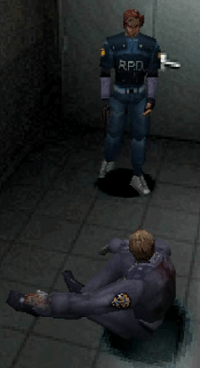
Leon’s personality stays much the same, and his basic story plot does too. Very little changes with him, and its clear that he was fleshed out conceptually very well from the start. Leon is still the rookie police officer we all know and love, but thankfully this time around it isn’t his first day on the job.

The second character is Elza Walker. she is a student at Raccoon University. Let’s be honest, she’s no Claire Redfield, that’s for sure.

Elza is a motorcycle enthusiast who returns back from a long vacation only to find that the city is completely overrun with zombies. She ends up crashing her motorcycle into the main lobby of the police station and closes the shutters, locking her inside.

Classic Leon is awesome in both 1.5 and Resident Evil 2. Though, I must say, the same doesn’t hold true for Elza. I prefer Claire over Elza any day.

No matter what scenario is chosen, the goals are roughly the same. Players must find a safe way out of the police department, save any survivors, and get out of the city. As far as survivors go, there are several.

The Birkin family makes a full fledged return. Sherry is still a child that needs protection. Annette and William are her parents. Ada Wong, Marvin Branagh, and Brian Irons, have returned as well. In Resident Evil 1.5, their roles have changed drastically. This is probably one of the most important reasons to play Resident Evil 1.5, because it gives us a look at what these characters could have been.

I won’t spoil too much, but there are some interesting things to take note of. In this version, Marvin spends a great deal of time with Leon throughout the game. Ada is an employee of Umbrella, she was under arrest until the outbreak occurred. Brian is more level headed, and less murderous, but his role is very small.

Mechanics: The Good, The Bad, The Broken…

There are a few oddities to make note of. Computers in the game make a point to remind the player to save their progress, but, there are standard Resident Evil typewriters too. I’m not really sure why the save system might be implemented in this way, but it is an interesting little detail.

You’ll have to be careful when running around. The game was still in development when it was scrapped, so there are plenty of broken boundaries.

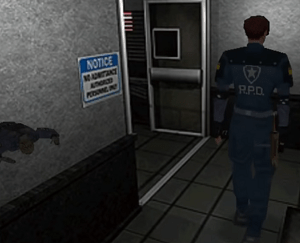
You clip through things that you shouldn’t be able to, and all enemies can be seen. Yes, that also means you can see them through walls.

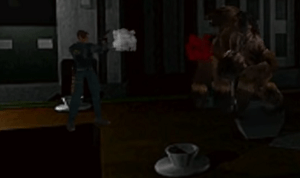
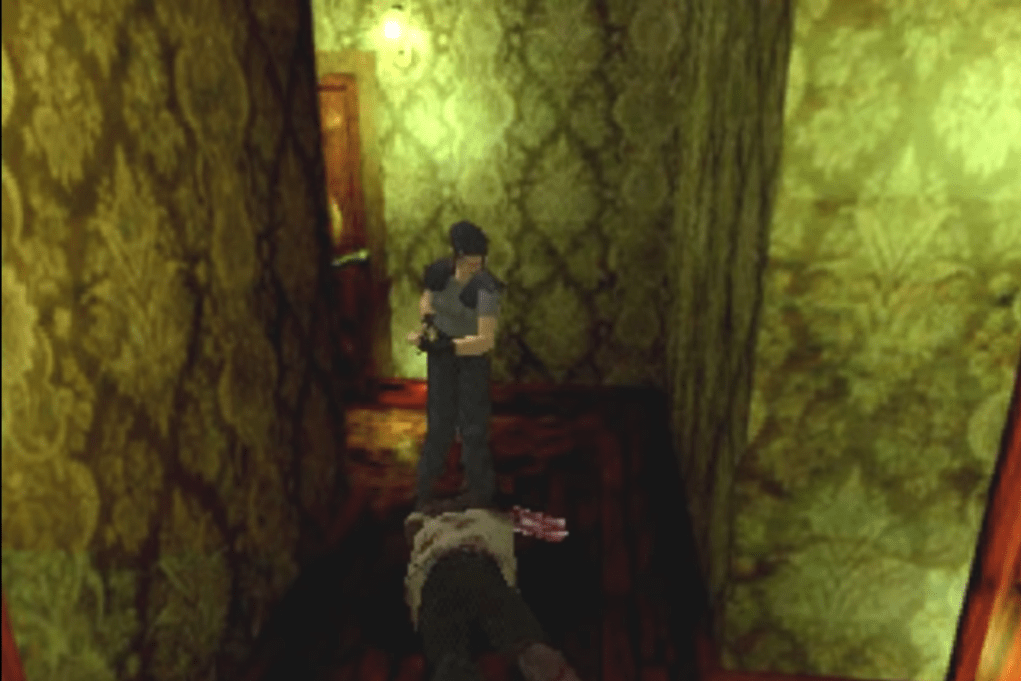
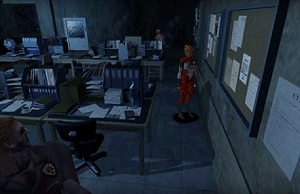
If you notice, it looks like Leon is standing on the table in this photo, and there are plenty of moments like this. Trust me, that’s not a rug. I assure you that dark square thing is, in fact, a table.

Furthermore, there is a huge range of weaponry to choose from in Resident Evil 1.5, but some of the items don’t have assets. Using an item that doesn’t have assets will crash the game.

Puzzles look to be standard Resident Evil format, though most aren’t completely implemented. You can go through the entire game without collecting key items. This is likely a good thing.

Other than that, playing Resident Evil 1.5 isn’t too different from the classic Resident Evil 2. There are more zombies on screen at any given time, and even other enemies can come in small packs. Tank controls and fixed camera angles make a return, of course. Anyone who has played the classic titles in the series will be well acquainted with them by now.

There’s just one problem. The controller can be very wonky…

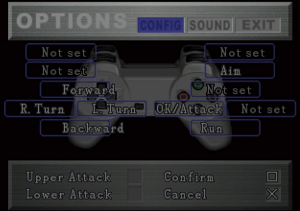
The game never had an official console release. That means you have to play the game using an emulator. If you’re like me, you use an Xbox 360 controller. The directional pad on Xbox 360 controllers are a piece of garbage, and it can make playing the game difficult. If you have a controller with a better directional pad, you should use it.

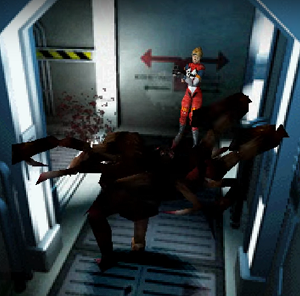
The rest of the mechanical changes are small, but I have to admit that I actually prefer most of them. Shotguns can still completely destroy a zombie. However, you can’t aim upwards to take off a zombie’s head. Shotguns will only rip the zombie in half. This can be used to incapacitate a zombie entirely. If you aim below the belt, you can even take their legs clean off. I have to admit, it’s a nice touch.

There is one awkward thing, though. When comes to health bars and status effects, your character will show signs of being injured by having ripped up clothing or seeping wounds. This was a nice idea in practice, but for me it kills immersion. Obviously when you heal back up, the wounds go away and the clothing goes back to normal.

This looks a little odd, and quite frankly, I prefer the limping and slower movement speed that’s found in most classic iterations of the franchise. It simply works better in my personal opinion.

Interesting Visuals and Soundtrack

The sound design is a masterful mix between the first and second Resident Evil titles. The music itself has that classic Resident Evil vibe to it, but there is no voice acting in the game. Due to the fixed camera angles, it’s important that each monster has an auditory cue so that players can hear when they’re just off screen. This ethos is the same in all of the classic titles, and it makes a return here as well.

Visually the game is impressive for its time. However, as a fan it’s hard not to notice something. There is a strange middle ground between Resident Evil graphics and Resident Evil 2 graphics. Resident Evil 1.5 fits perfectly in the center of all of it, showing off what would happen if you merged the two styles completely. Everything is slightly more improved visually from the first game, but, the Resident Evil 2 that was officially released is by far better looking.

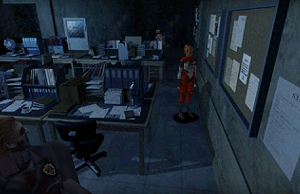
My favorite place has to be inside the police station. There’s a cold, sterile feeling that comes along with it. The colors are often muted, meaning that even the brown cardboard boxes on shelves become eye-catching. Truthfully, it isn’t as interesting as the police station in Resident Evil 2, but, it has its own charm to it.

Final Thoughts

There are a lot of good things to come out of this failed prototype of a game. In truth, there are some less than stellar things about it too. It has flaws in spades, but, that’s the point of playing it.

Resident Evil 1.5 is a stepping stone for classic survival horror. It conceptualizes a game’s development cycle in a way few prototypes can. That shouldn’t be overlooked.

The hard work and love that staff put into their crafted worlds can’t be understated either. This prototype was a steppingstone that showcases just how much effort it takes to make a series like Resident Evil.

Fans of the franchise shouldn’t miss the opportunity to experience this prototype in one way or another. If you have the chance to play Resident Evil 1.5, you should. If you need to watch someone else play it, you should still do it. The experience is worth the time, and I can’t stress that enough.

This has been Kernook of The Demented Ferrets, where stupidity is at its finest and level grinds are par for the course. I’ll see you next time.

Click to Donate

You can help support us through PayPal or Patreon.

Meanwhile, check out some of our other great content below. You can also find more information about supporting us at the bottom of this post.

With your contributions, you make our efforts possible. Thank you for supporting our content. Patreon supporters receive access into our official Discord server, and a few other perks depending on the tier. If you don’t care for Patreon, and don’t care about perks, you can always support us through PayPal too… links below.

Those who join via Patreon get special perks, such as extra content, quicker updates, and more.

Click to Donate

To Our Supporters

Thank you for helping us to enrich our content.

Patreon Supporters:
($3) Little Ferrets: None
($5) Demented Minions: Francis Murphy and Andrew Wheal.
($7) Fandom Ferret: None
($14) True Blue Ferret: None.
($25) Premium Ferret: None.
($50) Round Table Ferret/Fluffy Ferret: Josh Sayer

Resident Evil Retrospective Review

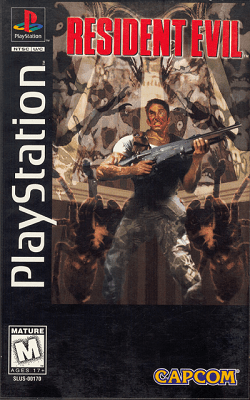
Hey guys, it’s Kernook here. Let’s enter into the realm of survival horror for a spell, shall we? This will be a retrospective review of Resident Evil. This review will only cover the original black box release of Resident Evil 1, for the PlayStation.

Resident Evil Review – Video Format

This review will not cover the directors cut, or the duel shock release of the game. That’s for two reasons. Firstly, the soundtrack was changed in both of those versions, and not entirely for the better. Secondly, even though I do have both the director’s cut and the original black box release, I usually don’t play the director’s cut version.

Furthermore, this review does not cover the Resident Evil remake. That’s a topic for a different day. It requires it’s own separate review. Today, I’m just going to be covering the original game. There’s a lot to cover here, so let’s get started.

Resident Evil as a franchise will always be very near and dear to my heart. In order to understand why, I need to give you a glimpse of my childhood. My personal upbringing with gaming isn’t necessarily something that should be emulated.

In 1989, I was born with Dyspraxia and Dysgraphia, which are non-curable motor-skill disorders. They’re also kind of weird, and when I was a child there was no good way to handle the disorders. Experts in the field of medicine sort of just shrugged it off. They weren’t entirely sure how to help alleviate the symptoms, which are a long list in and of themselves. Look it up if you want to, just know that not all of them apply to everyone. There is a spectrum.

What worked for me, probably as a fluke was incredibly lucky. I just want to make that clear. I don’t advocate for buying games for children who aren’t ready to handle the context of that game. Furthermore, I believe it’s up to parents to police their child’s gaming habits. It’s not for the media or the public to decide.

That being said, as a child I spent a lot of my time playing video games. I belonged to a family of gamers. My earliest memories contain eight-bit and sixteen-bit images splashed across the television screen. Sonic and Mario were my bread and butter. We were lucky to have a Sega Genesis, a Nintendo, and a Super Nintendo in the house.

Our gaming library wasn’t particularly vast. Thankfully, we had a large and active gaming family. My bother, older cousins, and even my mom, played video games. We often traded games and systems, to experience the best of all worlds. The medium of gaming was everywhere for me.

When I think about it now, playing the Resident Evil franchise in the late 90’s was one of the best experiences I could have had as a child. It helped a lot for my personal and particular problems. So, from here on out, when I talk about the franchise, just keep that. I do have a positive personal bias towards the franchise as a whole, and I won’t disregard that.

The Beginning: Sweet Home Mutates into Resident Evil

Any gamer that was around for the 90’s knows that it was a very experimental time in gaming history. Prior to the 90’s, playing games with 3D animation was laughable, expensive, and to casual players it was unheard of.

Frankly, 2D gaming was cheaper to develop, more accessible to gamers, and pandered to a wider family-style audience. In general, 2D gaming was just the commonality at the time. Occasionally computers offered a stepping stone into 3D gaming, but even that was limited at first. A lot of games that looked 3D weren’t. They just looked that way, using clever techniques and tricks of the eye.

Sony changed that with the release of the PlayStation. The powerhouse of a system opened doors for developers, and allowed gamers a glimpse into what fully realized worlds might look like.

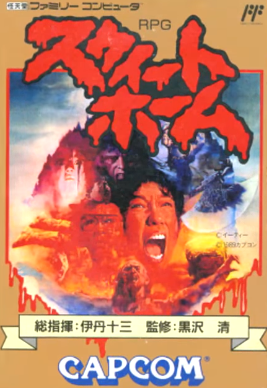
Capcom, a Japanese video-game developer, had the bold idea of bringing one of their classic games over to the new console. Its name was “Sweet Home“. Now, here’s a little food for thought. Sweet Home was a title for the family entertainment system. It was made in 1989, so everything about it was made with the older platform in mind. Bringing it into a 3D space was going to be a monumental effort. The game was a fusion, containing both RPG and horror elements. Knowing that this would not be an easy task, Capcom asked Shinji Mikami to help them with the project.

To say that the project was a massive undertaking would be selling the matter short. Everything was against them in this effort. Sweet Home was a complex game with multiple story lines, and very intricately created puzzles. They couldn’t just up-heave the general concept, and then proceed to cram it into a 3D environment.

That surely would have been a complete disaster. Thankfully, that’s not what they did.

Instead, the ideas and themes of Sweet Home took on a life of their own. Eventually, from the ashes of all of those great ideas, a new game was born. It was known as Bio Hazard in Japan.

Unfortunately, there was another problem. They couldn’t use the name. A DOS game had already registered that name for a different brand, so Capcom couldn’t use it.

Capcom eventually re-named the title, and it became Resident Evil. The game, in a word, was masterful. There were plenty of horror games to play at the time, but none of them were quite like this one. With the release of Resident Evil, so too, came the birth of survival horror.

An Aside: A Plethora of “You Died” Screens

I was young when I began my Resident Evil journey. The first game I ever beat on my own was Resident Evil 3: Nemesis. Prior to that, I didn’t have the skills required to beat the games. I tried, of course, but I always needed help. Resident Evil 3: Nemesis had a freakishly low skill requirement on easy mode.

With tons of weapons and ammo in the item box at the start of the game, it’s actually pretty difficult to die. Well, I mean, unless you just stand there and let zombies eat you.

As a general rule, survival horror is not an easy genre to play. It’s generally made for adults. It’s not aimed at it kids, nor should it be. I played the genre as a child, but I had an older brother that was usually with me. Forcing myself to focus on cognitive puzzle solving, basic game controls, memorizing maps, and recalling enemy layouts were some of the hardest things I ever had to do in a game. This is why I say that playing these games helped me more than I ever could have perceived as a child. They were foundational tools for many of the skills I became able to do after holding a controller and thinking outside of the box.

After playing Resident Evil 3: Nemesis on easy, normal, and finally hard difficulty, I was able to go back to the older games in the genre and play them on my own. Before that, I usually never made it beyond the mansion in Resident Evil 1, or the police station in Resident Evil 2. Before that, poor inventory management, terrible ammo conservation, and a lack of ink ribbons usually did me in.

Entering the Nightmare

Entering into Resident Evil, a bazaar string of murders runs rampant. Victims are being eaten alive.

Resident Evil features a fairly typical story. A rescue mission is taking place. With a string of murders running rampant across the fictional Raccoon City, it’s up to the police to find out what is really going on. In response to this, the Special Tactics and Rescue Service, or “S.T.A.R.S.” have been sent to look into the issue. Having been sent deep into the mountains, the first team has gone missing.

When starting the game, players get to choose between two characters. Both of them are S.T.A.R.S officers. One is a man by the name of Chris Redfield. The other is a woman by the name of Jill Valentine. Each one has their own story, and it serves the player to go through each scenario at least once.

No matter what character you pick, you have a few not-so-simple tasks:

  • First, you must find the missing Bravo S.T.A.R.S. team members. At the very least, you must find out what happened to them.
  • Secondly, you must find out what has been happening deep in the Arklay Mountains just northwest of Raccoon City.
  • Thirdly, you have to survive this ordeal and come out of it alive.

The opening cinematic is the same for both characters. You find out that the other team’s helicopter has been heavily damaged, and no one is around. A pack of deranged zombie dogs attack the group. In a desperate attempt to survive the attack, the alpha team members make a mad dash to the nearby mansion. They hide inside, where they believe it will be safe.

Instead, they’ve walked headlong into the nightmare. The a virus has spread throughout the entire mansion, infecting everything from humans, dogs, plants, spiders, and more.

The Basics

The mansion itself is a labyrinth of narrow hallways. A maze that needs to be traversed bit by bit, carefully and with an eye out for the looming dangers.

Tight camera angles and tank controls keep the player on their toes. Now, I’ll say this, a lot of people complain about tank controls. In this current era of gaming, I agree they can be a bit clunky. That said, I never had an issue with them. In fact, they were almost second nature to me. For me, I had more of a problem with inventory management and trying not to use up all my ammo.

The game-takes small cues from Sweet Home, Alone in the Dark, and other story driven horror titles. With limited inventory and never enough ammo, players will be forced to explore many areas to find the items they need in order to progress.

Certain keys have to be acquired, and backtracking will happen more than once. This was a risky design decision, but I’m glad it works so well. Typewriters for saving and item boxes for inventory management will be utilized often. They have been carefully placed in areas that players visit often.

On the topic of item boxes and typewriters, they are instrumental in playing Resident Evil. These are core game mechanics across most of the titles. Space on your character is limited, and it is imperative that you plan accordingly. This includes saving your game. In order to save your game, you require ink ribbons. You’ll usually find them in small batches.

Every time you save your game, it costs an ink ribbon. The supply is limited and on the first play-through you might find yourself running out. The ink ribbon is a doubled edged sword, though. Higher end game rankings require faster completion times, fewer saves, and less healing items.

Thanks to constant puzzle solving, there is a sense of adventure woven into the narrative. To be honest, it couples nicely with the campy dialogue and nods to classic horror as a genre.

Nowadays, the original Resident Evil might be a bit too campy, but I still enjoy it. I think it works well, given the graphics of the era.

Newcomers need to remember that the PlayStation era was before high fidelity graphics were even possible in gaming. In my opinion, the goofy dialogue only adds to the charm. In some ways, it has even helped to age the game. Back in the day there were some parts of the game I had a hard time taking seriously. Nowadays, I think it’s actually impossible. I feel like everyone has that moment when they want to laugh out loud at least once. For me, that reason alone makes it an experience worth playing.

The Combat

Really, there is only one form of combat in Resident Evil. You can either aim your gun and shoot, or choose to run away. Both options have their place, and it’s important to know what option suits the situation best.

Skilled players can do no “save, knife only runs”, but that isn’t something average players will master. Certainly not on their first try.

Learning the contours of the mansion will help you to make these all too important decisions. You can’t murder every enemy in the entire game. Your ammo is limited, and this key fact is what defines the survival horror genre. Well, that, and the tank controls for earlier titles.

Your job is simply to survive by any means necessary. Choosing a live-and-let-live approach comes in handy inside wide open rooms. Outmaneuvering slower enemies will conserve ammunition. Narrow hallways will require a more aggressive approach.

Due to the stationary camera angles and tank controls, sometimes enemies will be hiding just off camera. The developers planned for that, giving every monster in the game some sort of audio cue. They were careful to make every sound distinct and clear against the ambient music of the soundtrack. Zombies have their moans, dogs growl, hunters make a clicking noise whenever they walk, and so on.

Even boss fights like Yawn have carefully placed cues to warn you about what kind of attack is coming. In general, careful players can usually avoid getting attacked by a monster off screen, all they need to do is wait and listen.

If you take damage from an enemy, you’ll have to rely on herbs and first aid sprays to heal you. They’re in short supply, and every time you get hit you put yourself into a sticky situation. Your character will begin to hold their side if the injury is bad enough. If they continue to take damage, they’ll begin to limp slowly, and this makes avoiding enemies difficult.

There are several boss battles, of course. Yawn is a battle you face twice. With the right weapons and preparation, they’re never too hard. If you conserve your ammo properly the bosses shouldn’t be your largest threat. In fact, I’d say that most boss battles in this game aren’t that big of a threat at all.

Instead, I’d say that forgetting where you might have left a zombie or two is a much bigger problem. Backtracking after a battle can be a death sentence. Especially if you’re low on ammo and healing items.

Final Thoughts

The first Resident Evil game is a true classic among the survival horror genre. It isn’t insanely difficult, but it doesn’t forgive reckless new players either. The game has a learning curve, and it expects you to rise above every puzzle, enemy, and trap that it gives you.

The game is atmospheric in the best ways, utilizing visual assets in a way few games could back then. The musical sound design is flawless in the original black box edition of the game, ambient and often beautiful.

The musical quality is abysmal when it comes to the directors cut, or the duel shock releases of the game. Sadly, that’s the trade-off you make if you can’t get a copy of the original.

The voice acting is campy at best, embarrassingly bad at worst, but a lot of that dialogue became a touchstone for gamers around the world. People attend anime and gaming conventions cosplaying as the characters. Fan fiction flooded websites, and fan art followed soon after.

Best of all, nowadays speed-runners collectively band together to experience the game, giving rise to an entirely new audience of survival horror fans. All of that cannot be understated.

Obviously, with the original game being remade, we got to visit the mansion once more with the Resident Evil remake for the GameCube in 2002. Many prefer the remake over the original. I certainly do as well. The remake eventually received a PC port, which is by far the most visually impressive way to enjoy the game.

That said, returning to the original game every now and then is vastly important to gaming history. Survival horror as a genre would be completely different than it is today without the original Resident Evil.

This has been Kernook of The Demented Ferrets, where stupidity is at its finest, and level grinds are par for the course. I’ll catch you next time. Meanwhile, check out some of our other great content below.

With your contributions, you make our efforts possible. Thank you for supporting our content. Patreon supporters receive access into our official Discord server, and a few other perks depending on the tier. If you don’t care for Patreon, and don’t care about perks, you can always support us through PayPal too… links below.

Those who join via Patreon get special perks, such as extra content, quicker updates, early fiction chapters and more.

Click to Donate

To Our Supporters

Thank you for helping us to enrich our content.

Patreon Supporters:
($3) Little Ferrets: None
($5) Demented Minions: Francis Murphy and Andrew Wheal.
($7) Fandom Ferret: None
($14) True Blue Ferret: None.
($25) Premium Ferret: None.
($50) Round Table Ferret/Fluffy Ferret: Josh Sayer
Anime Review: Sweetness and Lightning

Sweetness and Lightning is a slice of life series that aired in 2016. At its core there’s a story about family, grief, and finding a place to belong.

These themes are wrapped up nicely in a show that centers around the heart of every home, the kitchen. On the surface, this is a cooking series. Beneath that, each dish that the characters make provide catharsis for their struggles.

The anime isn’t dark by any stretch of the imagination. In spite of the themes surrounding it, the series is very upbeat. The writing is masterful, but it’s not deep. Each emotional issue is handled maturely, but, the series itself can easily appeal to almost all ages. At the end of the day, the story is about familial love, and finding comfort in places that the characters would least expect them.

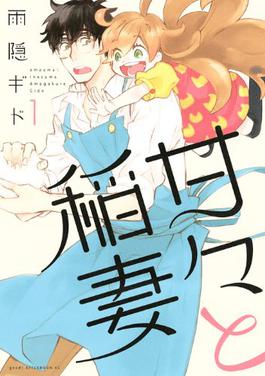
The anime is an adaptation of a manga with the same name. The adaptation is true to its source material, diverting only slightly when the narrative demands it. Those occasions are rare, minor, and actually make the anime a better viewing experience. The subtle changes aren’t always easy to notice, and that’s the way it should be.
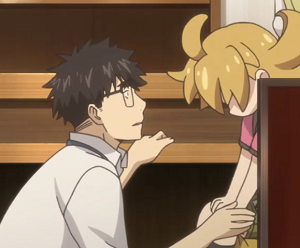
The twelve episode series follows two very different family dynamics. It focuses on both equally, but, one family stands out more.

The Inuzuka Family

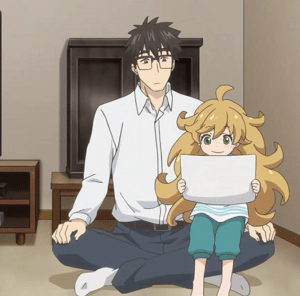
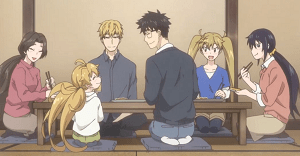
The first family is a father and daughter. Kōhei Inuzuka is left a widower after his wife’s passing. His daughter, Tsumugi Inuzuka is still quite young. She’s only in kindergarten, and therefore she’s solely dependent on her dad for almost every need. Kōhei struggles with the demands of being a single parent.
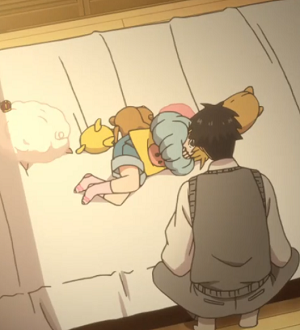
Working a full time job as a teacher and seeing after his youngster are large emotional commitments. He is not a homemaker, and he has no idea how to fill the void his wife left behind.

The Iida Family

The second family follows the Iida family. Kotori is a student in his class. She spends a lot of her time alone, both at home and at school. She’s a loner by choice and routine. Her mother is often away, having a very small role in the anime. The absence of Kotori’s mother is a driving force for her loneliness in the series.

Kotori has a passion for food. Since her mother is an acclaimed celebrity chef, she knows her way around the kitchen. However, her incredible fear of knives keeps her from enjoying that passion to the fullest.

Mundane Life

This is not an action filled series. It is not full of suspense or plot twists. There are not a lot of over the top “anime style” gags, and you won’t find many standard tropes clogging up the anime either.

Even among the slice-of-life anime often provided to fans, this show is something that might appeal to a “non-anime” fan due to its down to earth nature.

The series asks its viewers to sit down and enjoy a relaxing story. Sweetness and Lightning is episodic, and mundanity is literally everywhere.

This is a series that finds its excitement by characters interacting within the confines of every day life. Each struggle begins and ends with one key component; the family dynamic.

The story opens with the the facts of life at the Inuzuka home in plain view. Six months before the series begins, the love of Kōhei’s life passed away. He’s still grieving, and trying to make ends meet. As a single father, this is no small task.

Kōhei has no idea how to cook, and so he lives off of ready made meals, serving his daughter the same. These foods aren’t healthy. Often times, they aren’t even tasty. His wife had been the one to make the family meals, but with her passing it now falls onto him.

Kōhei fails to keep a largely stocked kitchen, and can’t prepared the dishes his daughter loves to eat most. Worst of all for him, his daughter often comments on this.

While still grieving himself, he feels incredibly guilty that he can’t live up the memory of her mother.

Tsumugi obviously misses her mom, but the concept of death is a foreign concept to the little girl. She can’t quite grasp it, and the way she mourns reflects this. Everything is in the little details for her. She complains that meals have become different now. She gets upset with the changes in her routine.

The things her mom used to do are now in her father’s hands, and Tsumugi has to cope with those changes. It’s all very age appropriate, and fits the narrative well. It never comes off as “too much”, and it isn’t overbearing either. There are plenty of scenes that follow her day-to-day life too, and the conflicts that she runs into. Both at school and at home.

To that point, I want to reiterate that Sweetness and Lightning is a very down to earth series. Tsumugi is a little girl, and she acts like one. She can be very bright and cheerful. However, like all small children Tsumugi throws her fair share of tantrums too.

She’ll pick at her food, or reject it entirely. She’ll babble nonsense, or fight back a little when she’s scolded by her dad.

She is a very accurate depiction of a child. If you don’t like children, this aspect could easily get on your nerves. Tsumugi is such a major character in the anime that you can’t avoid her. She has way too much screen time to be ignored.

Unlike other family style anime that may have a child in it, this series focuses on those complexities. Kōhei’s personal story is about the difficulties of being a parent. Tsumugi is her own unique character, and she does challenge her father.

Meanwhile, Kotori is an average teenage girl. Her passion for cooking aside, she can be a bit of a wallflower. She does have one close friend her own age named Shinobu. The character makes occasional appearances every now and then.

Other than that, Kotori mostly spends time on her own. As an only child of divorced parents, she’s used to being independent.

The only interesting character quirk she has is a terrible fear of knives. She managed to cut herself pretty badly as a child, and the fear of knives persists because of it. Other than that, Kotori isn’t very interesting on her own.

What truly uplifts Kotori as a character is the way she interacts with Tsumugi and Kōhei.

The student and teacher dynamic between them slowly shifts into one of friendship. At the high school, Kōhei maintains his position of authority. After school hours, he begins to treat Kotori as an equal.

The way that Kotori proves herself capable of assisting with Tsumugi helps to lessen the divide between them. As the series goes on, the way these two families merge help to fill the respective voids between them.

The Kitchen: The Heart of Every Home

Obviously, if you don’t like anime centered around cooking, you won’t like this. A vast majority of the scenes take place in the kitchen. It focuses on how meals are prepared, and the steps it takes to make a home cooked meal. Learning these basic steps remain the foundation of the series as a whole.

Kotori’s mother owns a restaurant, although it usually remains closed. Through a series of events, Tsumugi acts as the balm to eventually tie this odd trio together. The three of them end up gathering regularly at the restaurant, learning to make home cooked meals. They eat together and treat each other as a family.

As the characters spend more time together, old pains begin to lessen significantly. The two broken families start to redefine what it means to be a family in the first place.

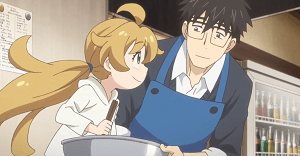
The teacher becomes the student, perhaps the only actual plot twist in the show. Still, it’s no surprise to the viewer. Kōhei learns his way around a kitchen with Kotori’s help. She knows more than he does, and it’s good that the dynamic shifts here. It shows that the characters mutually respect each other.

With all of her mother’s recipes at her disposal, they work together to make each dish. Kotori finds comfort in spending time with Kōhei as well. She also gets along well with Tsumugi, eventually treating her like a younger sibling.

There is a saying that families are made around the dinner table, and this anime examines that. As time goes on, more friends join in on the nightly gatherings, forming strong bonds.

Although nothing inappropriate ever goes on between Kōhei and Kotori, the connection they build runs deep. You could choose to see something beyond a platonic friendship if you wanted. However, the anime only provides minor subtext for that. You’d honestly have to be looking for romance in places that it just isn’t.

Like Anime and Gaming content? Check out our other platforms below:

Kotori’s emotional state shifts as the series progresses. Shinobu, her best friend even takes notice. She states that Kotori seems to be at her happiest whenever she’s cooking food and eating with the Inuzuka family.

Kotori’s mother eventually meets Kōhei and Tsumugi. She finds herself grateful that her daughter found such good people to have in her life and encourages their time together to continue.

The changes over time for Kōhei and Tsumugi are also noteworthy. Kōhei becomes more capable as a father. When he finds himself lacking, Kotori helps to influence the way he deals with his daughter’s outbursts. Tsumugi becomes happier in general, and truly enjoys her time spent with Kotori.

Final Thoughts

If you don’t like anime with kids actually acting according to their age, skip it. Tsumugi is unavoidable as a character. She is a child, and she unequivocally acts like it.

On the other side of the coin, if you’re looking for a romantic series with a significant age gap between the characters, this is not it. You’re going to have to look hard for that subtext and frankly there are just better anime out there for that sort of romantic entanglement.

Sweetness and Lightning is about family, the cultivation of strong familial bonds, coping with loss, and overcoming grief. These are the themes that make the cooking aspect of the anime so powerful. They are the absolute core of everything, without fail.

Trying to take any of that out of context, for any reason, probably won’t serve you well.

The animation in the series is good, and holds up adequately enough. Like all anime that revolve around food, the animation sees a spike in quality when meals are displayed.

Some of them look good enough to eat, and appear more appealing than their real world counterparts.

The musical design is spot on, and enjoyable. Like the series itself, it doesn’t try to be over the top. It won’t stand out over the scenes, and I don’t find it memorable outside of that. The music only serves to be complimentary towards the series. The opening and ending songs are enjoyable for what they offer, but, they won’t make any of my top ten lists any time soon.

The anime leaves these two families as fast friends. There is subtext that the two might become one later down the line. However, that isn’t written in stone. The subject of romance itself is not something that is heavily addressed, and that’s fine. It shouldn’t be.

The anime never pulls a “Usagi Drop” moment either, and Kōhei’s friendship with Kotori is respectful at all times. It never crosses into questionable territory or inappropriate power dynamics.

Sweetness and Lightning is everything the title says. It is a very sweet series. The darkness that comes with it doesn’t overtake the series as a whole. Instead, the sadness is brief, but carefully included. The anime strives to tell a simple story, with a simple conclusion.

In the end, it provides strictly what it promises, and very little more.

It doesn’t necessarily fall into the “cute girls doing cute things” trope, and I wouldn’t call it a “healing” anime either. I didn’t feel refreshed or renewed after watching it.

The fact is that slice-of-life is its nearest comparison, but that’s a lackluster description of the series too. None of these categories do the show the justice it deserves.

Although I enjoyed it, and I would watch it again, for me it’s just a popcorn anime. The series is addictive in the moment, and its very easy to consume. The episodic nature makes it a joy to binge watch. This, coupled with the fact that it’s only twelve episodes long makes it an ideal choice during a lazy Saturday afternoon.

It’s a tame viewing experience. Those qualities make Sweetness and Lightning a top contender for family style anime of this nature.

If you’d like to see a few other reviews on the topic I’d say Them Anime and Lumi has you covered for more opinions on this wonderful series.

In the end, I would say that Sweetness and Lightning is merely a story about life. It doesn’t go anywhere particular, and it doesn’t need to. There are very few anime that can put so much heart and soul into such a mundane story. That alone makes it worth a watch if you like shows that center around family dynamics.

This has been Kernook of The Demented Ferrets, where stupidity is at its finest and level grinds are par for the course. I’ll see you next time.

Click to Donate

You can help support us through PayPal or Patreon.

Meanwhile, check out some of our other great content below. You can also find more information about supporting us at the bottom of this post.

With your contributions, you make our efforts possible. Thank you for supporting our content. Patreon supporters receive access into our official Discord server, and a few other perks depending on the tier. If you don’t care for Patreon, and don’t care about perks, you can always support us through PayPal too… links below.

Those who join via Patreon get special perks, such as extra content, quicker updates, early fiction chapters and more.

Click to Donate

To Our Supporters

Thank you for helping us to enrich our content.

Patreon Supporters:
($3) Little Ferrets: None
($5) Demented Minions: Francis Murphy and Andrew Wheal.
($7) Fandom Ferret: None
($14) True Blue Ferret: None.
($25) Premium Ferret: None.
($50) Round Table Ferret/Fluffy Ferret: Josh Sayer