Tag Archives: Film

Jurassic Park Review: A Hauntingly Gorgeous Masterpiece That Still Roars

Hey all, it’s Kern here, coming at you with another classic movie review. It’s been a long time since I’ve done one of these, but I suppose it’s better to write one now than never. I chose Jurassic Park because it’s such a beloved 90’s classic and the franchise is still ongoing. I’m not quite sure how I feel about the “World” era of the Jurassic Park plot line, but it is what it is, I suppose.

Why Jurassic Park Is Still a Masterpiece (And Always Will Be)

Let’s get this out of the way before we do anything else. Yes, yes and more YES! Jurassic Park (1993) isn’t just a “good” movie. It’s a legendary one, flat out. Whether you’re a die-hard film buff, the average movie goer, or someone who gets hyped over perfect storytelling in games or film, Jurassic Park just hits differently. It did back in the day, and it still does now.

On a rainy afternoon with nothing better to do I recently re-watched this Steven Spielberg classic… and you know what? Yeah, I so often forget how good this movie is. Let’s call Jurassic Park what it really is; cinematic lightning in a bottle.

The movie is partially a science fiction with dashes of philosophy for good measure. It’s also part thriller, part jungle adventure, and all heart. The story isn’t just about dinosaurs. Honestly, I’d say it’s way more about the awe of discovery, the terror of nature, forced imbalance, and the hubris of mankind. Jurassic Park is just the raw beauty of film making done right… but, let’s dive into why that is.

The Plot in a Nutshell

Do I really need to do this? I highly doubt it, so get ready for a rapid fire acknowledgement about the plot. If you’re somehow new to this prehistoric party, here’s a quick summary of the Jurassic Park story:

It all starts with a hunk of amber, and a dead mosquito inside, right along with a blood sucking lawyer complaining about legal disputes. It seems a billionaire with more money than common sense, John Hammond, uses cloning technology to bring dinosaurs back to life and opens a theme park on a remote island. He invites a team of experts including paleontologists Dr. Alan Grant, Dr. Ellie Sattler, and the smart-ass chaotician Dr. Ian Malcolm to tour the park before it opens.

Of course, as one might expect when you decide to play God; things go horribly wrong. The park, a mix of zoo and amusement park, with the issues of both, fails critically on several levels. Exactly what you assume happens, happens. Yeah, everything goes to hell in a hand-bag..

The reasons why are numerous. For Hammond to have “spared no expense” it seems as though a few key bits of infrastructure isn’t up to the task. At the start, this only shows as safety rails that don’t stay in place, but the cracks show quickly. Security systems fail, dinosaurs escape, and what starts as a scientific marvel turns into a full-blown thriller bent escape from the island.

Cinematography That Stuns: Jurassic Park Is a Visual Masterclass

The cinematography is still really good despite the age of the film. The movie is hauntingly gorgeous. Cinematographer Dean Cundey (the same guy who did Apollo 13 Back to the Future), and director Spielberg delivered shot after shot of pure visual poetry.
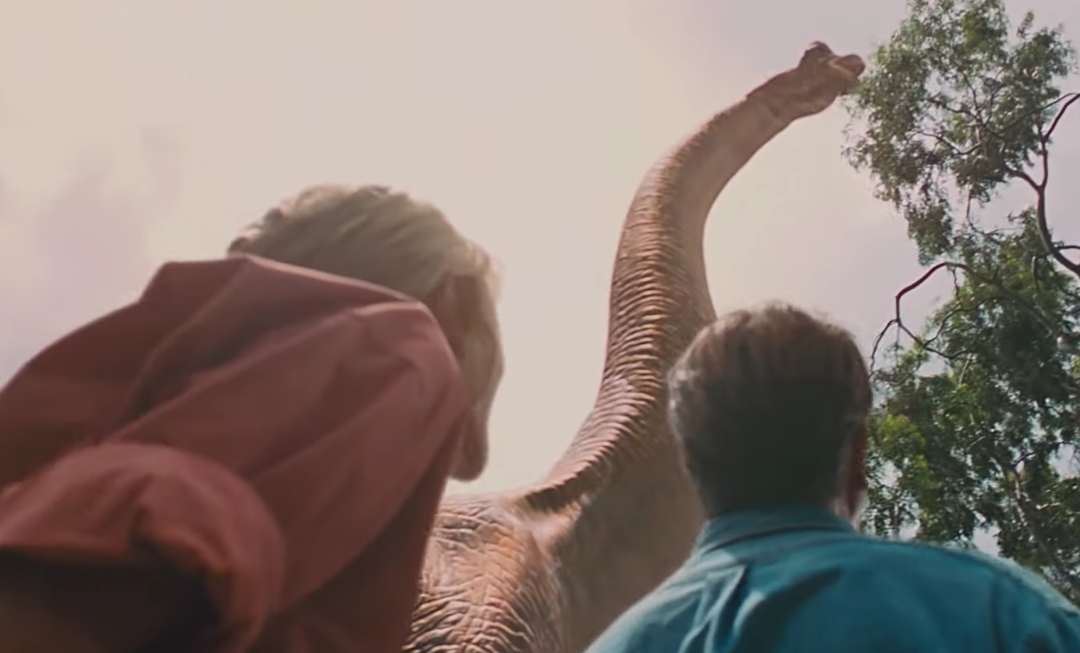
From the first reveal of the Brachiosaurus and that upward camera pan? Yeah, that’s a moment of film history right there. Another standout moment; The rain-soaked T. Rex let out his first roar on screen. Still terrifying. Still a masterclass in tension and lighting. A mix of practical effects, puppets and CGI were used. Some of the puppets STILL look better in the original movie than the new CGI ones do in later films.

Plus, I mean… Raptors in the kitchen, anyone? That entire sequence is pretty famous. Why shouldn’t it be? The reflections in the metal, how the shadows move, how tension melds with the tapping of raptor toes and the communication between the creatures themselves. Every frame feels carefully crafted to sell the illusion that this world is real. You’re not just watching dinosaurs running amok, you’re witnessing them acting exactly as they would in the wild…

At least, that’s what Hammond wants visitors of the park to believe. The cold hard truth is that we’re not watching dinosaurs, we’re watching abominations of science roam free. It’s at this time I should mention, this movie is based on the book of the same name; Jurassic Park, written by Michael Crichton. The book was much darker than the film, but the general themes are the same more or less.

Acting That Grounds the Chaos

One of the most underrated aspects of this film is the stellar acting. Yes, the dinosaurs steal the spotlight (they should), but the raw human performances are what make you care. The kids actually do a good job acting alongside their much more seasoned and experienced adult counterparts. We’re just going to bullet point the most important characters but, uh, here it goes:

  • Sam Neill (Dr. Alan Grant): His gruff-but-lovable energy anchors the emotional journey.
  • Laura Dern (Dr. Ellie Sattler): Smart, capable, and not afraid to get her hands dirty. She owns every scene she’s in.
  • Jeff Goldblum (Dr. Ian Malcolm): The perfect mix of swagger, sarcasm, and “I told you so” vibes.
  • Richard Attenborough (John Hammond): A dreamer with good intentions and blind optimism. So tragically believable.

There are more than these major players in the movie, like the lawyer that famously gets eaten off of a toilet by good ole Rexy, but I wouldn’t say they’re as compelling to watch. That being said though, that’s being said in contract to the acting and characters above… nobody gave a bad performance.

Even the kids pull their weight surprisingly. The characters of Lex and Tim are believable and sympathetic. They’re also capable, as shown by the kitchen scene to be resourceful, without feeling as though they retained “plot armor” simply for being kids. they do act their respective ages, but they’re not overly annoying. They’re not the sort of kids to complain unless there is something worth complaining about, like oh… say; falling from a tree in a mangled car or getting electrocuted? The character of Tim is a real trooper in this movie, and there’s no denying it.

John Williams’ Score: A Symphony of Awe and Dread

What’s a Spielberg film without a legendary John Williams soundtrack? These two have worked together on a lot of films; Jaws, E.T. the Extra-Terrestrial, Raiders of the Lost Ark, Schindler’s List… I could go on and on. Anyway it goes without saying. The Jurassic Park theme is instantly iconic—majestic, sweeping, and full of childlike wonder. If you hear this thing, you know exactly what it is.

Over time, the deeper you go into the film, the more the music shifts into eerie tension and dread. From soaring melodies during dino reveals to those near-silent moments during suspense scenes, the soundtrack guides your emotions like a roller coaster and it doesn’t let go.

Themes That Hit Harder Than Ever

Oh sure, dinosaurs eating people, high speed chase scenes, moments of baited breath and stealth, Jurassic Park has it all. Even though this is a popcorn blockbuster, the themes of Jurassic Park are shockingly deep. The main focus is primarily about respecting one’s place in the universe. It’s about human arrogance vs. nature’s unpredictability.

Hubris is the ultimate downfall of the park. Those who decided to use a lack of scientific ethics when designing it suffer the worst. The danger of playing God is woven through the film, with stern warnings from the resident chaotician, not that anyone listens. The least of the issues, although certainly problematic in its own right is the downright levels of corporate greed overriding common sense and caution.
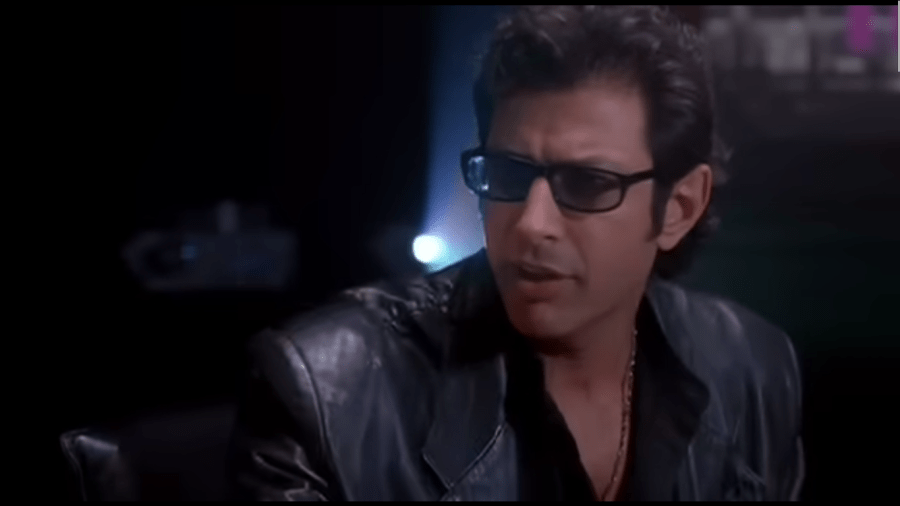
Perhaps the most iconic Ian Malcolm one-liner depicts all of the above themes the best. “Your scientists were so preoccupied with whether or not they could, they didn’t stop to think if they should.”

Ultimately the scene around the table is perhaps the one most fundamental to the entire movie, and if you haven’t seen at least that one movie clip, you should. It’s an interesting moral debate if little else, and it leaves a lot of interesting points to ponder. In a way the scene is more topical today than it ever was way back in the 90’s.

Is Jurassic Park Still Worth Watching in 2025? YES.

If you’re wondering, “Does Jurassic Park still hold up in 2025?” The answer is a T. rex-sized YES. Here’s why… you’re not going to find another Jurassic Park story quite like it. It’s plenty dark while balancing action and adventure. It’s also a fairly intelligent film. The scientific and moral dilemmas aren’t just surface level. That said, if that’s the part of the movie you love the most you should probably read or listen to the original book too to get the full experience of the philosophical debate.

I don’t think it’s too over-the-top to say that Jurassic Park defined a generation with lunch boxes, clothes, hats and toys. Children and adults alike loved this movie, and it’s certainly a huge part of media history.

This isn’t a children’s movie, but families flocked to it all the same, myself included. When I saw this movie, I was five and this movie was most certainly not for a five years old… but, I loved dinosaurs, my other families were going to see it anyway. My father took me with them to see it too. I think that’s a pretty common story surrounding Jurassic Park and just how many people loved it.

So yeah, this movie is certainly worth a watch. I can’t imagine why anyone wouldn’t give it a try if they like the general premise.

On that note, I love the movie so much that I made a fan song for it, and I hope you’ll enjoy it.

This has been Kern from The Demented Ferrets, where stupidity is at it’s finest and level grinds are par for the course. Don’t forget to check out our YouTube channel, like and subscribe! We’re on Twitch too, if you like gaming content.

What’s your favorite scene in Jurassic Park? Let me know in the comments!
Jurassic Park Review: A Hauntingly Gorgeous Masterpiece That Still Roars

Hey all, it’s Kern here, coming at you with another classic movie review. It’s been a long time since I’ve done one of these, but I suppose it’s better to write one now than never. I chose Jurassic Park because it’s such a beloved 90’s classic and the franchise is still ongoing. I’m not quite…

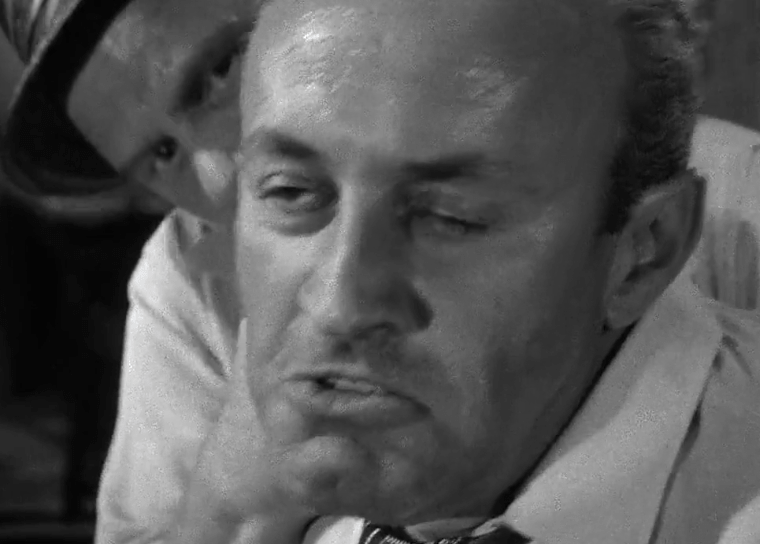
Movie Review: 12 Angry Men

In 1957, the movie 12 Angry Men hit theaters and took movie watchers by storm. The movie demanded a certain level of forbearance as a drama and a thought piece.

Movie Review: The Dark Knight

Beyond bombastic, high octane moments, we get a real struggle of ideology here. This curiously haunting film is best enjoyed when you’re willing to think about its core themes. It takes its origins all the way to the next level, and sometimes in more ways than one.

Movie Review: The Godfather

At the heart and soul of this franchise, there’s a sad truth to tell. It isn’t all unicorns and rainbows when you’re leading the mob. Rather, oftentimes Don Corleone finds it to be a merciless position to be in. He understands that position, acting with gravitas where it suits him to do so. When it…

Movie Review: Road to Perdition

This particular review was requested by one of our members over on Patreon. If you’d like to help decide what content gets reviewed, consider becoming a member. Hey everyone, it’s Kernook here. When I was asked to review this movie, I found myself rather surprised. The “Road to Perdition” is a strange film all things…


Movie Review: 12 Angry Men

Like Anime, Gaming, and movie reviews? What about RWBY Analysis? If so, check out our other platforms and support our content. Also, please don’t forget to follow our blog for more content like this.

You can help support us through PayPal or Patreon.

Hey everyone, it’s Kern here, bringing you something just a little different today. In 1957, the movie 12 Angry Men hit theaters and took movie watchers by storm. The movie demanded a certain level of forbearance as a drama and a thought piece.

Even these days, I’d be willing to call it unconventional. Then again, I’d also certainly call the film compelling. This movie is an oldie to be sure, you can only find it in black and white. Back in those days, technicolor was still a rarity in many households and theaters.

Regardless, this feature film stands the test of time, and that’s why I’ll be reviewing it today.

The premise is simple enough on the surface. It’s just a court drama, little more, little less. What makes this movie so interesting is the way these themes are addressed. Confined to a room, twelve men need to come to a decision reguarding a murder trial. All the while someone’s life hangs in a delicate balance. We never get to know that someone first hand, only what these twelve men have to say about him.

These men are acting as a jury, and on the surface the accused man looks guilty… but what if he isn’t? All of the evidence seems to line up, but it’s also full of holes, so what is this jury to do?

Is there any reasonable doubt at all?

That is the entire basis of this film. The beginning and the end of it, wrapped up in layers of context and subtext, the question comes down to one thing. Is there any reasonable doubt? If so, they shouldn’t convict this man of a murder he might not have comitted.

One juror, unconvinced of the suspect’s guilt, refuses to believe that there isn’t cause for reasonable doubt. Frankly, he’s just not sure that the man on trial committed a crime at all.

Morals and ethics pervade this film first and foremost. Personal opinions and emotional biases carry a lot of weight in that room and surrounding the table in the aftermath. This old classic doesn’t have a lot of bells and whistles, just a simple setting and a problem at hand.

Is the suspect actually guilty? Who knows?

It’s not about if the suspect is actually guilty or not. It’s about the conclusions these characters come to while trying to decide that. Now, one might rightly argue there’s more ego and testosterone involved around the table than what might be valuable to a firm debate. You might also say there’s almost too much posturing at times.

There are certainly enough hot heads and diatribes based upon hurt feelings and egos to go around. Given the mindsets of the era, you can hardly be surprised. You wouldn’t be at fault for taking issue with it.

I won’t even say this classic film would appeal to a vast many sorts of viewers these days…

For movie fans that it would appeal to, there’s a genuine human interest story to be found here. The heart and soul of these men rests beyond mere conjecture, and even the most loud mouthed idiot among them has solid reasons to act the way he does, blind rage or not.

Judicious and sound reasoning comes at the price of boredom and time loitering around until they can agree on a verdict. There are other places most of these characters would rather be, but until a decision is made, they’re stuck there, arguing among themselves.

Henry Fonda plays the willing skeptic as Juror number Eight. Only known to us as “Davis” at the end of the movie. All we ever know about his character is that he’s in search of justice, works as an architect and is a father of three. He’s also the only one to question the evidence at first, voting “not guilty” with the intent to examine the facts.

The very little we do know about him doesn’t change the fact that he’s a compelling character. The same can be said for all of the twelve jurors that surround the table. We get just enough out of each and every one of them to understand them emotionally, morally and ethically.

The rest of the weight of the film is maintained by the acting. Each character is contextualized with strong performances by the actors and firm personalities showcased by each of the characters themselves.

I don’t think the film would have been so good without keeping their backstories on a surface level. Part of what makes the conflicts in this movie so interesting, is that for many of them, it’s not a personal conflict. It’s not about grudges, or even about being ‘right’ exactly. To some degree it goes beyond that for all of them.

At only about an hour and a half in run time, this movie isn’t very long. Quite the contrary, it feels just about right. It isn’t too fast, it isn’t too short. While some of the conversations feel contrived or even convoluted at times, that’s precisely the point.

This is one classic film that doesn’t need a re-imagining or a fresh coat of paint. It’s just as wonderful to watch now as the spectacle that it was back in 1957. The fact holds true even to this day that 12 Angry Men holds acclaim for being one of the best court house dramas ever written.

Although I wouldn’t personally call it a drama, I would say it is one of the best movies surrounding the concept of moral high-ground that I have ever seen. I think that says a lot.

It’s also a lot easier to watch emotionally than the 1962 film To Kill A Mockingbird, and a lot less emotionally contentious too. There’s just not a lot of particular (and trust me, they are particular) slurs thrown around in this film compared to others of its era.

Then again, 12 Angry Men has other ways to get the point across, such as rude tempers, and certain characters sticking their feet into their mouths repeatedly. Lee J. Cobb, who plays Juror 3, does an absolute stellar performance playing the “villain” in this movie… if you could really call anyone a villain at all.

At the end of the day, this is a movie for those who want to see wonderful actors taking their characters to their reasonable conclusions without anything else attached.

The set is minimalist at best, and all we really have to entertain us are the characters themselves. There’s no wider reaching story besides the conjecture of the court case, and the conclusion each man comes to.

Then again, the clear distillation of these characters is all you need. Each of the twelve make up a fully fleshed out ensemble cast, even when the individual alone might lack a detail or two. In my opinion you’re just going to have a hard time finding a tighter fitting narrative and carefully woven script in such a short run time… certainly not with twelve characters to flesh out and puzzle together in the way this film has.

The ending isn’t overly happy or overly sad, it’s just an ending. A final, conclusion, a decision and a parting of ways among these twelve strangers that sat in a court case together. It’s as satisfying an ending as we were ever going to get, and much more satisfying than I thought most would ever realistically hope for.

Truly, this is one film that you have to see to believe. A proper masterwork of the actors and the script, perfectly orchestrated to offer the best performance possible. I really couldn’t ask for more than that.

This has been Kernook of The Demented Ferrets, where stupidity is at its finest and level grinds are par for the course. I’ll see you next time.

With your contributions, you make our efforts possible. Thank you for supporting our content. Patreon supporters receive access into our official Discord server, and a few other perks depending on the tier. If you don’t care for Patreon, and don’t care about perks, you can always support us through PayPal too… links below.

Those who join via Patreon get special perks, such as extra content, quicker updates, and more.

Click to Donate

To Our Supporters

Thank you for helping us to enrich our content.

Patreon Supporters:
($3) Little Ferrets: None
($5) Demented Minions: Andrew Wheal.
($7) Fandom Ferret: None
($14) True Blue Ferret: Francis Murphy and Bryan BSB.
($25) Premium Ferret: None.
($50) Round Table Ferret/Fluffy Ferret: Josh Sayer

Movie Review: The Dark Knight

Hey everyone it’s Kernook here, coming at you with a review of the Christopher Nolan movie The Dark Knight. Over all this 2008 film is a powerhouse in several different ways. In my opinion, it isn’t your typical “super hero” movie, and in fact tends to be far from it.

Beyond bombastic, high octane moments, we get a real struggle of ideology here. This curiously haunting film is best enjoyed when you’re willing to think about its core themes. It takes its origins all the way to the next level, and sometimes in more ways than one.

The Dark Knight is a movie worth thinking about as the credits roll.

One day, I may do a strict and firm analysis of this masterclass movie. The narrative alone is almost perfect to do strictly that, but sadly, today isn’t that day. This is just a simple review.

If you can’t tell by now, yes I do happen to like it. The film is mired in tragedy though. I’m alright with that. When a film hits so hard without being too complex there’s just a lot to like about it.

About the only thing I don’t like about it, and mind you this is just a minor pet peeve, is that some of the choices when it comes to lighting really can make Batman look kind of stupid. That’s not the fault of the actor, and really I can’t even blame the costume.

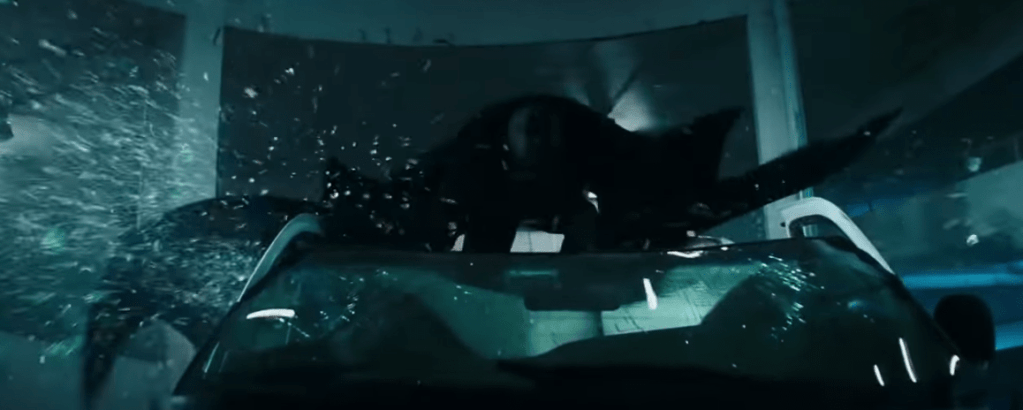
It literally is the lighting and shot composition, and nothing else, but I do feel the need to point that out. Depending on the lighting during a few very serious scenes, it can be hard to take those scenes seriously because Batman’s costume doesn’t mesh well with that particular shot composition, and it ends up making him look a little goofy… the image below is a great example.

One of the key scenes that poses a problem is the interrogation scene. There’s just a moment or two that can really snap you out of the immersive experience because the light overhead becomes a distraction instead of “mood setter”. Instead of helping to make Batman look intimidating, he looks like… well… stupid.

Aside from tiny nit-picks of that nature, where vast improvements could have been made with very little effort (say the light flickers whenever he bashes on the table, for example) this movie really is something to praise.

The acting performances, direction, writing, and wider universe has a nice beefy story to tell. It isn’t convoluted, either. This film, might be what some would call a “comic-book movie”, but it surely doesn’t feel like one.

It goes deeper, and becomes far more emotionally complex than most.

The Dark Knight is not a bog-standard tale of good against evil. It isn’t just a mindless action flick, either. Batman is the “good guy”, yeah sure he is. The Joker is “bad guy”, yeah once again, sure he is.

That’s about where the similarities stop. The film enjoys twisting inward on a grittier “soul-searching” kind of quest. The Joker is more than a villain here. He’s still a madman, but the film digs into that, and studies the reasons why.

Thematically, the movie centers around two distinct dynamics; moral ethos and the fragility of the mind itself.  Heath Ledger, plays the Joker and he does a phenomenal job. Honestly, it’s one of the last films he played a key role in.

As a quick moment of reflection, on January 22 of 2008, Heath Ledger passed away. Therefore, in my mind, The Dark Knight is probably one of the most iconic roles he ever played… you might be asking yourself why?

Well, his passing heavily impacted the promotion of the movie. I’m sure I’m not the only one who went to see the film at the time, just to see him in an acting role one last time… and really, movies like these aren’t ones I typically go and see on the big screen. I was glad I did, though.

On a slightly different note, Christian Bale plays the role of Batman. He’s alright, I’ve got no complaints. He lands a solid on screen performance and plays his role well. Would I say he knocks it out of the park? Not entirely, but he does just fine for what the story needs him to do.

That’s honestly the key to what makes this movie so amazing. It would have been all too easy to give Batman more power and leeway, because he is the “hero”. Christian Bale toned that sort of iconic ideology down in very distinct ways, adding a layer of complexity. This does two things.

First it makes our beloved Joker a much larger threat over all. Secondly, it makes Batman more compelling by pure default. When I say I’d like to do a strict and firm analysis of this movie one day, that’s because Batman and Joker have such an interesting and unique power struggle in this movie. Our titular hero doesn’t take too much of the limelight, only making a spectacle of himself when he absolutely needs to.

That’s exactly what Batman should do, and it’s exactly what he does in this movie.

Special effects, bombastic moments, super hero and villain aside, this is a story about humanity. Both dramatic and heart-felt, there’s just an emotional journey here. The story truly feels sophisticated, or at the very least, it feels earnest.

It doesn’t get too far up it’s own ass, unless of course that particular moment is meant to be viewed that way.

We’ve got the Joker here, for goodness sake, could we really expect otherwise? He’s nothing if not acerbic on a good day, never mind when he starts concocting the worst of his evil plots.

I do like that beneath all of the emotional grit, that there is a satirical bent to some of the scenes. It isn’t flashy, or “in your face”. It just happens to be there. You either take it, or you leave it…

You know, a lot of the film feels that way. Monotone moments and daily grinds clash against ciaos and unsound minds. That juxtaposition is what forces you as a viewer to pay attention to the tiny details. The movie doesn’t seem to care if we like what we see, and in this case I truly respect that kind of flippant nature.

The Dark Knight has a simple plot resting over the far more emotional complications. The Joker is attempting to humiliate Batman and expose his secret identity. That’s it… really… it is that simple. The joker strives to make a point, and Batman has to deal with it.

That’s why I’m not going to focus on the plot here, the plot isn’t the point. The characters are the point, the world building is the point, the players and pieces involved on the strategic chess board… that’s the point. The plot is just the simple overlay over the top of all that, tying these details together.

Any die-hard Batman fan can tell you, that’s always the logic used between Batman and Joker in any iteration of the series. Here that ethos is displayed in one line, both in the trailer, and in the movie. It is so keenly displayed as a core ethos of the film that it deserves mention here.

“You either die a hero, or you live long enough to see yourself become the villain.”

Over all the film is good, and it’s worth a watch. I’ve given it a lot of praise, but I should offer one last tiny thing I noticed. As enamored as I was the first time I saw it in theaters, I hadn’t picked up the movie to watch a second time until writing this review.

I have no idea why I didn’t feel the need to see it again, only that I felt satisfied seeing it the first time. I can completely recall a firm and deep contentment when I exited out of that theater in 2008.

With that in mind, I have to admit, I wasn’t quite as enamored with the film a second time around. It felt lesser, in a way, on a second viewing. I almost as though it wasn’t meant to be watched a second time. I believe that’s just a personal stance I take mind you.

I think the movie loses a fair bit of impact on a second viewing in a way others just wouldn’t. I don’t really want to watch it a third time either. That’s okay though. I think I got everything from the experience that I wanted the first time.

This second viewing all these years later didn’t have to matter so much. I wouldn’t call it a collector’s movie. It doesn’t belong on my shelf to watch over-and-over again. Frankly, I don’t want it to, and I certainly don’t need to unless I’m going to analyze it.

My point is, give it a watch on a streaming service before you just go out and buy it. One viewing may be enough for you, just like it was enough for me.

This has been Kernook of The Demented Ferrets, where stupidity is at its finest and level grinds are par for the course. I’ll see you next time.

Click to Donate

You can help support us through PayPal or Patreon.

Meanwhile, check out some of our other great content below.

Netflix Original – Resident Evil series releases on July 14th. Will it be any good?

Hey guys, it’s Kernook here, and you know I just had to bring this up. As a huge Resident Evil fan, myself, I couldn’t keep quiet about this for long. Absolutely not…

Netflix has always been full to bursting with original content, and it’s really no surprise that they would try to garner attention from Resident Evil fans. We are a rather hungry group of people when it comes to our games, movies, books and other media. Cashing in on the franchise at this point is just flat out common sense.

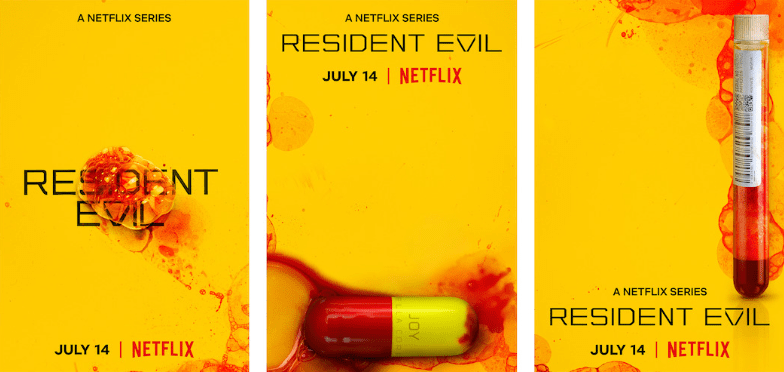
They’ve been promoting the series fairly hard for a while now, using posters that make nods to the less than scrupulous pharmaceutical company that fans know as Umbrella. Yellow posters are splattered with blood, pills, and the unsettling promise that we’re certainly going to enter the nightmare on this one…

It isn’t all blood and gore though. In a clear attempt to promote its forthcoming Resident Evil series, they’ve also released posters back in June featuring long-time villain and franchise mainstay Albert Wesker and other members of the family.

The actor to play Wesker in this iteration will be played by Lance Reddick, and honestly, I’m pretty excited for that. Yeah, he’s not the image of Wesker that we’re all used to. That being said, he’s going to be the first person of color to play Resident Evil‘s long time big baddie. He also has an impressive acting career. This guy is no amateur.

I stand firm on the concept that representation in media is important, and since this series isn’t a direct 1-to-1 replicate of the games, it isn’t a problem for me. As long as he can play the part, and do it well, that’s all I care about.

I have high hopes… but I also have a few worries.

The Netflix series will be the first live action one to be heavily based on Capcom’s games, so it has a lot to live up to… we’ll have to just wait until its released on July 14 to see how it goes.

Like Anime, Gaming, and RWBY Analysis content? Check out our other platforms and support our content. Please don’t forget to follow our blog for more content like this.

Click to Donate

You can help support us through PayPal or Patreon.

So, what do we know about the story?

Well, the 8-episode series is supposed to be set in 2036. That’s about 14 years after their deadly virus caused a global apocalypse… and this is where my concern rests. As we can clearly see, they’re already playing fast and loose with the plot-line already.

Jade Wesker, Albert’s daughter, fights for survival in a world completely overrun by Umbrella’s twisted experiments. Jade is haunted by her past in New Raccoon City, by her father’s previous connections to the Umbrella Corporation, and something having to do with her sister.

Honestly, this is the thing I am least excited for.

I think it may be a little disingenuous for the series to claim it follows the Capcom plot-lines, without any respect paid to the original game franchise at all. I don’t care if the race of actors playing the characters change. I’m completely fine with that, but I don’t want to see a new character taking the spotlight either.

I’m withholding judgement, but I’d rather see a true and proper retelling of the game series, not yet another spin-off that literally goes off the rails. I have no idea why this disconnect is so predominant with filmmakers, but it is an issue with games turned into film.

Constantly, we get a story-retelling that somehow doesn’t follow the actual story. How that happens repetitiously, when you have the actual games, and remasters of the actual games as a blueprint, I have no idea. At this point though, it is a pet peeve… and it drives me up the wall.

I’m going to withhold my judgement until I see the series, it might be wonderful…. and I hope it is.

As a fan of Resident Evil, though?

Well, I do feel at least a little cheated that we aren’t getting a series mainstay as a main character… failing that, at this point the series has a robust side cast to utilize. We do not need more random characters, what we need is a spotlight put on the ones we don’t have enough of.

I hope at the very least, Netflix has taken that into consideration. Beyond that, I hope we get plenty of compelling narratives for characters that we preexisting fans already know about and have a sentimental tie with.


This has been Kernook of The Demented Ferrets, where stupidity is at its finest and level grinds are par for the course. I’ll see you next time.

Click to Donate

You can help support us through PayPal or Patreon.

Meanwhile, check out some of our other great content below. You can also find more information about supporting us at the bottom of this post.

Anime Review: Perfect Blue

Hey everyone, it’s Kernook here, and it’s time for an anime review. Today I’ll be talking about Perfect Blue. Before I do that, though, I’d like to discuss the director behind the work very briefly.

Thank you to our patrons for supporting our content.

Satoshi Kon was a master in directorial design. He took to his craft with a keen eye for detail. Unfortunately, he passed away in 2010, leaving behind his works of art as a legacy to the anime industry.

In brief summary, Kon’s works are noteworthy to say the least and each of them are particularly unique. Frankly, his productions are incredible, even if they aren’t exactly mainstream media.

The fact of the matter is, most of Satoshi Kon’s greatest works are way ahead of their time thematically. They challenge viewers, and often require more than a single viewing.

Satoshi Kon combines the art of anime with his ability to craft an interesting narrative. His works are often saturated with several layers of metaphor to drive his stories forward. In order to completely catch every minor detail he skillfully embeds into his works, it’s best to watch them at least twice.

Fandom: Satoshi Kon

His aspiration in life was to become an animator, but thankfully he blossomed well beyond that. In his career he was credited for being…

In 1997, Satoshi Kon had built quite a name for himself. His reputation grew quickly. His ability to craft compelling stories gave him an edge in the anime industry. In the 90’s animation was striving to do new things, and he was just the sort of person able to utilize his skills to the fullest potential. In collaboration with the studio Madhouse, Satoshi Kon was able to direct his first feature length film; Perfect Blue.

Satoshi Kon’s First Film: Perfect Blue

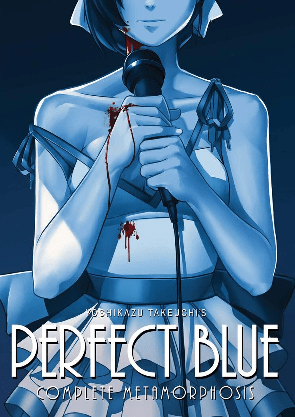
Originally, Perfect Blue was a fictional novel under the name “Perfect Blue: Complete Metamorphosis” written by Yoshikazu Takeuchi.

The animated adaptation does make a few narrative changes, so keep that in mind. There is also a second novel named “Perfect Blue: Awaken from a Dream”. Both are worth a read if you love the Perfect Blue series.

As of writing this review, you can find both books on Amazon, same with the film.

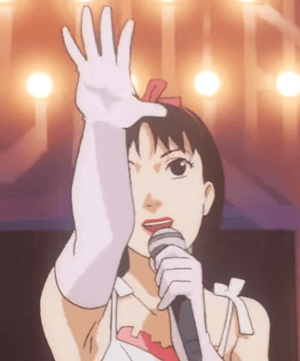
Perfect Blue is a psychological drama. Its themes are heavy and introspective. It dives feet first into the darker aspects of what it means to be a Japanese idol, and the implications of that choice.

Thanks to its deep narrative and chilling atmosphere, it will be an unsettling animated movie for some viewers. This is by no means a children’s anime.

Perfect Blue was originally released in 1997, but in 2019 it was remastered. Now there is a blue-ray edition of the film as well. There is a dub and a sub of the series, and both will serve you well. Though I must admit, I do prefer the sub slightly over the dub.

Spoiler warning: From this point onward, there will be spoilers for the animated adaptation of Perfect Blue. You have been warned. This is a film you may want to watch before you see the spoilers.

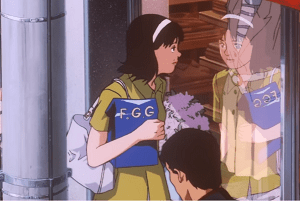
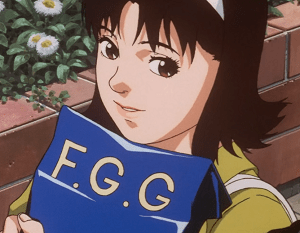
Perfect Blue tells the personal story of a Japanese idol named Mima. She’s established and fairly successful, but she believes that she can do better. Therefore she decides to leave her singing career behind, choosing to become an actress instead.

Quite quickly, she manages to get a small role in a murder mystery series. Unfortunately, that’s when things start to go horribly wrong for Mima, and it’s the crux of the entire movie.

Now, there is something to be said about idol culture, and the mentalities surrounding it. Japanese idols are a strange concept to anyone unfamiliar with it. In truth, westerners don’t have a one-to-one comparison for idol culture, so can be hard to describe.

Basically, a Japanese idol is a teenage girl or a very young woman who fits into a societal mold. These girls are dressed up in cute outfits in order to sing, dance, and perform for their fans. Furthermore, idols are expected to behave in a certain way. They have plenty of rules to follow, and they don’t have a lot of personal freedom. Idols are meant to encourage and inspire their fans, maintaining a perfect image for the general public.

Perhaps the nearest comparison I could make is the old days of the Micky Mouse Clubs, but even that falls on its face because idols are usually not children. Rather, they are late teens or young adults.

A somewhat sinister fact to this is that normally these girls don’t come from prominent families. Most of the time, they’re nameless and unpopular at first, rising to stardom because that’s what idol fans like to see.

This cultivated narrative suggests to fans that anyone who tries hard enough has the chance to be an idol themselves. Perfect Blue portrays the dark side of idol this particular type of idol culture.

Mima can’t just leave her identity as an idol behind. As much as she might want to, Mima can’t escape who she was, or the image she portrayed. In a way you could say she is a slave to her fans.

One fan in particular starts retaliating when she decides to start acting. This new role takes away from her purity and innocence that an idol should portray. Due to that, things become dangerous very quickly for her. Sadly, this also trickles down to those she’s associated with.

As people in Mima’s social circle end up being murdered, Mima must learn to cope with these new dangers. To make matters worse, Mima has trouble coming to terms with her professional career.

She believes she making the right choices logically. Emotionally though, those choices aren’t fulfilling in the slightest. They just don’t excite her like she thought they would. Instead, she ends up just going through the motions of daily life, feeling almost numb to her success.

She doesn’t voice this outwardly as she much as she should, keeping it to herself. Inwardly, she feels as though she needs to live up to a certain expectation, and since she was once an idol, this is no surprise.

As Mima’s career path shifts, so does she as a person. She constantly finds herself placed in very uncomfortable circumstances . As dark realities start drifting to the surface, she struggles to find her footing as an actress.

Mima is forced to act out scenes for her television series that she isn’t comfortable with, and she attends photo shoots for magazines that contain nudity. This goes against Mima’s formerly squeaky clean idol identity. Sadly, she conforms in spite of her discomfort with it all.

As if all of this wasn’t enough, there’s one more detail to this sordid puzzle. A detail that truly makes this animated film something truly haunting.

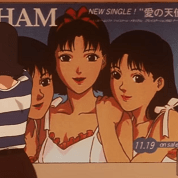
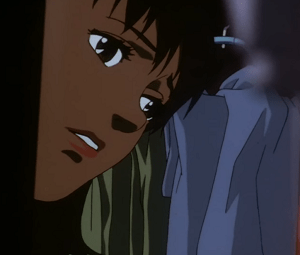
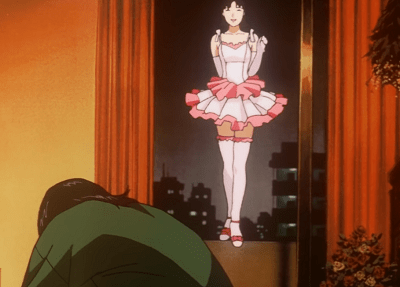
Mima isn’t necessarily in her right mind. Instead, she begins to hallucinate. Her former idol identity manifests in front of her. This image begins teasing her, taunting her, and asking her to dive deeper into her own depression. This image begins to ask Mima if she’s living the life she really wanted for herself.

It happens more than once. Each time this happens, it’s rather disturbing, both to Mima and to us, the viewers.

The vision of her idol identity keeps appearing and toying with her at every opportunity. It’s as if Mima is slowly going mad. At one point Mima even sees her idol identity sitting in the back seat of someone’s car. A point that I’ll come back to later.

The mental spiral continues to get worse for Mima. She begins passing out during the day and waking inside her apartment. She has absolutely no recollection of how she got there. She begins to see photos uploaded to a fan site that she doesn’t recognize and she begins to question herself, feeling as though she’s losing her mind.

The most disturbing part of all of this is that the television series that Mima has been working mirrors this. It has all of the same basic story beats. This gives viewers several narratives layered with complex implication and metaphor.

As we watch Mima struggle, we’re inclined to wonder about who she is as a person. We’re brought to wonder just how much of her life is a fabrication, and how much of it is real. Viewers are encouraged to question the stability of Mima’s mind, and what she sees as reality.

Frankly, all of these contextual pieces would be terrifying on their own. However, mixed together the way that they are, it is truly unsettling in all the right ways. The themes linger long after the anime has been turned off, and that’s by design.

Like Anime and Gaming content? Check out our other platforms:

Perfect Blue’s Perfect Metaphors

Satoshi Kon knew how to get his point across. He understood the fine lines of media, and how to make them work in his favor. He approached Perfect Blue with a firm understanding of what he wanted to do, and how to get it done.

The meticulous editing and scene changes found in this film are some of the best I’ve seen in anime. The film relies heavily on implication and juxtaposition to carry important scenes forward.

One moment, she’ll be standing over a dead body in a scene she’s acting out.

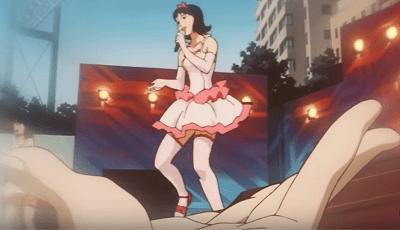
In the next, she’ll be standing in front of an audience, preparing to perform.

These scenes compare and contrast two stressful situations for Mima. She’s wearing the same expression in both moments, but one is much more horrific than the other.

As I said above, viewers are encouraged to question her sanity and what she believes to be real. This is one key scene, among many others, that truly contextualize Mima as a character.

It’s at this point I’d like to remind you of two other important scenes. One is the scene about the photos on the fan site she found. As I said above, she has no recollection of the pictures that were taken of her. However, the clothes are certainly in her closet, even if she can’t remember buying them.

The second scene is of the moment she see’s her idol identity sitting in the passenger seat of someone else’s car. She can’t deny what she saw, but even she can admit the entire idea is pure insanity on its face.

As Mima questions herself, viewers are asked to question her as well. As the concept of reality shifts around her, we begin to see that not everything is as it seems. We realize that her experiences are not trustworthy.

We can’t help but question which of the experience she’s having is the real one. Maybe only one situation is, maybe they both are, or perhaps it’s all just a fabrication of a very ill mind. This brings me to my next point…

Who exactly is Mima?

Mima’s Conflicted Identity

Throughout the film, it becomes clear that Mima isn’t being entirely honest with herself, or those around her. As I stated above, she truly struggles to find her place in life.

She’s not a happy person, at least not professionally, socially, or emotionally. She lives a very complicated life, with several facets of her personality being hidden away from the public eye.

Mima lives a double life. It may be two sides of the same coin, but that is a very isolating thing to do. We see this play out in the film.

It’s arguable that her supreme sense of isolation leads to her unhealthy mindset and warped perception of reality. It’s also arguable that she’s isolated purely because her perceptions are warped to begin with.

Viewers will never truly know the answer, it’s left strictly up to interpretation.

Mima is rather lonely in the privacy of her own apartment. Meanwhile, her idol persona is outgoing and charismatic. Lastly, her actress persona is someplace in the middle of the other two.

These conflicting identities lead her to a crisis of sorts. At times, it seems as though the idol personality within her is trying to break lose. It seems to gain a personality of its own. The way it seems to harass her is another question in and of itself.

Are these her own personal thoughts of self hatred given form? Or is the idol within her becoming it’s own split off personality, separate from Mima as a person? Or is she simply a ghost of who Mima once was?

Once again, the answer is not so clear. While it’s true this isn’t likely a purgatory of sorts, the trials placed in front of Mima are no less troubling.

Most of what viewers see is through the eyes of Mima, and what she goes through in daily life. With these many personas in constant conflict, her personal identity gets lost in the shuffle.

It’s anyone’s guess. That’s what makes this film so good. You could debate this endlessly and never come to a final answer.

Has Perfect Blue Aged Well?

Perfect Blue was originally released in 1997. In some ways it is a product of its time. When it comes to the world itself, it shows its age in spades. Decor looks dated to be sure, and that says nothing about the world during that era of time.

Electronics in the film reflect the era of the late 90’s. As a result, so do some of the conversations in the series. For example, there’s a scene where Mima learns how to use the internet for the first time.

Televisions and computers are the sort that you would find in the late 90’s. What was once top of the line equipment now looks like a relic. If anything, I do appreciate the little Mackintosh logo at the bottom of the computer and on the box. There are plenty of little nods like this all over in the anime.

If you are old enough to remember the 90’s these are neat little additions. I’m sure that in the 90’s additions like this helped the narrative to be more immersive.

As far as the actual animation goes, it holds up quite well, even in it’s original state. Thanks to the blue-ray remastering of the anime, those who want high definition certainly have an option too. The soundtrack to the show is as haunting as it is beautiful. Each track melds into scenes flawlessly, building tension and atmosphere when it needs to.

Final Thoughts

Perfect Blue is not an anime film for everyone. In fact, I personally believe a good number of people won’t like it at all. It can be hard to recommend to the average anime viewer.

It isn’t a relaxing show, and it has some pretty brutal pacing. That, coupled with its dark and sinister themes, lead to a very complex and morally grey narrative. It is a thriller, and that can’t be understated.

The film relies heavily on its psychological drama to carry the story forward. Many scenes are purposefully unsettling, and Mima is an enigma by nature. Several questions are left unanswered and up to interpretation.

The ones that will be answered, may not be satisfactory or to your liking. That’s just the nature of this film, and Satoshi Kon’s directorial style in general.

That being said, Perfect Blue is by far one of the most compelling anime I’ve ever watched. There is so much to unpack about the world, Mima, and the concept of idol culture in Japan. If you can tolerate the concepts in the anime, you may find a real gem here.

This has been Kernook of The Demented Ferrets, where stupidity is at its finest and level grinds are par for the course. I’ll see you next time.

Click to Donate

You can help support us through PayPal or Patreon.

Meanwhile, check out some of our other great content below. You can also find more information about supporting us at the bottom of this post.

With your contributions, you make our efforts possible. Thank you for supporting our content. Patreon supporters receive access into our official Discord server, and a few other perks depending on the tier. If you don’t care for Patreon, and don’t care about perks, you can always support us through PayPal too… links below.

Those who join via Patreon get special perks, such as extra content, quicker updates, and more.

Click to Donate

To Our Supporters

Thank you for helping us to enrich our content.

Patreon Supporters:
($3) Little Ferrets: None
($5) Demented Minions: Francis Murphy and Andrew Wheal.
($7) Fandom Ferret: None
($14) True Blue Ferret: None.
($25) Premium Ferret: None.
($50) Round Table Ferret/Fluffy Ferret: Josh Sayer