Hey everyone, it’s Kern here. Today it’s time we ask ourselves a question, or two. Is there such a thing as being blinded by nostalgia? Even if there is, is that necessarily a bad thing?
Those are two questions I often ask myself as I re-visit older series that I take such great joy in. I have to wonder, is the creative medium that I’m consuming actually good? Or is it simply my fond memories that bring me back to older media time and time again?
The film relies heavily on its psychological drama to carry the story forward. Many scenes are purposefully unsettling, and Mima is an enigma by nature.…
I’m honestly not sure if I have the answer to any of those questions. I also don’t think there’s a clear-cut answer to any of them. When I re-visit a series or play a game, I try to reflect on my past experiences. Sometimes they’re good, and other times they’re not. Either way, I believe that nostalgia is part of the reason I’m always drawn back to older media.
Does that mean I’m blinded by my nostalgia?
No, I don’t think so. I don’t actually think there is such a thing as “nostalgia blindness”. I think the phrase is a knee-jerk reaction to a greater problem. Times change, and so does media along with it.
I think all media should be viewed through two equally important lenses. There are two factors at play, and they both deserve a discussion.
The First Lens: Time
The first lens is that media is a product of its time. As times change, so does everything around us. Media that was at one point the cultural norm, may one day be seen as obsolete or problematic. Therefore, the questions we should ask are actually quite simple.
Why was that piece of media made in the first place? What were the social, cultural, and economic norms at the time? Does the media hold up to those norms, or, does it subvert them? Lastly, does that media uphold any value at all in the current day and age?
If we look at media through that lens, we get to experience it on a very fundamental level.
These questions give a looking glass into history. The most imperfect and morally grey pieces of media might still hold that value under that context.
Even if it is just to say that we have grown, evolved, and learned better from our past mistakes, that has some real value. Also, older media serves as a teaching aid of just how we’ve moved forward, and in what ways we still need to do so. We shouldn’t overlook that, failing to be aware of those details will only perpetuate old mistakes anew once more.
The Second Lens: Personal Experience
The second lens is something far more personal. Each piece of media can raise more nuanced questions. Ones that don’t hold simple answers beneath all of the subtext.
Whether we consume media, or reject it, it’s important that we don’t to it mindlessly. Instead, we should be asking ourselves why we enjoy the media we consume.
What does that media mean to the viewer? What value does it hold for the people who consume it? Why does that particular piece of media speak to them, when another similar piece might not? These are questions of introspection and discovery.
Through this second lens, viewers become empowered. Even the most trite piece of commentary, slap-stick humor, or questionable message might breed a greater discussion.
An Example
Let’s dive down the rabbit hole, shall we?
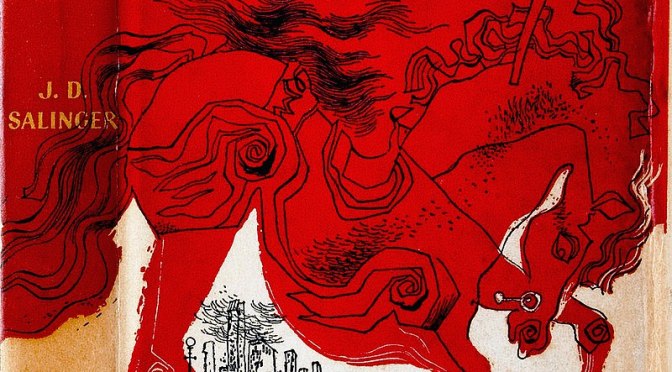
Books like “The Catcher in the Rye” from the author J. D. Salinger come to mind. It contains elements that I would certainly deem problematic, but to cast aside the work would cast aside greater history.
Anime like “Ghost in the Shell: Stand Alone Complex” for example, comes to mind specifically because it draws so heavily from “The Catcher in the Rye“. As an anime fan, I can only respect that it draws so much inspiration and introspection from the classic book.
What about “The Matrix” movie franchise? Did you know that universe was inspired by “Ghost in the Shell” and the anime medium?
There are examples of this in almost every ounce of media you come across. Media being the touch-stone that it is, will always have problematic content. It is only through careful discourse and consideration that media can evolve and change with the times.
In Conclusion
Respectful commentary, and a healthy dose of nostalgia will always play a role in changing the future. Media will always be made by people who are inspired by the past to make a better future. Choosing to forget our past simply because it becomes dated will only bury our previous failings along with it.
We should never risk burying our collective history. Once that happens, we are doomed to repeat lessons that should have already been learned.
In my opinion, there is no such thing as being blinded by nostalgia. However, there is such a thing as denial. Either casting aside the many failings in old media itself, or the greater implications that such media had on society.
We should acknowledge all media for what it is; a looking glass. Once we do that, we escape the confines that bind media down to society and we can use it as a tool. Media is powerful, it is influential, and it does have the power to change the world for a greater good. Media’s problematic history becomes part of that. It reject old media entirely risks a repeat our mistakes.
This has been Kernook of The Demented Ferrets, where stupidity is at its finest and level grinds are par for the course. I’ll see you next time.
You can help support us through PayPal or Patreon.
With your contributions, you make our efforts possible. Thank you for supporting our content. Patreon supporters receive access into our official Discord server, and a few other perks depending on the tier. If you don’t care for Patreon, and don’t care about perks, you can always support us through PayPal too… links below.
Those who join via Patreon get special perks, such as extra content, quicker updates, and more.
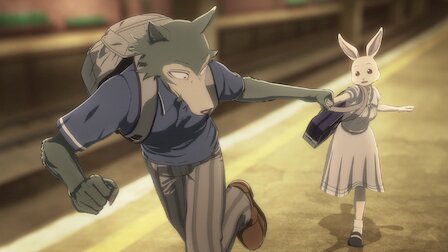
Hey everyone, it’s Kern here. Beastars is a great anime, and no, it isn’t just for furries. In fact, it’s far from it. No, really, I’m serious.
Beastars is a great anime, and no, it isn’t just for furries. In fact, it’s far from it. No, really, I’m serious. Beastars offers fans of the series a meticulously crafted world and compelling characters. Both qualities are the bare minimum for a halfway decent anime, but Beastars goes the extra mile. The anime is beautifully animated, there’s no question about that.
So why did the show garner such a strong stigma when it first released?
Upon first glance, this is actually a pretty difficult question to answer. The simple answer is that it just looks like a furry show. For those of us who don’t identify as furries, that can be a little off-putting. However I’d say the issue goes a little deeper.
In general, furries get a bad reputation across all kinds of mainstream media. For example, the widely popularized NCIStelevision series has a bad habit of throwing shade at the anime and gaming fandom. There have been episodes where a few off-handed remarks painted furries in a bad light. Now this problem has gotten way better in recent years on NCIS but doesn’t erase the history of the show, or the fact that those old episodes still air on television.
I can’t imagine how the furry community feels when it comes to mainstream media, and I wouldn’t care to speculate. Frankly, I don’t identify as a furry, and I don’t speak on behalf of the community, nor would I ever want to.
What I can say is that some of the backhanded comments made on the crime drama, particularly in the earliest parts of the series still prick at my sensibilities in a wholly unsatisfying way, and I’m just an anime fan and a gamer.
Like Anime and Gaming content? Check out our other platforms below:
If mainstream media perpetuates those stigmas too, then what about the anime community? Surely we would have been more enlightened, right?
Well, I don’t have the answer to that one.
Beastars didn’t do itself any favors with it’s promotional material for those of us that didn’t originally follow the manga. Moreover, Beastars has a barrier to entry that’s a little steep.
That being said, when the anime started airing, I couldn’t help but wonder where the series was going to go. From a narrative perspective, the anime just seems odd. It revolves around anthropomorphic animals. The anime isn’t just about bunny and cat girls. Every character, both male and female are animals with human characteristics.
They walk on two legs and speak normally, but the characters are still animals. While animal instincts tend to crop up from time-to-time in each episode, it isn’t exactly the core theme of the show. At least, not in the way you’d entirely expect.
So, given the murmurs about Beastars, and the initial knee-jerk reaction that came along with it from non-furry anime fans, I knew I had to see the series for myself.
My conclusion is this: Beastars, while somewhat strange, it is not just a furry anime. In fact, it is far from it. I wouldn’t say that it’s a “must see” show, or that it’s a pinnacle anime that everyone should watch.
Instead, I would say that it is a rare show, and a diamond in the rough. Yearly anime line-ups usually hosts a slog of repetitive, formulaic shows. If that’s you’re thing, awesome.
But, it isn’t my thing.
I don’t like watching rehashes of the same types of shows over, and over, and over again. Beastars is the breath of fresh air that I sorely needed.
Now, as I said before Beastars has a barrier of entry. I believe that for some people, it might be a steep one. It isn’t say… Sweetness and Lightning, for example.
Beastars will demand that you leave your preconceived notions at the door. The reason I’m speaking so generically about this series is because it is extremely easy to give off the wrong impression of this show.
The core themes are deep, vast, and very nuanced. Not to go into spoilers, but some of the themes revolve around psychological impulse, trafficking, oppression, addiction, and the confines of society. That is what I mean by a barrier to entry. It never quite goes too far, but it is just dark enough.
I certainly came away from Beastars with several personal qualms. I won’t get into what I think is truly problematic, purely because that’s a very subjective concept. Also, what I dislike toes a fine line. I’m not quite sure how to articulate or even categorize those thoughts cleanly and concisely. I don’t think I’ll ever be able to.
Beastars demands its viewers to challenge their own perceptions. Anime as a creative medium, has a power to really challenge a viewers personal outlook. This anime could do that, if you give it a chance. Or, it could simply just annoy you. There are times this anime did both for me.
Now, there’s an interesting discussion to be made about how the series portrays racial tensions using species as a metaphor. It questions social divides, and the inevitable problems that come along with that. It even manages to do it in a very pragmatic way. It’s approachable, but it’s also unnerving.
This anime balances on a very slippery slope in a lot of different ways, and this is one of them. As an American, that particular part of the anime is one of the areas that I take extreme issue with.
I’m not sure how I feel about how the anime handles racial tension in its metaphors. Mind you, I realize that this comes from my American sensibilities, and my personal upbringing. In America, comparing someone to an animal tends to come off as racism, and this anime toes a strange line.
To give an example, there are two different species of rabbits in this series that don’t get along. Some of things that are said in dialogue exchanges are just flat out uncomfortable for me to watch. That being said, I am not the one qualified to lead any sort of discussion on this particular sort of topic.
I just wanted to point out that the metaphor is there, and that it can be questionable.
So, with everything I’ve just said in mind, I think every anime fan who wants a unique experience should watch Beastars at least once in their lives. This is not a mindless show. It is not furry pandering.
Beastars is literally a narrative beast all of it’s own, and it cannot be aptly compared to anything else that I’ve ever seen in anime.
If you do choose to watch Beastars, be aware of the core themes. Understand that it can get dark pretty quickly. A lot of concepts in the anime are very morally grey. If you do watch the series, keep that in mind.
This has been Kernook of The Demented Ferrets, where stupidity is at its finest and level grinds are par for the course. I’ll see you next time.
You can help support us through PayPal or Patreon.
With your contributions, you make our efforts possible. Thank you for supporting our content. Patreon supporters receive access into our official Discord server, and a few other perks depending on the tier. If you don’t care for Patreon, and don’t care about perks, you can always support us through PayPal too… links below.
Those who join via Patreon get special perks, such as extra content, quicker updates, early fiction chapters and more.
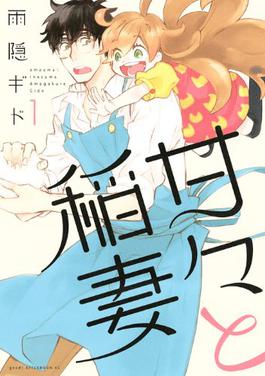
Sweetness and Lightning is a slice of life series that aired in 2016. At its core there’s a story about family, grief, and finding a place to belong.
These themes are wrapped up nicely in a show that centers around the heart of every home, the kitchen. On the surface, this is a cooking series. Beneath that, each dish that the characters make provide catharsis for their struggles.
The anime isn’t dark by any stretch of the imagination. In spite of the themes surrounding it, the series is very upbeat. The writing is masterful, but it’s not deep. Each emotional issue is handled maturely, but, the series itself can easily appeal to almost all ages. At the end of the day, the story is about familial love, and finding comfort in places that the characters would least expect them.
The anime is an adaptation of a manga with the same name. The adaptation is true to its source material, diverting only slightly when the narrative demands it. Those occasions are rare, minor, and actually make the anime a better viewing experience. The subtle changes aren’t always easy to notice, and that’s the way it should be.
The twelve episode series follows two very different family dynamics. It focuses on both equally, but, one family stands out more.
The Inuzuka Family
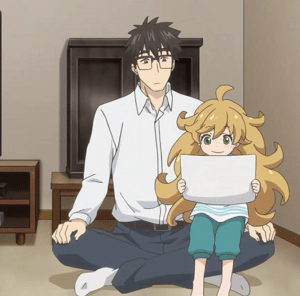
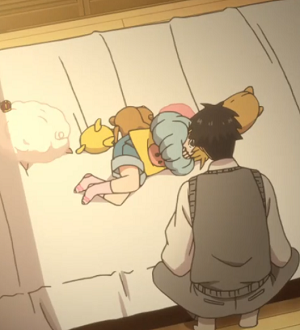
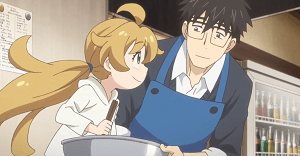
The first family is a father and daughter. Kōhei Inuzuka is left a widower after his wife’s passing. His daughter, Tsumugi Inuzuka is still quite young. She’s only in kindergarten, and therefore she’s solely dependent on her dad for almost every need. Kōhei struggles with the demands of being a single parent.
Working a full time job as a teacher and seeing after his youngster are large emotional commitments. He is not a homemaker, and he has no idea how to fill the void his wife left behind.
The Iida Family
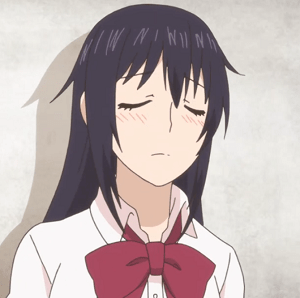
The second family follows the Iida family. Kotori is a student in his class. She spends a lot of her time alone, both at home and at school. She’s a loner by choice and routine. Her mother is often away, having a very small role in the anime. The absence of Kotori’s mother is a driving force for her loneliness in the series.
Kotori has a passion for food. Since her mother is an acclaimed celebrity chef, she knows her way around the kitchen. However, her incredible fear of knives keeps her from enjoying that passion to the fullest.
Mundane Life
This is not an action filled series. It is not full of suspense or plot twists. There are not a lot of over the top “anime style” gags, and you won’t find many standard tropes clogging up the anime either.
Even among the slice-of-life anime often provided to fans, this show is something that might appeal to a “non-anime” fan due to its down to earth nature.
The series asks its viewers to sit down and enjoy a relaxing story. Sweetness and Lightning is episodic, and mundanity is literally everywhere.
This is a series that finds its excitement by characters interacting within the confines of every day life. Each struggle begins and ends with one key component; the family dynamic.
The story opens with the the facts of life at the Inuzuka home in plain view. Six months before the series begins, the love of Kōhei’s life passed away. He’s still grieving, and trying to make ends meet. As a single father, this is no small task.
Kōhei has no idea how to cook, and so he lives off of ready made meals, serving his daughter the same. These foods aren’t healthy. Often times, they aren’t even tasty. His wife had been the one to make the family meals, but with her passing it now falls onto him.
Kōhei fails to keep a largely stocked kitchen, and can’t prepared the dishes his daughter loves to eat most. Worst of all for him, his daughter often comments on this.
While still grieving himself, he feels incredibly guilty that he can’t live up the memory of her mother.
Tsumugi obviously misses her mom, but the concept of death is a foreign concept to the little girl. She can’t quite grasp it, and the way she mourns reflects this. Everything is in the little details for her. She complains that meals have become different now. She gets upset with the changes in her routine.
The things her mom used to do are now in her father’s hands, and Tsumugi has to cope with those changes. It’s all very age appropriate, and fits the narrative well. It never comes off as “too much”, and it isn’t overbearing either. There are plenty of scenes that follow her day-to-day life too, and the conflicts that she runs into. Both at school and at home.
To that point, I want to reiterate that Sweetness and Lightning is a very down to earth series. Tsumugi is a little girl, and she acts like one. She can be very bright and cheerful. However, like all small children Tsumugi throws her fair share of tantrums too.
She’ll pick at her food, or reject it entirely. She’ll babble nonsense, or fight back a little when she’s scolded by her dad.
She is a very accurate depiction of a child. If you don’t like children, this aspect could easily get on your nerves. Tsumugi is such a major character in the anime that you can’t avoid her. She has way too much screen time to be ignored.
Unlike other family style anime that may have a child in it, this series focuses on those complexities. Kōhei’s personal story is about the difficulties of being a parent. Tsumugi is her own unique character, and she does challenge her father.
Meanwhile, Kotori is an average teenage girl. Her passion for cooking aside, she can be a bit of a wallflower. She does have one close friend her own age named Shinobu. The character makes occasional appearances every now and then.
Other than that, Kotori mostly spends time on her own. As an only child of divorced parents, she’s used to being independent.
The only interesting character quirk she has is a terrible fear of knives. She managed to cut herself pretty badly as a child, and the fear of knives persists because of it. Other than that, Kotori isn’t very interesting on her own.
What truly uplifts Kotori as a character is the way she interacts with Tsumugi and Kōhei.
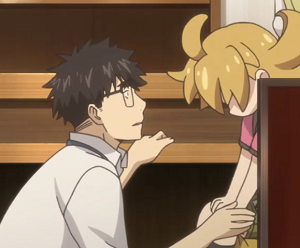
The student and teacher dynamic between them slowly shifts into one of friendship. At the high school, Kōhei maintains his position of authority. After school hours, he begins to treat Kotori as an equal.
The way that Kotori proves herself capable of assisting with Tsumugi helps to lessen the divide between them. As the series goes on, the way these two families merge help to fill the respective voids between them.
The Kitchen: The Heart of Every Home
Obviously, if you don’t like anime centered around cooking, you won’t like this. A vast majority of the scenes take place in the kitchen. It focuses on how meals are prepared, and the steps it takes to make a home cooked meal. Learning these basic steps remain the foundation of the series as a whole.
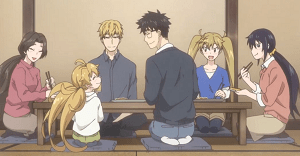
Kotori’s mother owns a restaurant, although it usually remains closed. Through a series of events, Tsumugi acts as the balm to eventually tie this odd trio together. The three of them end up gathering regularly at the restaurant, learning to make home cooked meals. They eat together and treat each other as a family.
As the characters spend more time together, old pains begin to lessen significantly. The two broken families start to redefine what it means to be a family in the first place.
The teacher becomes the student, perhaps the only actual plot twist in the show. Still, it’s no surprise to the viewer. Kōhei learns his way around a kitchen with Kotori’s help. She knows more than he does, and it’s good that the dynamic shifts here. It shows that the characters mutually respect each other.
With all of her mother’s recipes at her disposal, they work together to make each dish. Kotori finds comfort in spending time with Kōhei as well. She also gets along well with Tsumugi, eventually treating her like a younger sibling.
There is a saying that families are made around the dinner table, and this anime examines that. As time goes on, more friends join in on the nightly gatherings, forming strong bonds.
Although nothing inappropriate ever goes on between Kōhei and Kotori, the connection they build runs deep. You could choose to see something beyond a platonic friendship if you wanted. However, the anime only provides minor subtext for that. You’d honestly have to be looking for romance in places that it just isn’t.
Like Anime and Gaming content? Check out our other platforms below:
Kotori’s emotional state shifts as the series progresses. Shinobu, her best friend even takes notice. She states that Kotori seems to be at her happiest whenever she’s cooking food and eating with the Inuzuka family.
Kotori’s mother eventually meets Kōhei and Tsumugi. She finds herself grateful that her daughter found such good people to have in her life and encourages their time together to continue.
The changes over time for Kōhei and Tsumugi are also noteworthy. Kōhei becomes more capable as a father. When he finds himself lacking, Kotori helps to influence the way he deals with his daughter’s outbursts. Tsumugi becomes happier in general, and truly enjoys her time spent with Kotori.
Final Thoughts
If you don’t like anime with kids actually acting according to their age, skip it. Tsumugi is unavoidable as a character. She is a child, and she unequivocally acts like it.
On the other side of the coin, if you’re looking for a romantic series with a significant age gap between the characters, this is not it. You’re going to have to look hard for that subtext and frankly there are just better anime out there for that sort of romantic entanglement.
Sweetness and Lightning is about family, the cultivation of strong familial bonds, coping with loss, and overcoming grief. These are the themes that make the cooking aspect of the anime so powerful. They are the absolute core of everything, without fail.
Trying to take any of that out of context, for any reason, probably won’t serve you well.
The animation in the series is good, and holds up adequately enough. Like all anime that revolve around food, the animation sees a spike in quality when meals are displayed.
Some of them look good enough to eat, and appear more appealing than their real world counterparts.
The musical design is spot on, and enjoyable. Like the series itself, it doesn’t try to be over the top. It won’t stand out over the scenes, and I don’t find it memorable outside of that. The music only serves to be complimentary towards the series. The opening and ending songs are enjoyable for what they offer, but, they won’t make any of my top ten lists any time soon.
The anime leaves these two families as fast friends. There is subtext that the two might become one later down the line. However, that isn’t written in stone. The subject of romance itself is not something that is heavily addressed, and that’s fine. It shouldn’t be.
The anime never pulls a “Usagi Drop” moment either, and Kōhei’s friendship with Kotori is respectful at all times. It never crosses into questionable territory or inappropriate power dynamics.
Sweetness and Lightning is everything the title says. It is a very sweet series. The darkness that comes with it doesn’t overtake the series as a whole. Instead, the sadness is brief, but carefully included. The anime strives to tell a simple story, with a simple conclusion.
In the end, it provides strictly what it promises, and very little more.
It doesn’t necessarily fall into the “cute girls doing cute things” trope, and I wouldn’t call it a “healing” anime either. I didn’t feel refreshed or renewed after watching it.
The fact is that slice-of-life is its nearest comparison, but that’s a lackluster description of the series too. None of these categories do the show the justice it deserves.
Although I enjoyed it, and I would watch it again, for me it’s just a popcorn anime. The series is addictive in the moment, and its very easy to consume. The episodic nature makes it a joy to binge watch. This, coupled with the fact that it’s only twelve episodes long makes it an ideal choice during a lazy Saturday afternoon.
It’s a tame viewing experience. Those qualities make Sweetness and Lightning a top contender for family style anime of this nature.
If you’d like to see a few other reviews on the topic I’d say Them Animeand Lumihas you covered for more opinions on this wonderful series.
In the end, I would say that Sweetness and Lightning is merely a story about life. It doesn’t go anywhere particular, and it doesn’t need to. There are very few anime that can put so much heart and soul into such a mundane story. That alone makes it worth a watch if you like shows that center around family dynamics.
This has been Kernook of The Demented Ferrets, where stupidity is at its finest and level grinds are par for the course. I’ll see you next time.
You can help support us through PayPal or Patreon.
With your contributions, you make our efforts possible. Thank you for supporting our content. Patreon supporters receive access into our official Discord server, and a few other perks depending on the tier. If you don’t care for Patreon, and don’t care about perks, you can always support us through PayPal too… links below.
Those who join via Patreon get special perks, such as extra content, quicker updates, early fiction chapters and more.
Media remains a powerful touchstone in our society. It’s helps to shape our culture and to experience the cultures of others. Through a lens that is not our own, we’re taken to vast new worlds.
Media often asks little of its consumers. Only that we take it in, consider it, and accept it for all that it is. When we become fans of something, we take part of the media that has influenced us. We spread it around, hoping to find others that share our joys and passions. That is why retrospectives are so important.
That being said diversity of opinion, culture, personal experience and critique are fundamental in fandom. This inclusion is the only way to keep a fandom from stagnating.
Media will always be a flawed mirror into the biases of its maker. It will not be perfect. It will occasionally hold views that are different from our own, and that’s okay too. Media is a tie that binds us all, it’s up to us to choose how we consume it.
When I dive into a retrospective, I do it carefully, trying my best to recall what once captivated me. On occasion my views shift. Sometimes I am no-longer captivated.
Like Anime and Gaming content? Check out our other platforms below:
Truthfully, I don’t see that as a bad thing. Media I once loved and now hate is my personal journey onward to better things. I will never be ungrateful for that steppingstone, and that’s important too.
That’s why this blog will be so heavy with retrospective content. I don’t want to forget the media that influenced me, or the changes in perspective that I gained from that experience. The two share a symbiotic relationship, just as they should.
This has been Kernook of The Demented Ferrets, where stupidity is at its finest and level grinds are par for the course. I’ll see you next time.
You can help support us through PayPal or Patreon.
With your contributions, you make our efforts possible. Thank you for supporting our content. Patreon supporters receive access into our official Discord server, and a few other perks depending on the tier. If you don’t care for Patreon, and don’t care about perks, you can always support us through PayPal too… links below.
Those who join via Patreon get special perks, such as extra content, quicker updates, and more.
When I first starting writing fan fiction, I was still just a student in elementary school. I had a bunch of ideas that I wanted to put down on paper, and I wanted it to be about characters I already knew about and loved on the screen. With a bent pen and torn piece of paper I wrote my first scene.
News flash, it was terrible…
I didn’t know about any popular fan fiction websites at the time. I had no idea just how many fan fiction writers were out there. The only thing I knew for certain was that I didn’t want the story to end after the shows I enjoyed had its final episode.
Sailor Moon was my gateway, on a whim I did a google search. I quickly learned that hundreds of thousands of fan fiction already existed online for me to read. All of it at my fingertips. I felt elated, and also overwhelmed.
I didn’t know where to begin, it was an exciting time. Back in those days FanFiction.net , or “FFN” as it’s known nowadays, wasn’t even around. That didn’t come around until 1998, a full two years after I knew what fan fiction was. theArchive of our Own, or Ao3, wasn’t even a twinkle in the eyes of fandom.
The Early Days of Fan Fiction
In the early days, fans made their own websites or posted on forums to publish fan related content to the world. There were hundreds of posts sloppily mixed together. Stories were often tangled with comments. It was a far different world than it is today. Some web pages had no way to contact the author, leave a review, or click a kudos.
To be honest, fans had so few ways to connect at all. As a child I had no way to join in on this fun. I had to sit quietly, watching others write their stories, posting them online… I wished I could do the same.
For a short time I stopped reading actual books. I only read fan fiction. I was enamored with it. Every aspect just seemed so much better to me. I don’t know why. I can’t put my finger on it. I think at the core of it all, I recognized that these people were like me. They loved the same thing that I did.
As a child who’d been bullied in school and teased for a lot of different reasons, this one fact gave me inclusion. I finally felt like I was part of something that mattered. I knew these writers had to be older than me. There were a lot of words I didn’t understand and story plots that were never in the anime.
That didn’t matter to me. All that I cared about was that for once, I fit in.
FanFiction.net launched in October of 1998. I don’t recall much from that time. I still read fan fiction, and scribbled my own messily on paper. However I stuck to the small sites that I knew of. I didn’t venture into the treasure trove of archival sites until much later.
Yes, published books are polished, neatly written works of art. I don’t argue that. I simply see the original source material as the catalyst for something greater. The author can’t attain such an amazing feat on their own. I believe that seeing art through a fan’s lens makes everything so much more beautiful.
Fan fiction binds us together in a way nothing else can. New stories, deeper adventures, and combined inspiration fill so many different voids in our lives. You can’t put a price on that. It isn’t tangible. Spend enough time in a fandom, and you’ll form bonds you never thought possible. Some of those ties can turn into life-long friendships. I have several of my own. I have fan fiction to thank for that.
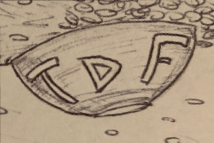
One such person is Ruka, our artist. Here you can see some of her earliest concept art for “The Demented Ferrets”. Without gaming I would have never met Kreshenne, but without fan fiction, I would have never met Ruka.
Fan Fiction is a Growing Medium
Nowadays fan fiction is very easy to find. A simple search will yield plenty of archives with thousands of fandom to choose from. Countless people gathering in one place to share their works and to celebrate the works of others. We cross over into many communities too, meeting others like ourselves.
Artists who draw fan art often credit fan fiction as their inspiration, and vice-versa. This collaborative effort made by fan communities is what fuels the ever-growing fan fiction population.
Yes, fan fiction can be a sloppy, unfiltered, unedited mess. It will often be riddled with grammatical errors and aggravating tropes. Usually people don’t have an editor, or “beta-reader” to help them out. All they have is a love for the medium and idea to plunk down for other fans to read. Honestly, I think that’s enough.
I wouldn’t be who I am today without fan fiction. I would have lived a far more isolated childhood, feeling as though I had nowhere to belong. Fan fiction is a powerful thing, and one we shouldn’t take for granted. I would strongly encourage anyone who hasn’t tried fan fiction to give it go. Open your browser and do a search.
Find a book, anime, or television series that you like. There will be fan fiction you’ll absolutely adore. I promise you, it’s out there waiting to be discovered. You’ll be glad you did.
This has been Kernook of The Demented Ferrets, where stupidity is at its finest and level grinds are par for the course. I’ll see you next time.
You can help support us through PayPal or Patreon.
2020 sucked when it came to real world crisis, that’s for sure. Now in the new year we can hope for a better and brighter future. At the very least, 2021 promises to be a great year for any anime fan. With many series returning for a second season, this is one year of anime you won’t want to miss.
Between the unfortunate loss of the Studio Ghibli actress Kumiko Okae, and the absolute hell of the world-wide spread of Covid-19, 2020 was a particularly horrible year for anime fans.
Covid-19 shoved a rather unfortunate boot in the face many industries, but one industry that isn’t talked about much in the west is the anime industry. If the disruption of several supply lines or the delays in production weren’t bad enough, everyone that had to isolate or work from home certainly was.
So, it’s true anime fans have more than enough reason to hate 2020. It will be a year that will go down in history as a well and true pain in the butt. However, for as bad as 2020 was, this new year promises a clean slate. Anime is coming back with a vengeance, and it’s doing it with a slew of what looks to be top-notch content.
Sure we have the usual contenders showing up for yet another season. You know the type. Among them are the big names. My Hero Academia returns for it’s fifth season and Attack on Titan returns for it’s final one. Those anime probably need no explanation. Unless you’ve been living under a rock, you probably know of those anime. You’ve likely formed your opinion on them, and not much I could say would change that.
If they’re not to your interest, don’t worry. they’re not the only anime out there promising to be entertaining. In fact, they’re both fairly low on my personal watch-list compared to other anime in the lineup for the year.
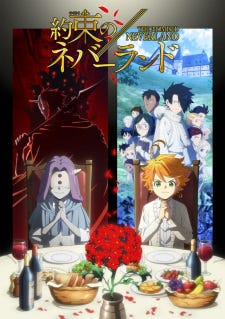
The Promised Neverland returns with it’s haunting tale for a second season, the perfect thriller promised to be filled with mental hurdles and compelling narrative twists. If you haven’t seen the first season yet, what are you waiting for? Any anime fan looking for a series with a story-line meaty sink your teeth into, look no further than this show. Catch up now while you can.
For those in search of a more adventure and less grit in their anime, Dr. Stone is sure to offer equally thoughtful narrative twists revolving around chemistry. It’s a series that raises more than a few interesting questions.
Both anime are sure to offer a reprieve amid the usual flood of uninspired seasonal line-ups. Then again, they’re both such solid entries that most anime fans have both series on their watch-lists already.
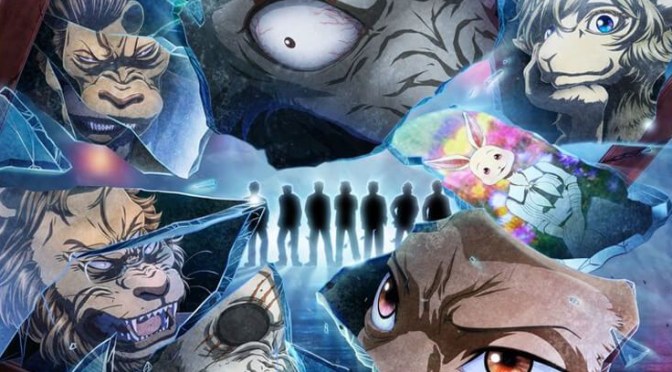
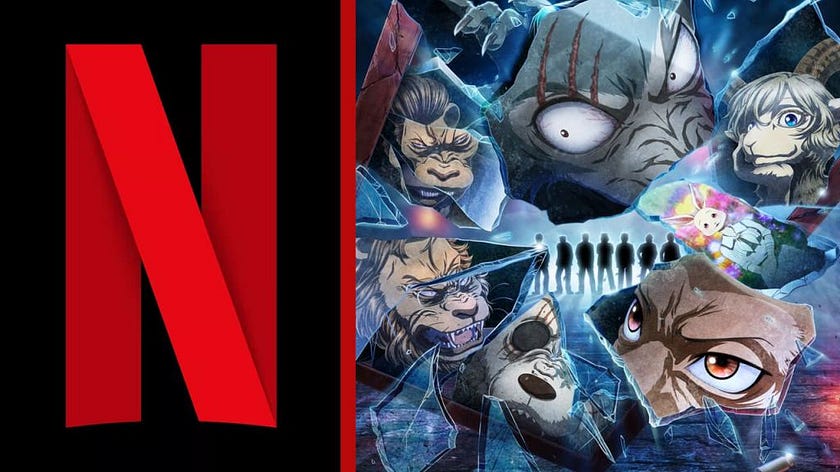
So then, let’s move onto an anime a little more derisive. Those searching for an anime off the beaten path can do no better than Beastars, and it’s back for second season too. Many who read the manga are particularly excited for this anime’s return. The first season was shockingly good, and I was one-hundred percent skeptical when I heard it was about anthropomorphic animals. The second season has me hyped.
To be honest, with all of these amazing titles the year of 2021 promises to be a strong year. It makes me think back to 2018. If you can recall how wonderful that particular year was for anime fans, it’s hard not to see the similarities.
For those in search of a more relaxing experience, you haven’t been forgotten about this year. One of the best “cute girls, doing cute things” anime is back for it’s second season too. Laid-Back Camphas you completely covered when it comes to an anime to take you mind off the ails in the world.
I’ve only named a few series, and there are countless more that prove to be promising. So farewell 2020, and good riddance.
Hello 2021, you beautiful, glorious, anime filled year!
This has been Kernook of The Demented Ferrets, where stupidity is at its finest and level grinds are par for the course. I’ll see you next time.
With your contributions, you make our efforts possible. Thank you for supporting our content. Patreon supporters receive access into our official Discord server, and a few other perks depending on the tier. If you don’t care for Patreon, and don’t care about perks, you can always support us through PayPal too… links below.
Those who join via Patreon get special perks, such as extra content, quicker updates, and more.

















 The Demented Ferrets