
Tag Archives: sitcoms

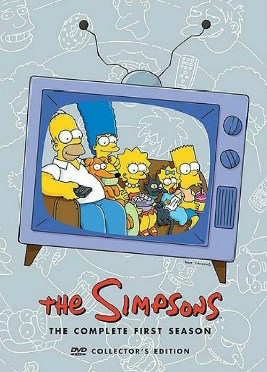
The Simpsons Season 1 Retrospective Review

Hey everyone, it’s Kernook here. When I think of influential television shows, The Simpsons comes to my mind instantaneously. I wanted to discuss the first season, so that’s what I’m going to do.

Click to Donate

You can help support us through PayPal or Patreon.

Honestly, I doubt that The Simpsons even needs an introduction at this point. It’s hard not to know of this series. With fifteen separate dubs and nearly thirty subs, The Simpsons stands right up there with some of the most prolific shows of our modern age. When it comes to worldwide appeal in the animation space, this series is something of an enigma.

Plenty of cartoons are, sure enough, but The Simpsons wasn’t exactly intended for children and it sits within an odd middle ground. It isn’t a Japanese anime, it’s not your average American cartoon, either.

Rather I should say that it didn’t used to be an average one. Back in the day, the series wasn’t directed at family friendly viewing. It just wasn’t so egregious that you need to slam the television off the moment a small child walked into the room. It’s no Family Guy or South Park in that way. It just wasn’t intended for children and appeared on a network and time slot that children wouldn’t gravitate towards.

The Simpsons got a start on the Tracy Ullman Show back in 1989, when the Fox Network wanted to appeal to young adults in the late teens and early twenties. My memories don’t actually include that, it’s just hard to be a Simpsons fan and not know that crucial little detail. I was also born in 1989. As you can probably guess my earliest memories of the show happened during my early childhood in the 90’s.

I remember The Simpsons as its own separate series. I grew up with it because my family watched it, thus I did too. I’d suspect many of you out there are the same as me.

In 1990, it began airing regularly as its own separate television show. The first season is about as messy as you can get. It was a new thing back then. Animation of the era, particularly american cartoons were sometimes questionable at best in terms of art style and quality. The Simpsons as a show wasn’t really any different.

Matt Groening, the cartoonist and creator of The Simpsons deserves his own separate blog post, but the key thing to note is that he wanted to put a lampshade on what a real american family was at the time. With his finger on the pulse he managed to do just that.

I don’t think any Simpsons fan would disagree that season one has a strange feel to it. It’s both a classic to television history, just as it is a complete and total mess by today’s standards. As a series in its infancy though, it was very well-liked and highly regarded. The distinctive feel of the early concepts we know and love today were just beginning.

These days if you were to look at the first season without context, it would be like walking into a bizarre world.

Waylon Smithers doesn’t look like this anymore. He’s yellow, like a large majority of The Simpson cast. I think it just goes to show how much the series was still in its infancy.

It’s funny, because when a lot of fans are “purists” about something, they’re usually referencing the earliest seasons. However, when it comes to fan of The Simpsons the idea of a “purist” usually refers to slightly later seasons, when characters began to feel fleshed out and the animation quality became stable.

Generally speaking, you either love or hate The Simpsons in the first season, or you just don’t remember the first season at all. Really though, I just can’t fault anyone for that. This animated series had a lot of bumps and bruises along the way to being the cultural icon as we know it today.

High Concept, Low Execution

The Simpsons was closer to a sitcom rather than it was a children’s cartoon, and that was by design. The colors were chosen to be bright and catch the attention of channel surfers, but despite the brightly colored characters, this was never meant to be for kids.

The characters themselves were generally down to earth when they needed to be, however the animation was experimental and occasionally that resulted in a total mess. While real character focused stories often took center stage, the scenes with a lot of characters on screen at once made for something of an eyesore.

If you look closely at almost every crowd shot within season one, you’re going to find a goofy little thing or two. It’s good for a small chuckle, I’ll give it that. This particular moment of unintentional hilarity comes from the episode Homer’s Odyssey. If you look carefully, you’ll see that it looks like two guys are either joined at the skull or they’ve freakishly snapped their necks.

I’m not sure if the creators intended it that way, or if it was just an accident. Either way, the first season of the Simpsons is absolutely bursting with moments like this. This is honestly one of my favorite ones to point to because it’s just so goofy that I easily remember it.

However, it wasn’t the animation that kept us viewers glued to our seats. The show almost always had something interesting to say. You see the thing is, The Simpsons portrayed a typical American family. At the time shows didn’t like to display families that were dysfunctional at best and absolutely downright awful at worst. The Simpsons refused to shy away from dysfunction. In fact, nine times out of ten, real and direct family dysfunction was the centerpiece.

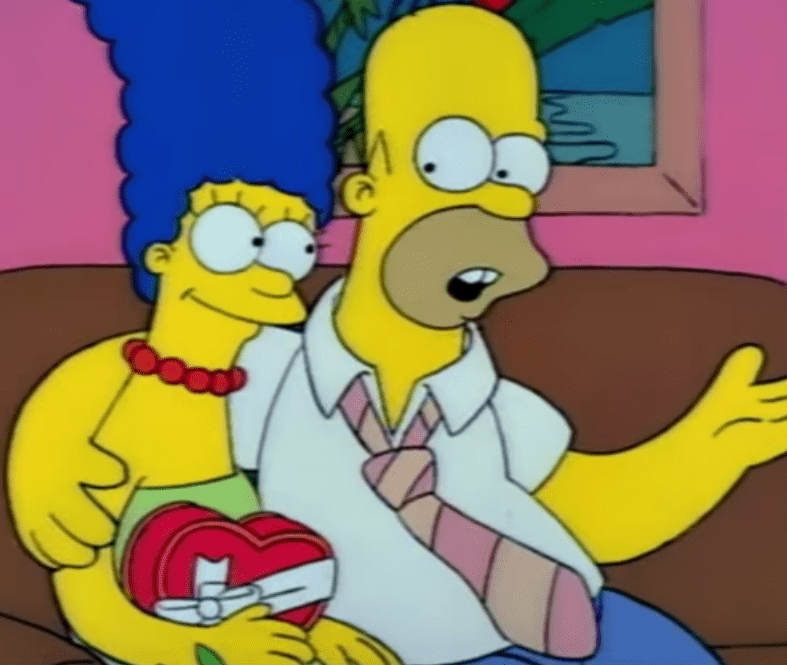
The usual concentric focus of family related sitcoms get put under a looking glass where temptation and personal character failings demand attention too. While Homer and Marge do have a loving relationship, and arguably a more stable one, the failings of the romance still shows through plainly.

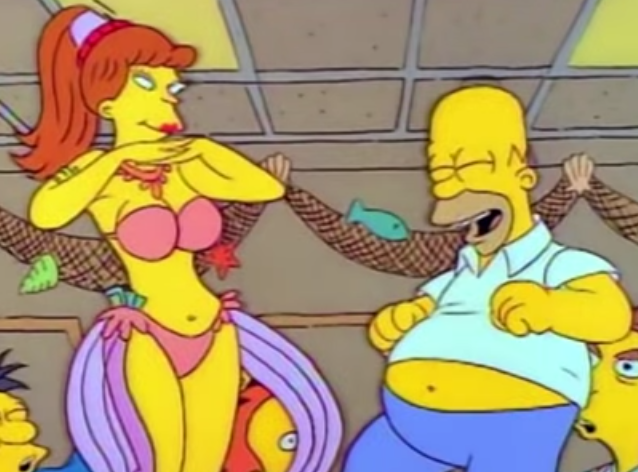
They can discuss marital issues, such as Homer going to a stag party and make notes of objectifying women with an earnest bent. The theme of the episode aside, in Homer’s Night Out the series still maintains the close family bonds that the family struggles to keep close at hand. The party itself is one thing. However the deeper theme is about how this impacts Bart’s view of women and Homer’s ability as a father to correct that.
Every episode is handled with similar attention paid to family drama and muddling their way through life. The same holds true for all the characters, although here in the first season we get more Homer or Bart related stories than anything else. They monopolize half of the episodes to stories centered around at least one of them.

Since the first season is only 13 episodes long, that’s a pretty large monopoly of screen time for these two characters. Although, I have to admit, that was probably a solid decision. These two characters certainly add a larger measure of flair to the family dysfunction.

We shouldn’t overlook the fact that the other family characters still get a large portion of screen time too within these focused stories. There’s a lot to be said about Lisa and Marge getting great early character development because of the stories that were told.

There’s a real sort of emotional focus upon the actions these characters take, and what impact it has on the family unit. We can have moments of Bart and Lisa arguing about who loves their father more, only to then have the joke subverting our expectations.

That’s not to say every episode hits it out of the park, or even manages to flawlessly get its point across. Many times, The Simpsons isn’t able to do that. What it can and does do flawlessly is leave the viewer with a loose ethos of what the series tried to represent. It asks you to either take it or leave it, and it doesn’t particularly care what you do with it.

The show is full of parody and satire culture, along with hot button issues of the era. You didn’t have to like the show back then, you just had to take notice of it. The series wasn’t trying to be a mindless popcorn viewing for the masses. Even though you could do that and enjoy the show just fine as it was, The Simpsons refused to be ignored either.

It gracelessly showcased the often questionable cultural identity of the white American family when “proper” sitcoms of the day hesitated to do strictly that. Homer was not the perfect father figure or husband, Marge while supportive was often short sighted, and the children were merely that; children. Bart was the wayward hell-raiser, and Lisa was the intelligent, if mischievous little artist. Maggie was the baby back then, clearly a very smart one, but she hadn’t come into her own as a character just yet.

There was a lot to unpack if you cared to, and many people did. The series was relatable, and that meant a lot.

Does The Simpsons Season 1 Hold Up?

Yes… surprisingly so, actually.

The Simpsons still continues on today, even though many fans often think the series has been milked for all it can be worth at this point. It lives on anyway. Perhaps it is a bit geriatric these days, lacking the more pin-point accurate depiction of what a microcosm of America should look like. However, you can look back on the first season of The Simpsons and find a relevancy there that hasn’t quite gone away.

Yeah, it looks dated, sure it does. The animation is a bit goofy looking sometimes. The series is over thirty years old, give it a little bit of slack there. It might not be perfect, in fact I’d say the show is very flawed. In a way though, that was the point.

The Simpsons should feel flawed. It should feel off kilter and askew while still feeling entirely relatable, and that’s exactly how season one feels even to this very day. Be it school yard woes and the topic of bullying, or martial problems and the struggles of faithfulness, there’s downright honesty to be found here.

It is satire, meaning it’s never too dark, or too gritty. There’s a humor and a light to be had at the end of the darkest moments. However that darkness pervades a little too. At the end of the day, the series has a lot of heart and soul embedded deep within every episode of this first season.
It can be funny and it can be dumb on occasion. No matter what though, it will always be astoundingly honest with you, the viewer. The Simpsons has a first season that doesn’t quite know what it is, and its beginnings are as humble as they are unsteady… but, well… we wouldn’t have so many seasons of the show, if it hadn’t started someplace.

If the series is a cash cow still to this day, then we only have these early seasons to thank for it, this first one most of all. That start really isn’t half bad even nowadays, either.

It truly is worth the watch. Even if you’ve already seen it, go back to the very start and get yourself a good dose of nostalgia. Enjoying the good old days every now and then really isn’t as much of a sin as we all make it out to be.

This has been Kernook of The Demented Ferrets, where stupidity is at its finest and level grinds are par for the course. I’ll see you next time.

Click to Donate

You can help support us through PayPal or Patreon.

Meanwhile, check out some of our other great content below. You can also find more information about supporting us at the bottom of this post.

With your contributions, you make our efforts possible. Thank you for supporting our content. Patreon supporters receive access into our official Discord server, and a few other perks depending on the tier. If you don’t care for Patreon, and don’t care about perks, you can always support us through PayPal too… links below.

Those who join via Patreon get special perks, such as extra content, quicker updates, and more.

Click to Donate

To Our Supporters

Thank you for helping us to enrich our content.

Patreon Supporters:
($3) Little Ferrets: None
($5) Demented Minions: Andrew Wheal.
($7) Fandom Ferret: None
($14) True Blue Ferret: Francis Murphy and Bryan BSB.
($25) Premium Ferret: None.
($50) Round Table Ferret/Fluffy Ferret: Josh Sayer

Betty White Passed Away At Age 99

Hey everyone, Kernook here… this image of my ferret just doesn’t reflect my mood recently. I am fairly saddened by entertainment news headlines. I was going to make this post a little earlier but I needed a bit of time to reflect and think.

As you know, in this household we watch sitcoms. One of the ones I grew up with in the early 90’s was Golden Girls. We used to watch the re-runs often, even after the series had long ended. We still do, this is why the news of Betty White’s passing brings such a dreary end to 2021. It’s as sad as it is poetic…

Betty White was known for her philanthropy as well as her robust acting career. Really though, she was a pioneer for the small screen in many different ways. Her acting career alone spanned seven decades… that just blows my mind… but that was Betty White for you. Honestly, I don’t recall a time when I didn’t see her on television, either through re-run programming or new sitcom line-ups.

Betty’s first credited appearance on television was in “A Time to Kill” a 1945 television short. However, you may remember her more aptly as Sue Ann Nivens from “The Mary Tyler Moore Show” or as Rose Nylund in “The Golden Girls” and the spin-off series “The Golden Palace“. These are the shows I enjoy most fondly.

If I tried to list all of the shows I’ve seen her in, it would never end. Heck, she even played herself in an episode of the Simpsons for a quick appearance. As a kid, that one always stood out to me.

Let’s keep it real, here… Betty White had a firm hand in the television industry any way you slice it. She was among the first women to showcase her skill both in front of the camera and behind it too. Her efforts coined her the honorary mayor of Hollywood in 1955. She’s also known as “the First Lady of television”.

This isn’t hyperbole, it’s true… this is how beloved Betty White is. She acted, produced, directed and even wrote for shows. She was doing most of that back in a time when women were just stepping into that kind of limelight.

There are people far more qualified than me to speak of her extensive career in the television industry. I’m just a simple, lowly fan… but as a fan I must say her legacy will live on in the countless classics found on television. I just wish she could have lived to see her 100th birthday.

Speaking on that, for her 100th birthday, a special movie event was planned. It’s still going to air. Apparently it’s called “Betty White: 100 Years Young — A Birthday Celebration” so here’s to hoping it celebrates everything her life was and all the wonderful things she gave to us as fans.

As for me, well… this post is all I can do. This woman was in every conceivable way a spectacular and influential person. Sadly, all I’ve got to go by are my own memories of sitting in front of the television with dinner in my lap and my family at my side. Those memories aren’t something I’ll soon forget. I hold onto them fondly, and now that the final Golden Girl, Betty White, has passed on it truly feels like the end of an era.

That’s the thing that sticks out to me the most, I think. It was nearly poetic how she passed away on New Years Eve, as though to pass the torch to the younger up-coming generations of sitcom stars. Ninety-nine years, and strangely it still seems all too soon.

Rest in peace, Betty… and it’s true, you can rest now. You’ve done so much, for so many. For every animal you rescued, thank you. For your massive contributions to “Guide Dogs for the Blind” and every other cause you worked to support over the years, thank you. For every half an hour on a weeknight that you lit up the television screen, and every memory you gave to families around the world, thank you…

Your fans will hold you in our hearts for years to come. So rest in peace.

To Our Supporters: Thank You!

With your contributions, you make our efforts possible. Thank you for supporting our content. Patreon supporters receive access into our official Discord server, and a few other perks depending on the tier.

There is a $1 tier, perfect for blog readers, so don’t hesitate. Join today!

Patreon Supporters

At the time of this post there are 2 supporters of our content, in the “Demented Minion” tier and 1 in the “Fluffy Ferret” tier.

($1) Little Ferrets: None
($3) Fandom Ferret: None
($5) Demented Minions: Francis Murphy and Andrew Wheal.
($10) True Blue Ferret: None.
($25) Premium Ferret: None.
($50) Round Table Ferret/Fluffy Ferret: Josh Sayer

The Comfort of Sitcoms: Fraser

Hey all, it’s Kern here. I’m back to writing proper blog posts, yes it’s taken me a while to get back into the swing of things, and I apologize for that profusely. In any case, let’s just dive into the topic at hand, shall we?

Today I want to talk a little bit about sitcoms. The draw they have and the appeal they carry to a wider audience shouldn’t be overlooked. For anyone that knows me and also the situation going on around the house right about now, you’ll know that sitcoms are a family affair. We’re known to crowd around the television together to watch an episode or two of our favorite ones.

Now back in the days of cable, we generally had shows we habitually flocked to. Shows like “The Nanny”, “Golden Girls” and “I Love Lucy” commonly filled the warm glow of our television screen. However, in this household only one sitcom stands out as king among the rest.

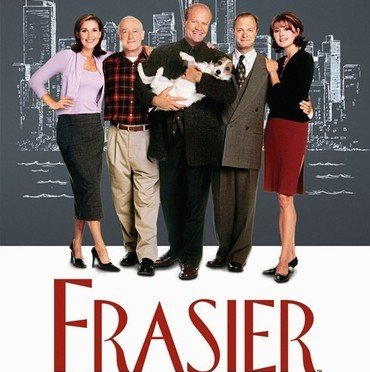
The show we watch most of all just so happens to be a show that hasn’t had any new episodes produced since May 13, 2004. This show is known as Frasier, and when it comes to sitcoms this show lasts the test of time.

Insofar as my household is concerned, we still watch the show nightly. With the advent of streaming services, we can now do so at length. Even before then, we had all of the box sets for the series, some of them we even have doubles of. Seasons one and two particularly. This is because when we first bought the box sets, it was in the early 90’s. Therefore we had them on VHS tape. When DVD’s became the foremost way to watch media, we switched over to those, and that’s why we have multiple sets of season one and season two.

Nowadays, streaming is the way of the world, and smart televisions are where it’s at. We were slow on this uptake in this house, only picking one up in early 2020, but Paramount+ was the wisest subscription we ever made because now my mother can watch Frasier to the point that she can drive me insane with it… and she often does. That was a fact I even mentioned in a previous blog post, which was very fitting at that exact moment.

As I stated at the time, even while I was writing a post about idle gaming, my mother was watching Frasier. She watches the show daily, we call it a hobby. So, when I said that we watch all eleven seasons of that sitcom over and over every week, I wasn’t joking then, and I’m not joking now. She is once again watching the show, and I am too.

For those of you that know of the show, and the sort of episodes you can find within the series, we are currently in the middle of the one where Frasier Crane (played expertly by Kelsey Grammer) looses his job as a radio talk show host and has a mid-life crisis of sorts. That particular plot line goes on for a few episodes. This episode isn’t exactly the best one in the series by far, but it is the one that happens to be playing.

All in all, it does illustrate my point.

The show stands the test of time, and even the test of my sanity. Eleven seasons isn’t very many when you watch them endlessly, much like we do around here. A reboot series in in the works apparently, spearheaded by Kelsey Grammer himself. It’s anyone’s guess if it will actually hold up to the old material, but I do remain hopeful.

The series won’t be the same without
John Mahoney, who played Martin Crane in the series. He passed away in 2018. May he be resting in peace.

The character of Martin was my absolute favorite as a child, and even now, I enjoy his time on the screen. He’s a breath of fresh air in the series. Martin Crane is the typical “every-man” that enjoys sports and fishing just as much as a good beer and time with his family. His beloved dog named Eddie is also a key focal point for him.

As former police officer, Martin Crane was a simple guy with a worldly aware attitude. His desires and vices are also simple as a result. He wasn’t too complicated and offered a staunch juxtaposition for the pomp and circumstance that other characters, like Niles and Frasier so commonly find themselves embroiled in.

When I think of sitcoms, a great many of them come to mind, but so few qualify to stand in my list of cream of the crop “comfort shows”. Some are funny, sure enough, and many of the older ones bring with them a hefty dose of nostalgia, but those are few and far between for me.

So then, why Frasier? Why not Cheers, which was where the character of Frasier Crane first originated? Why not literally any other sitcom? That’s a good question. I’ve been thinking a lot about that too, actually. It’s the heart and soul of the series that truly makes it special for me.

Surely the series has plenty of distilled witty humor, dry retorts mingling with overly long diatribes. To be honest, most of them sound much more sophisticated than they really are, as that is the punchline of those gags. However, it comes jam packed with slapstick comedy too.

Tongue-in-cheek humor tends to creep into visual hilarity at it’s finest. The image above highlights this, I believe. You don’t need to know the character of Niles too deeply to find find his absolutely disgusted look amusing, all while his pet bird uses his head as a perch.

It really is simple little visual jokes and sideways comments thrown about offhandedly, that truly makes the series sticks out for a good laugh or two. Even after you’ve seen all the gags, they’re still funny. It doesn’t lose the charm in re-watching the scenes. Honestly, the show is best enjoyed in it’s layers of symbolism and deeper discoveries. You should watch it a second time at least.

As a series, Frasier is both full of heart and goofy psychobabble related nonsense. It unflinchingly pokes fun at the psychiatric field, but it also softens that humor with stories that are truly steeped in the flaws that make us human. The series is just as much about the family unit as it is about hair-brained schemes and mindless posturing. There are times when it questions personal identity and moments when it refuses to fit the mold at all.

One of my favorite episodes includes Sir Patrick Stewart portraying man by the name of Alistair Burke. The character only appears in one episode, and in season eleven no less. However, the character is in a successful position in the theater, and his attempts to woo Fraiser Crane are the highlight of the episode. Fraiser has no idea the man is attracted to him until the matter is far too late to correct.

It is an iconic episode for me, and one that sticks out as a noteworthy piece of media because back in 2004 my inclusion in the GRSM (Gender, Romantic, and Sexual Minorites) community was lacking to say the least. I was still a teenager in high school, so characters in media were all that I had. Seeing an openly gay or trans character in the sitcoms my own mother watched was of great comfort to me. She did it without complaint, and without thinking twice about the matter, and it truly solidified my own comfort with my own identity.

Now, in a perfect world characters would be portrayed by a properly identifying individual more often than not, no matter the identity we’re discussing. Representation in media is very important, and therefore, we shouldn’t overlook that angle either. When we discuss what actor gets what role, identity should be a consideration (though not the deciding factor). However, this isn’t a perfect world, and it certainly wasn’t perfect back in 2004.

I don’t hold it against the media of the time… in fact, if anything, I think Sir Patrick Stewart did a wonderful job in the role for the single episode that he got to portray Alistair Burke.

Honestly, I’m thankful I just had the opportunity to have some level of wider exposure to the concepts that high schools refused to talk about, such as being gay. However, that’s why I believe I love this sitcom so much.

Frasier wasn’t just topical for its time, it was also down to earth and close to home. It didn’t chase down trends in a vain hope to appeal to the masses blindly… or at least it didn’t “feel” like that’s what the show was trying to do. I think that makes all the difference. It never felt like it tried to be more than it was, and what it was could often come off as pretentious and snobby to say the least. Particularly if someone wasn’t on screen to knock the Crane brothers back down a few pegs and rip off their masks of frivolity.

Someone always came along to do it too, usually Martin Crane or the character of Roz Doyle (played by Peri Gilpin).

Frasier was an intelligent series. It made statements that invited the viewer to come to their own conclusions. It was as funny as it was thoughtful, and it has aged decently well. Occasionally, it could even manage to be sad and soulful too.

That’s why I’m so drawn to it, and why my mother is too. It is rarely ever bombastic, yet it is far from mindless. The themes and the lessons are simple, and Martin Crane often tends to be the wisest character of all. If you’re looking for a decent sitcom and you haven’t seen it, give it a try. You may be pleasantly surprised.

This has been Kernook, of The Demented Ferrets, where stupidity is at it’s finest and level grinds are par for the course. I’ll see you next time.

If you liked this content, please be sure to follow the blog so that you can see more like it. I’ll be talking about sitcoms from time to time along with other media.

To Our Supporters: Thank You!

With your contributions, you make our efforts possible. Thank you for supporting our content. Patreon supporters receive access into our official Discord server, and a few other perks depending on the tier.

There is a $1 tier, perfect for blog readers, so don’t hesitate. Join today!

Patreon Supporters

At the time of this post there are 3 supporters of our content, currently all of them are in the “Demented Minion” tier.

($1) Little Ferrets: None
($3) Fandom Ferret: None
($5) Demented Minions: Francis Murphy, Josh Sayer, and Andrew Wheal.
($10) True Blue Ferret: None.
($25) Premium Ferret: None.
($50) Round Table Ferret: None.